Bird Image Review
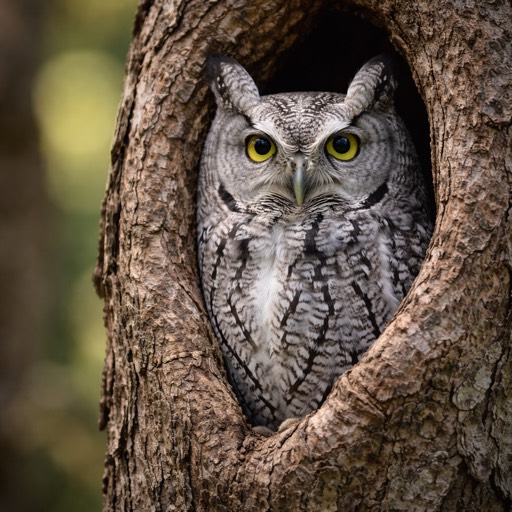
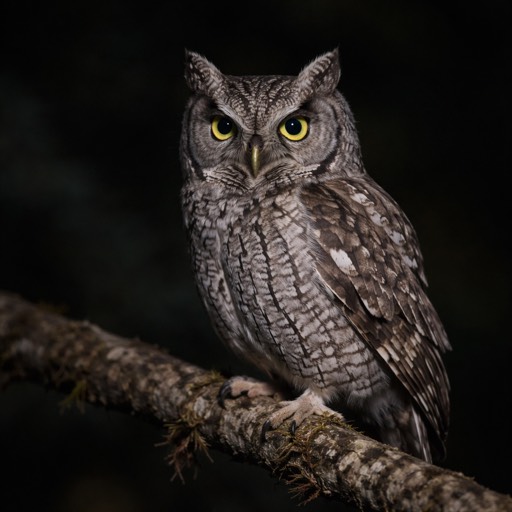
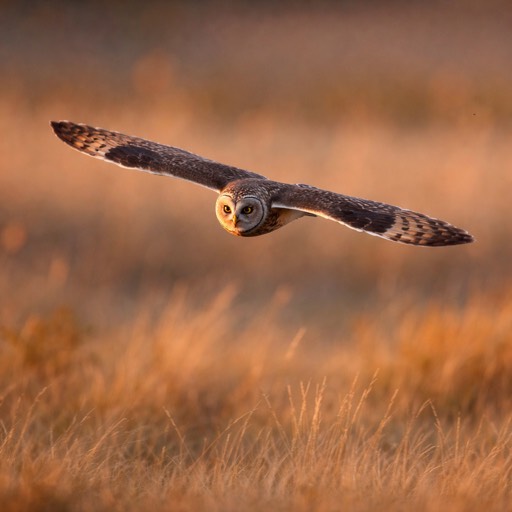
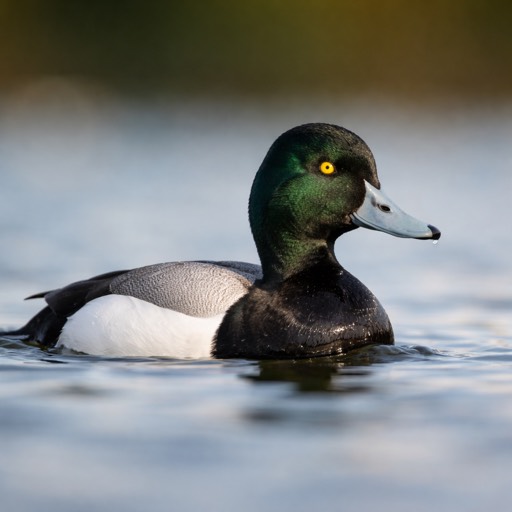
AI-generated bird image accuracy review — field marks verified against reference photos for North American bird species.
Image accuracy review page. Cross-reference each generated image against the field marks checklist and All About Birds photos.
Contents
Tier 1
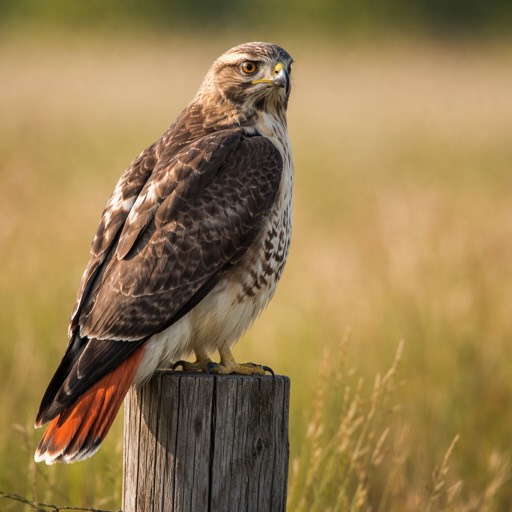
Red-tailed Hawk - Light Perch
|
Field Marks to Verify:
- Rufous-red tail (adults) — the namesake feature
- Dark patagial bar on leading edge of underwing
- Dark belly band across white underparts (light morph)
- Broad, rounded wings with translucent flight feathers
- Highly variable: light, dark, and rufous morphs in the West
View on All About Birds →
Report Issue →
|
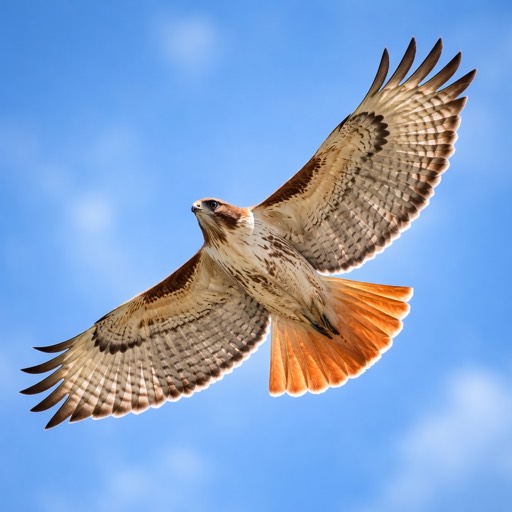
Red-tailed Hawk - Light Flight
|
Field Marks to Verify:
- Rufous-red tail (adults) — the namesake feature
- Dark patagial bar on leading edge of underwing
- Dark belly band across white underparts (light morph)
- Broad, rounded wings with translucent flight feathers
- Highly variable: light, dark, and rufous morphs in the West
View on All About Birds →
Report Issue →
|
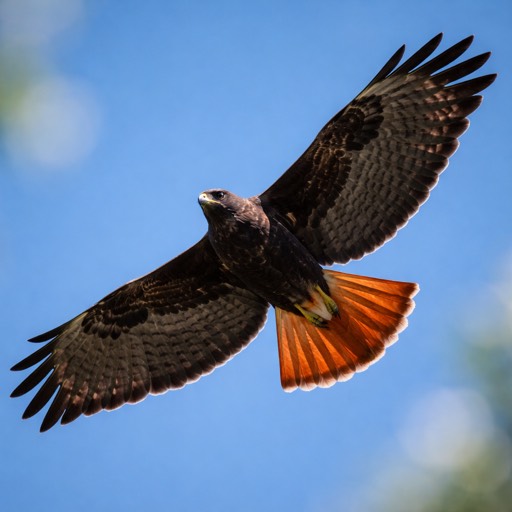
Red-tailed Hawk - Dark Flight
|
Field Marks to Verify:
- Rufous-red tail (adults) — the namesake feature
- Dark patagial bar on leading edge of underwing
- Dark belly band across white underparts (light morph)
- Broad, rounded wings with translucent flight feathers
- Highly variable: light, dark, and rufous morphs in the West
View on All About Birds →
Report Issue →
|
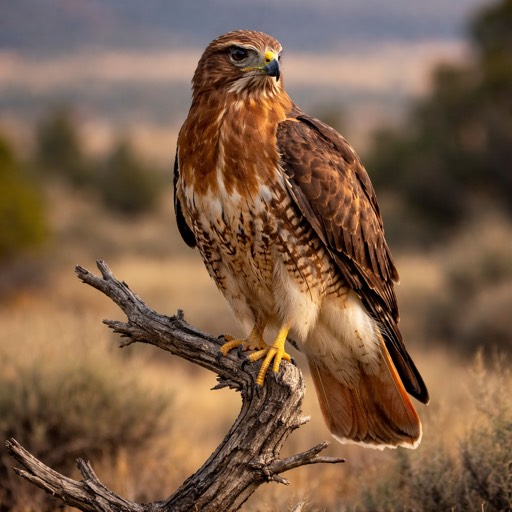
Red-tailed Hawk - Rufous Perch
|
Field Marks to Verify:
- Rufous-red tail (adults) — the namesake feature
- Dark patagial bar on leading edge of underwing
- Dark belly band across white underparts (light morph)
- Broad, rounded wings with translucent flight feathers
- Highly variable: light, dark, and rufous morphs in the West
View on All About Birds →
Report Issue →
|
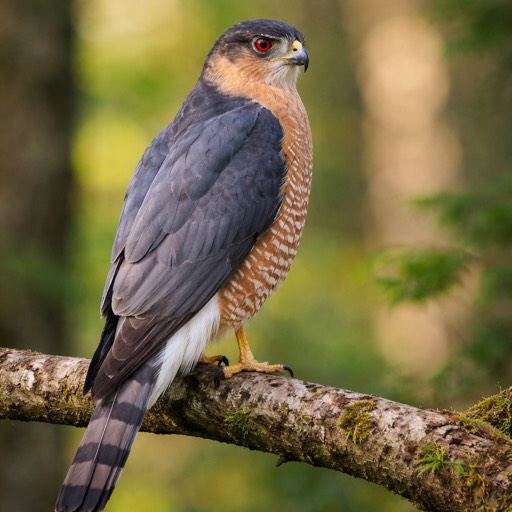
Cooper's Hawk - M Perch
|
Field Marks to Verify:
- Crow-sized accipiter with large, blocky head
- Rounded tail tip with thick white terminal band
- Blue-gray back (adults) or brown-streaked (immatures)
- Dark cap contrasts with pale nape
- Stiff, deliberate wingbeats in flight
View on All About Birds →
Report Issue →
|
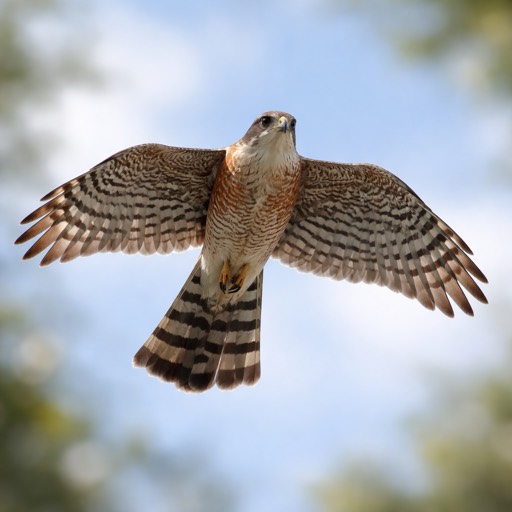
Cooper's Hawk - M Flight
|
Field Marks to Verify:
- Crow-sized accipiter with large, blocky head
- Rounded tail tip with thick white terminal band
- Blue-gray back (adults) or brown-streaked (immatures)
- Dark cap contrasts with pale nape
- Stiff, deliberate wingbeats in flight
View on All About Birds →
Report Issue →
|
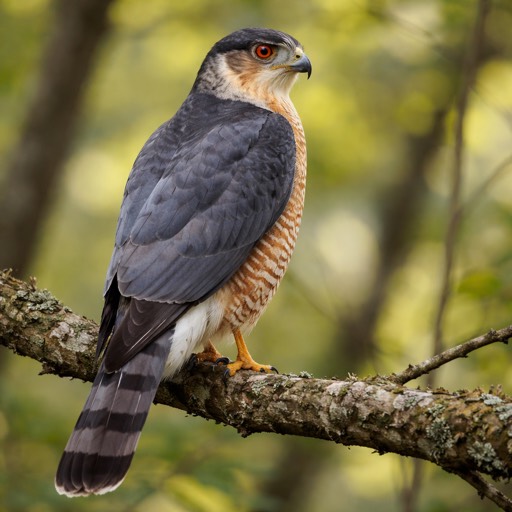
Cooper's Hawk - F Perch
|
Field Marks to Verify:
- Crow-sized accipiter with large, blocky head
- Rounded tail tip with thick white terminal band
- Blue-gray back (adults) or brown-streaked (immatures)
- Dark cap contrasts with pale nape
- Stiff, deliberate wingbeats in flight
View on All About Birds →
Report Issue →
|
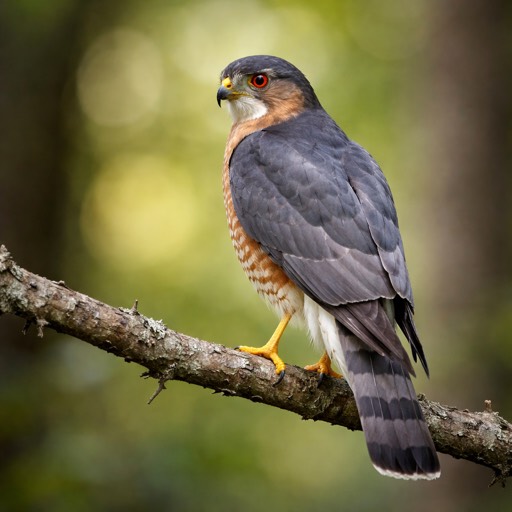
Sharp-shinned Hawk - M Perch
|
Field Marks to Verify:
- Jay-sized — smallest North American accipiter
- Square-tipped tail with thin white terminal band
- Small, rounded head barely projects past wings in flight
- Snappy, quick wingbeats
- Thin legs (the 'sharp shins')
View on All About Birds →
Report Issue →
|
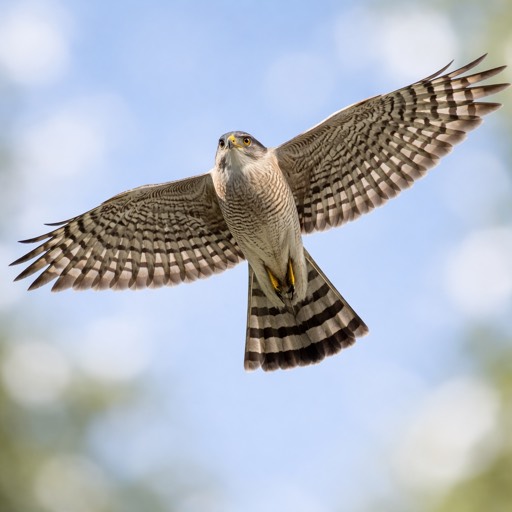
Sharp-shinned Hawk - M Flight
|
Field Marks to Verify:
- Jay-sized — smallest North American accipiter
- Square-tipped tail with thin white terminal band
- Small, rounded head barely projects past wings in flight
- Snappy, quick wingbeats
- Thin legs (the 'sharp shins')
View on All About Birds →
Report Issue →
|
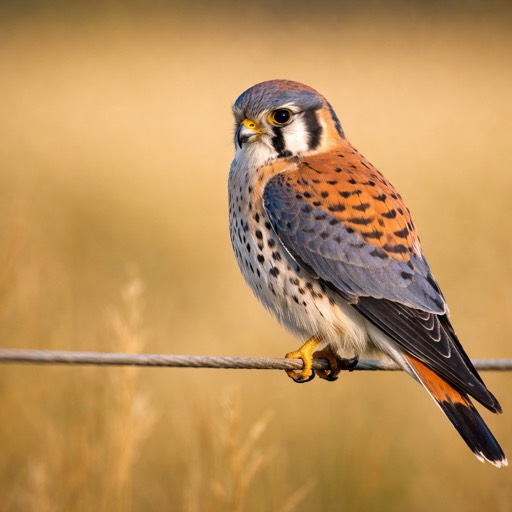
American Kestrel - M Perch
|
Field Marks to Verify:
- Two vertical black facial stripes on white face
- Rufous back and tail in both sexes
- Males: blue-gray wings contrasting with rufous back
- Smallest North American falcon — robin-sized
- Hovers in place while hunting — unique among falcons
View on All About Birds →
Report Issue →
|
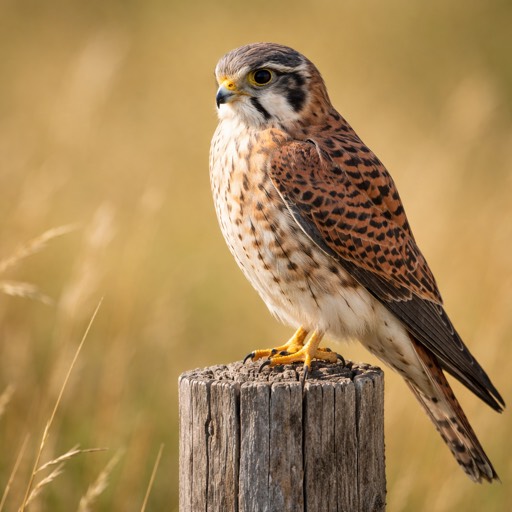
American Kestrel - F Perch
|
Field Marks to Verify:
- Two vertical black facial stripes on white face
- Rufous back and tail in both sexes
- Males: blue-gray wings contrasting with rufous back
- Smallest North American falcon — robin-sized
- Hovers in place while hunting — unique among falcons
View on All About Birds →
Report Issue →
|
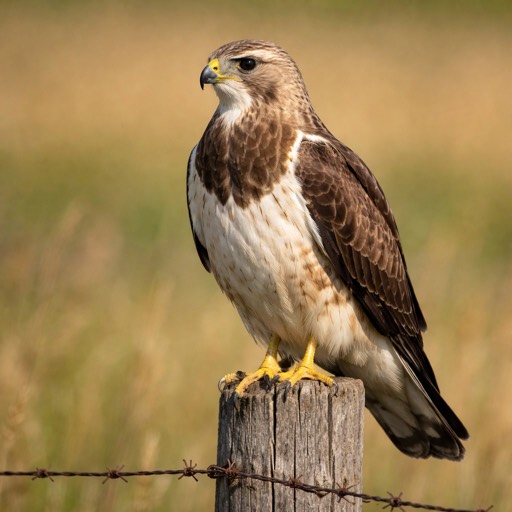
Swainson's Hawk - Light Perch
|
Field Marks to Verify:
- Dark bib/chest contrasts with white throat and belly (light morph)
- Long, pointed wings — more slender than Red-tailed
- Dark flight feathers contrast with pale wing linings from below
- Gray-brown tail with fine barring (no rufous)
- Often seen soaring in groups during migration
View on All About Birds →
Report Issue →
|
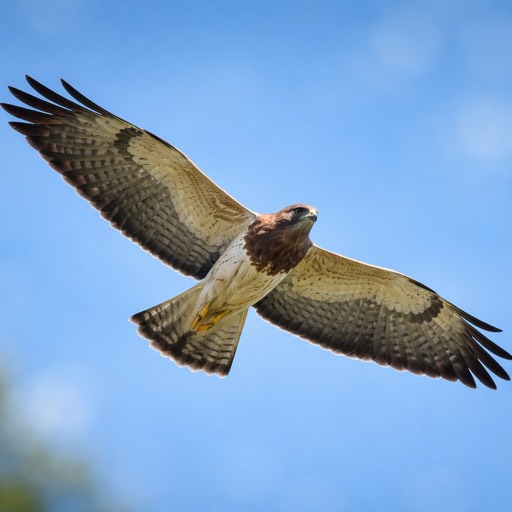
Swainson's Hawk - Light Flight
|
Field Marks to Verify:
- Dark bib/chest contrasts with white throat and belly (light morph)
- Long, pointed wings — more slender than Red-tailed
- Dark flight feathers contrast with pale wing linings from below
- Gray-brown tail with fine barring (no rufous)
- Often seen soaring in groups during migration
View on All About Birds →
Report Issue →
|
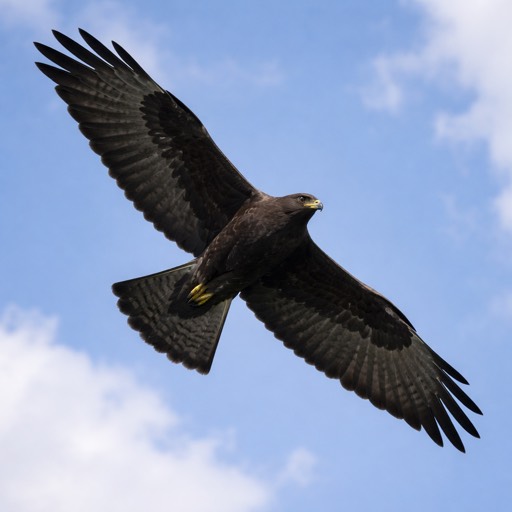
Swainson's Hawk - Dark Flight
|
Field Marks to Verify:
- Dark bib/chest contrasts with white throat and belly (light morph)
- Long, pointed wings — more slender than Red-tailed
- Dark flight feathers contrast with pale wing linings from below
- Gray-brown tail with fine barring (no rufous)
- Often seen soaring in groups during migration
View on All About Birds →
Report Issue →
|
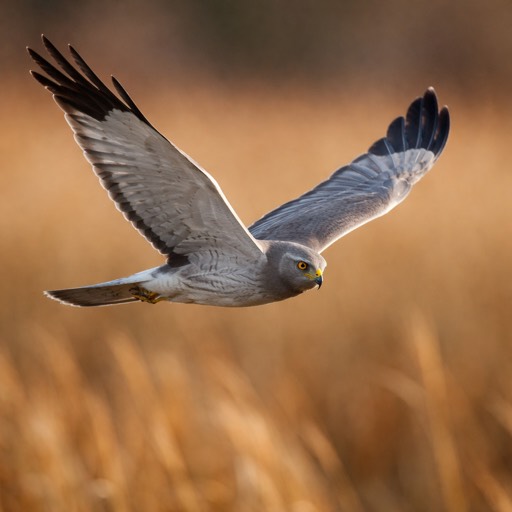
Northern Harrier - M Flight
|
Field Marks to Verify:
- White rump patch — visible at any distance
- Low, rocking flight over open fields with wings in V-shape
- Owl-like facial disk
- Long tail and long, narrow wings
- Males gray, females brown — strong sexual dimorphism
View on All About Birds →
Report Issue →
|
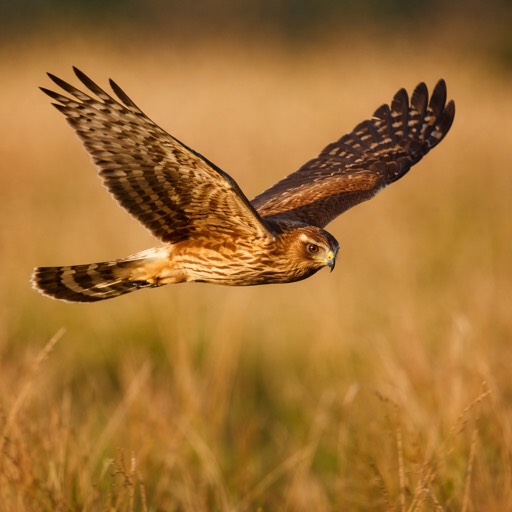
Northern Harrier - F Flight
|
Field Marks to Verify:
- White rump patch — visible at any distance
- Low, rocking flight over open fields with wings in V-shape
- Owl-like facial disk
- Long tail and long, narrow wings
- Males gray, females brown — strong sexual dimorphism
View on All About Birds →
Report Issue →
|
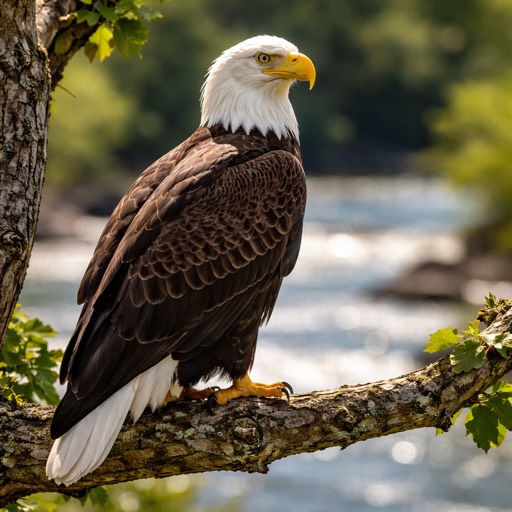
Bald Eagle - Adult Perch
|
Field Marks to Verify:
- White head and tail (adults) — unmistakable
- Massive yellow bill
- Dark brown body, enormous wingspan (6-7 feet)
- Immatures: blotchy brown and white, dark bill
- Flat-winged soaring profile (vs Golden's slight dihedral)
View on All About Birds →
Report Issue →
|
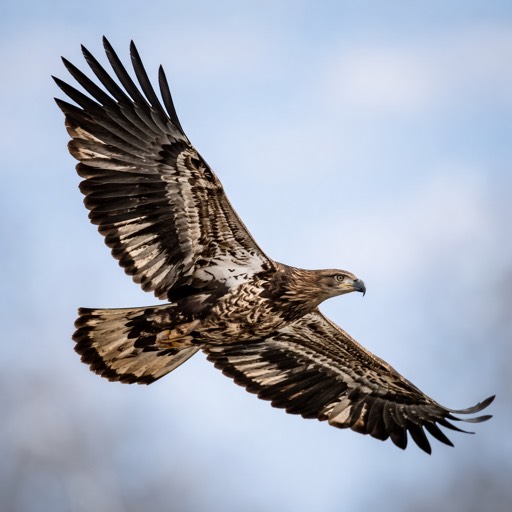
Bald Eagle - Immature Flight
|
Field Marks to Verify:
- White head and tail (adults) — unmistakable
- Massive yellow bill
- Dark brown body, enormous wingspan (6-7 feet)
- Immatures: blotchy brown and white, dark bill
- Flat-winged soaring profile (vs Golden's slight dihedral)
View on All About Birds →
Report Issue →
|
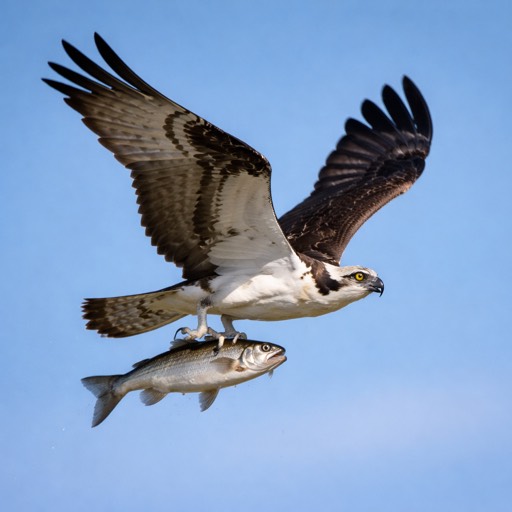
Osprey - M Flight
|
Field Marks to Verify:
- Dark eye stripe through white face — 'bandit mask'
- White underparts with dark wrist patches from below
- Wings held in distinctive crook/M-shape in flight
- Hovers before plunging feet-first into water
- Brown above, white below — reversed pattern from most raptors
View on All About Birds →
Report Issue →
|
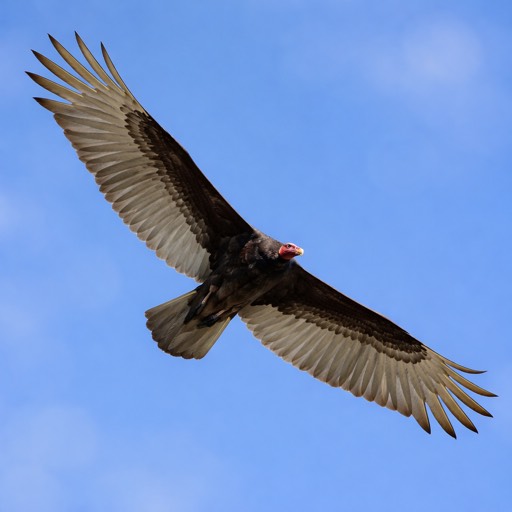
Turkey Vulture - Flight
|
Field Marks to Verify:
- Two-toned underwings: black linings, silvery flight feathers
- Holds wings in strong dihedral (V-shape) while soaring
- Rocks/teeters unsteadily in flight
- Small, red, featherless head (adults)
- Rarely flaps — soars on thermals for hours
View on All About Birds →
Report Issue →
|
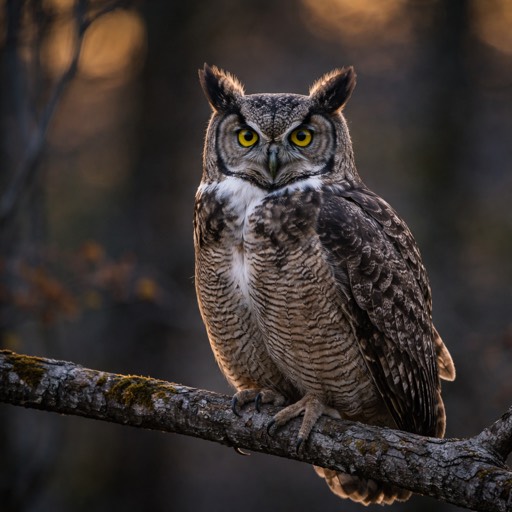
Great Horned Owl - M Perch
|
Field Marks to Verify:
- Large ear tufts ('horns') widely spaced
- Yellow eyes with dark surrounding feathers
- White throat patch ('bib')
- Barrel-shaped body — heaviest owl in the Americas
- Heavily barred underparts
View on All About Birds →
Report Issue →
|
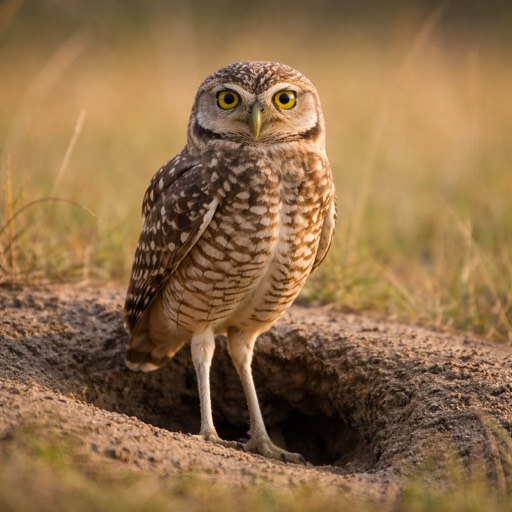
Burrowing Owl - M Perch
|
Field Marks to Verify:
- Long legs — stands upright on the ground
- Lives in prairie dog burrows — often seen at burrow entrance
- Round head with no ear tufts
- Yellow eyes, white eyebrows, white chin stripe
- Bobs and bows when alarmed
View on All About Birds →
Report Issue →
|
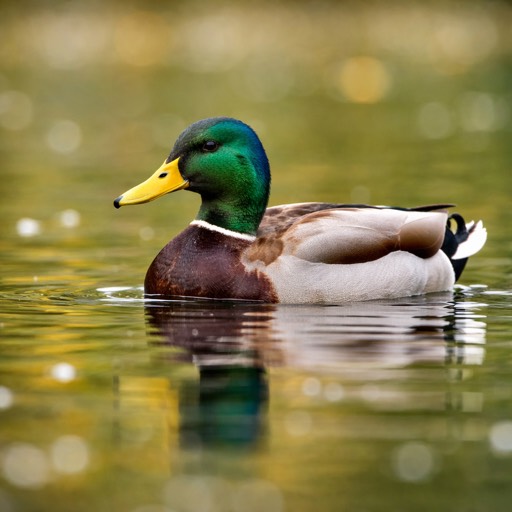
Mallard - M
|
Field Marks to Verify:
- Male: iridescent green head, white neck ring, yellow bill
- Male: chestnut breast, curled black tail feathers
- Female: mottled brown with orange-and-black bill
- Blue speculum (wing patch) bordered by white bars — both sexes
- Most common and recognizable duck in North America
View on All About Birds →
Report Issue →
|
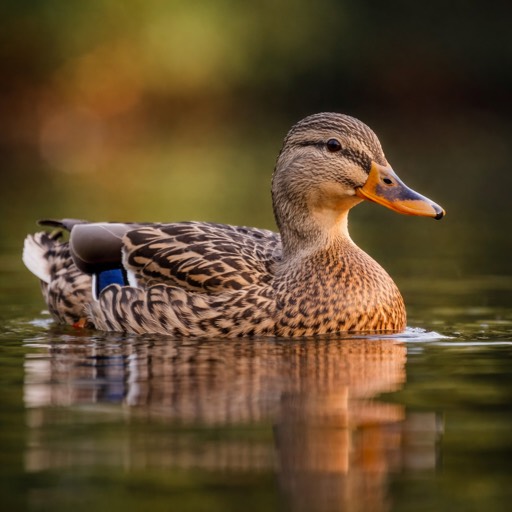
Mallard - F
|
Field Marks to Verify:
- Male: iridescent green head, white neck ring, yellow bill
- Male: chestnut breast, curled black tail feathers
- Female: mottled brown with orange-and-black bill
- Blue speculum (wing patch) bordered by white bars — both sexes
- Most common and recognizable duck in North America
View on All About Birds →
Report Issue →
|
Canada Goose - M
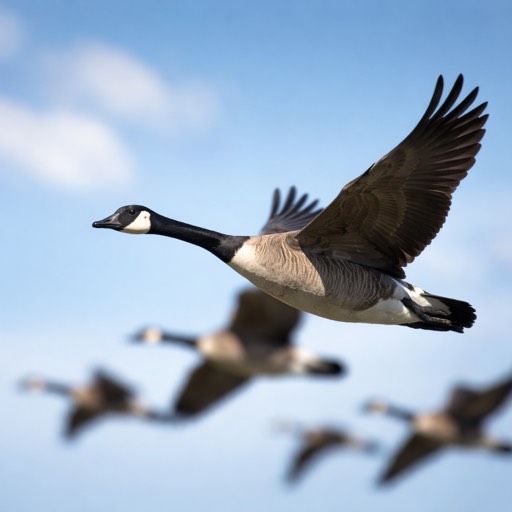
|
Field Marks to Verify:
- Black head and neck with white chinstrap
- Brown body, pale breast, black tail with white undertail coverts
- Long black neck — distinctive in flight
- Flies in V-formation, honking loudly
- Highly variable in size across subspecies
View on All About Birds →
Report Issue →
|
American Wigeon - M
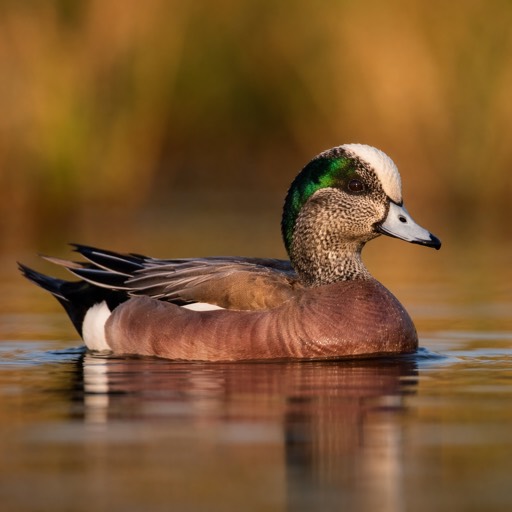
|
Field Marks to Verify:
- Male: white forehead/crown stripe ('baldpate'), green eye patch
- Male: pinkish-brown body, white hip patch visible at distance
- Female: warm brown head contrasting with grayish body
- Short, pale blue-gray bill with black tip — both sexes
- Often grazes on land; steals food from diving ducks
View on All About Birds →
Report Issue →
|
American Wigeon - F
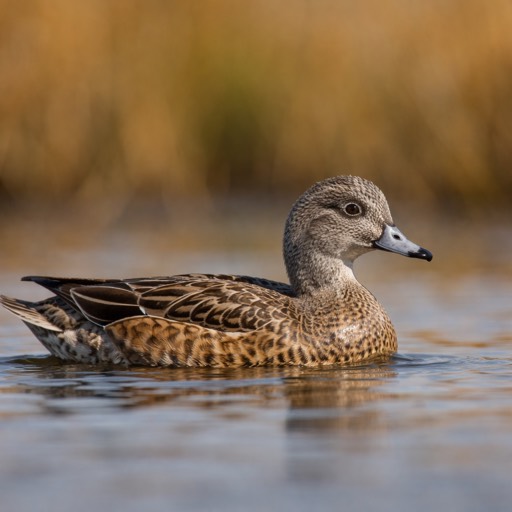
|
Field Marks to Verify:
- Male: white forehead/crown stripe ('baldpate'), green eye patch
- Male: pinkish-brown body, white hip patch visible at distance
- Female: warm brown head contrasting with grayish body
- Short, pale blue-gray bill with black tip — both sexes
- Often grazes on land; steals food from diving ducks
View on All About Birds →
Report Issue →
|
Northern Shoveler - M
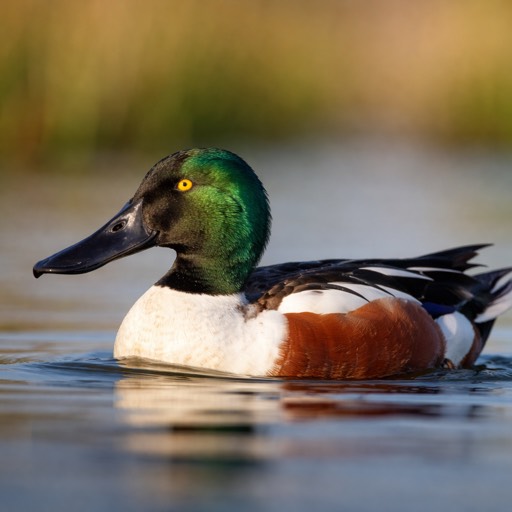
|
Field Marks to Verify:
- Enormous spatula-shaped bill — diagnostic
- Male: green head (like Mallard) but with white breast and chestnut sides
- Female: mottled brown with huge orange bill
- Often feeds in circles, sweeping bill side to side
- Pale blue shoulder patch visible in flight
View on All About Birds →
Report Issue →
|
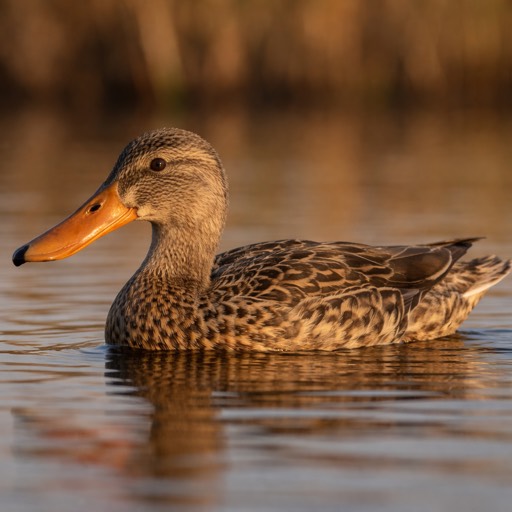
Northern Shoveler - F
|
Field Marks to Verify:
- Enormous spatula-shaped bill — diagnostic
- Male: green head (like Mallard) but with white breast and chestnut sides
- Female: mottled brown with huge orange bill
- Often feeds in circles, sweeping bill side to side
- Pale blue shoulder patch visible in flight
View on All About Birds →
Report Issue →
|
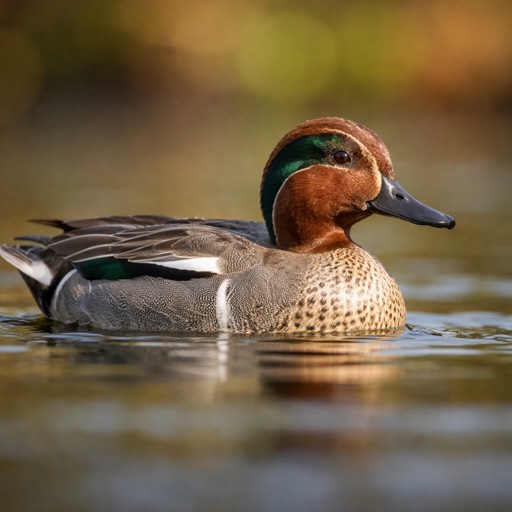
Green-winged Teal - M
|
Field Marks to Verify:
- Smallest dabbling duck in North America
- Male: chestnut head with green ear patch (hard to see at distance)
- Male: vertical white bar on side of breast — visible at distance
- Green speculum (wing patch) — both sexes
- Fast, erratic flight in tight flocks
View on All About Birds →
Report Issue →
|
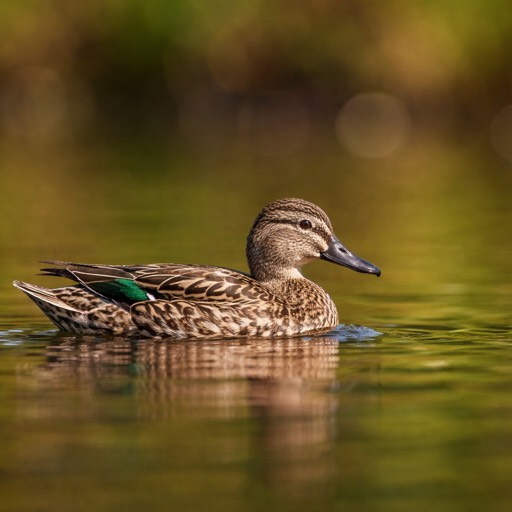
Green-winged Teal - F
|
Field Marks to Verify:
- Smallest dabbling duck in North America
- Male: chestnut head with green ear patch (hard to see at distance)
- Male: vertical white bar on side of breast — visible at distance
- Green speculum (wing patch) — both sexes
- Fast, erratic flight in tight flocks
View on All About Birds →
Report Issue →
|
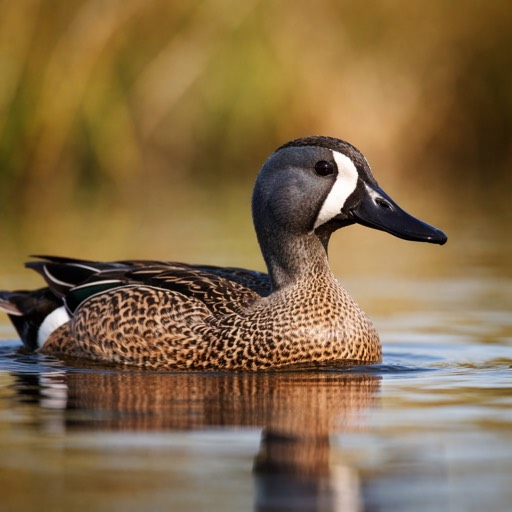
Blue-winged Teal - M
|
Field Marks to Verify:
- Male: bold white crescent on face in front of eye
- Male: dark head with white crescent, spotted brown body
- Pale blue shoulder patch visible in flight — both sexes
- Small, early-migrating dabbler — first to leave in fall
- Female: plain brown with dark eye-line, small bill
View on All About Birds →
Report Issue →
|
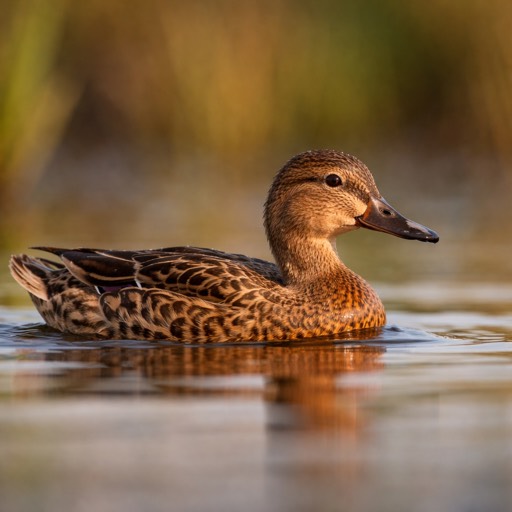
Blue-winged Teal - F
|
Field Marks to Verify:
- Male: bold white crescent on face in front of eye
- Male: dark head with white crescent, spotted brown body
- Pale blue shoulder patch visible in flight — both sexes
- Small, early-migrating dabbler — first to leave in fall
- Female: plain brown with dark eye-line, small bill
View on All About Birds →
Report Issue →
|
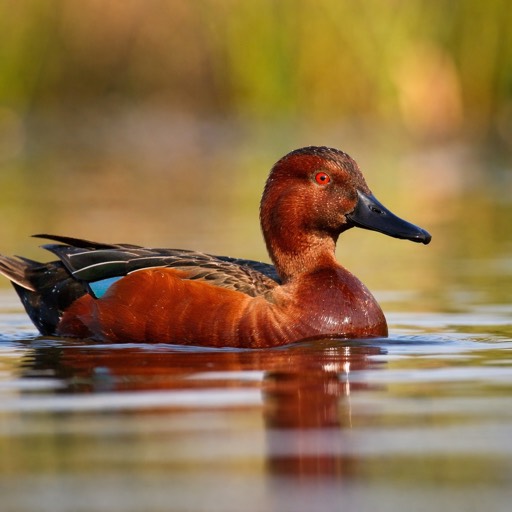
Cinnamon Teal - M
|
Field Marks to Verify:
- Male: entirely rich cinnamon-red body — unmistakable
- Male: red eye stands out against cinnamon head
- Female: nearly identical to female Blue-winged Teal
- Pale blue shoulder patch in flight — both sexes
- Primarily a western species — rare east of the Rockies
View on All About Birds →
Report Issue →
|
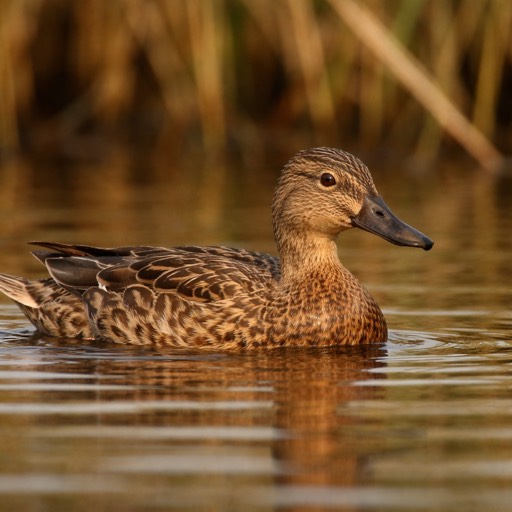
Cinnamon Teal - F
|
Field Marks to Verify:
- Male: entirely rich cinnamon-red body — unmistakable
- Male: red eye stands out against cinnamon head
- Female: nearly identical to female Blue-winged Teal
- Pale blue shoulder patch in flight — both sexes
- Primarily a western species — rare east of the Rockies
View on All About Birds →
Report Issue →
|
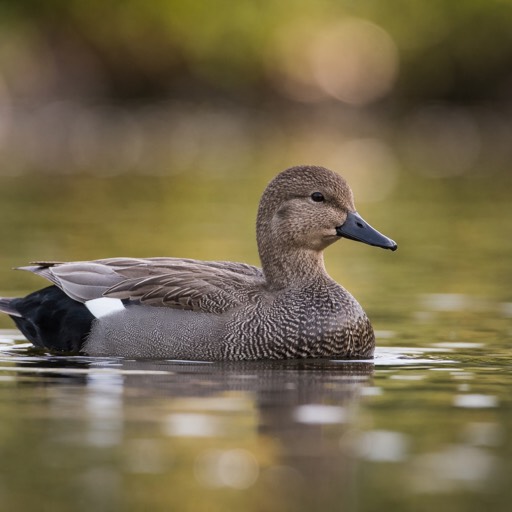
Gadwall - M
|
Field Marks to Verify:
- Male: subtle gray-brown with black rear end — 'the boring duck'
- White speculum — unique among dabbling ducks, visible in flight
- Male: intricate vermiculated gray patterns up close
- Female: similar to female Mallard but with orange bill sides and steeper forehead
- Often overlooked due to subdued plumage
View on All About Birds →
Report Issue →
|
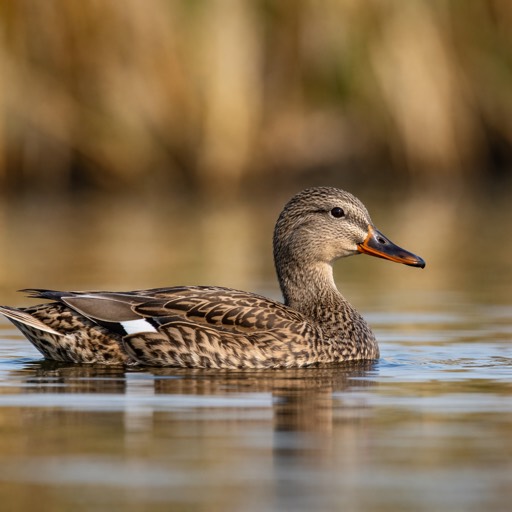
Gadwall - F
|
Field Marks to Verify:
- Male: subtle gray-brown with black rear end — 'the boring duck'
- White speculum — unique among dabbling ducks, visible in flight
- Male: intricate vermiculated gray patterns up close
- Female: similar to female Mallard but with orange bill sides and steeper forehead
- Often overlooked due to subdued plumage
View on All About Birds →
Report Issue →
|
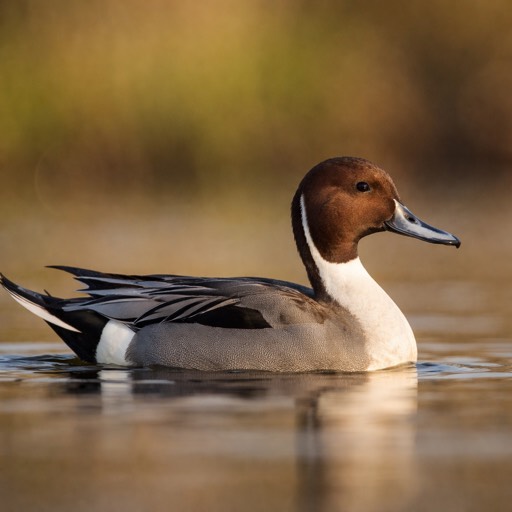
Northern Pintail - M
|
Field Marks to Verify:
- Male: long, pointed tail extending well beyond body
- Male: chocolate-brown head with white stripe up neck side
- Elegant, slender profile — most graceful duck
- Long neck for a dabbler — often tips up completely
- Female: plain brown but with same long-necked, elegant shape
View on All About Birds →
Report Issue →
|
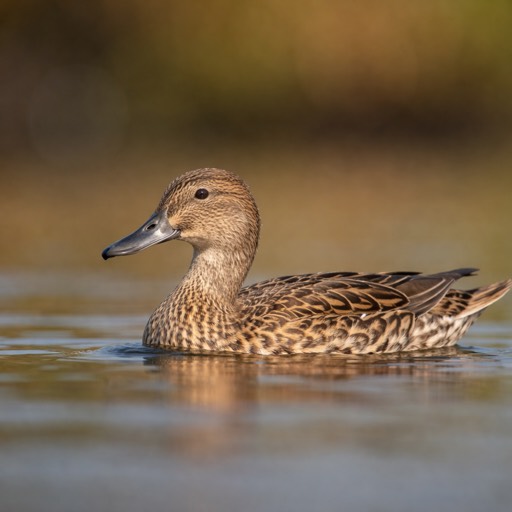
Northern Pintail - F
|
Field Marks to Verify:
- Male: long, pointed tail extending well beyond body
- Male: chocolate-brown head with white stripe up neck side
- Elegant, slender profile — most graceful duck
- Long neck for a dabbler — often tips up completely
- Female: plain brown but with same long-necked, elegant shape
View on All About Birds →
Report Issue →
|
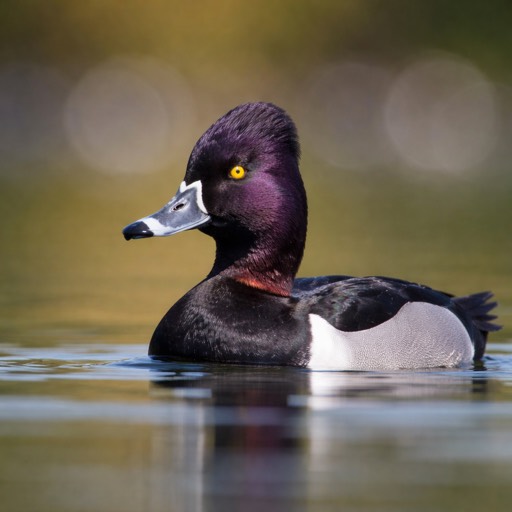
Ring-necked Duck - M
|
Field Marks to Verify:
- Bold white ring around bill — 'Ring-billed Duck' would be more accurate
- Male: black back and breast, gray sides with white vertical bar
- Peaked/angular head shape — distinguishes from scaup
- Male: dark purplish head (ring on neck nearly invisible)
- Female: white eye-ring, pale face patch at bill base
View on All About Birds →
Report Issue →
|
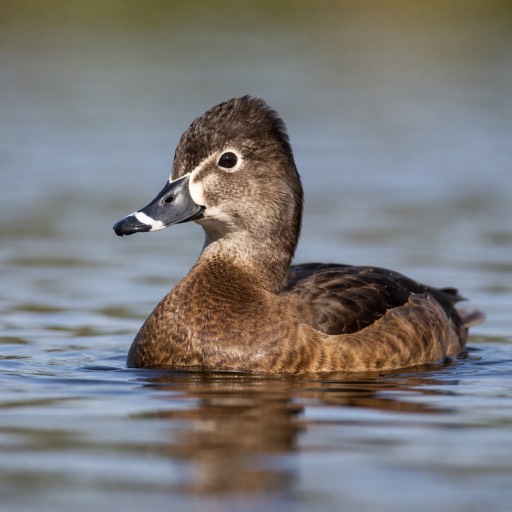
Ring-necked Duck - F
|
Field Marks to Verify:
- Bold white ring around bill — 'Ring-billed Duck' would be more accurate
- Male: black back and breast, gray sides with white vertical bar
- Peaked/angular head shape — distinguishes from scaup
- Male: dark purplish head (ring on neck nearly invisible)
- Female: white eye-ring, pale face patch at bill base
View on All About Birds →
Report Issue →
|
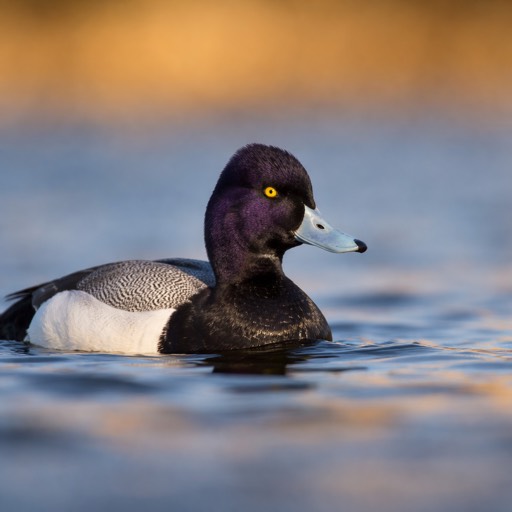
Lesser Scaup - M
|
Field Marks to Verify:
- Male: black head with purple sheen, gray back, white sides
- Peaked/pointed head shape (vs Greater Scaup's rounded head)
- White wing stripe only on secondaries in flight
- Female: dark brown with sharp white patch at bill base
- Most common diving duck on inland waters
View on All About Birds →
Report Issue →
|
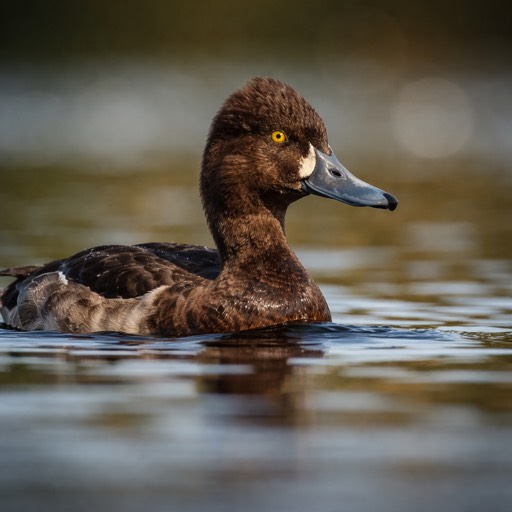
Lesser Scaup - F
|
Field Marks to Verify:
- Male: black head with purple sheen, gray back, white sides
- Peaked/pointed head shape (vs Greater Scaup's rounded head)
- White wing stripe only on secondaries in flight
- Female: dark brown with sharp white patch at bill base
- Most common diving duck on inland waters
View on All About Birds →
Report Issue →
|
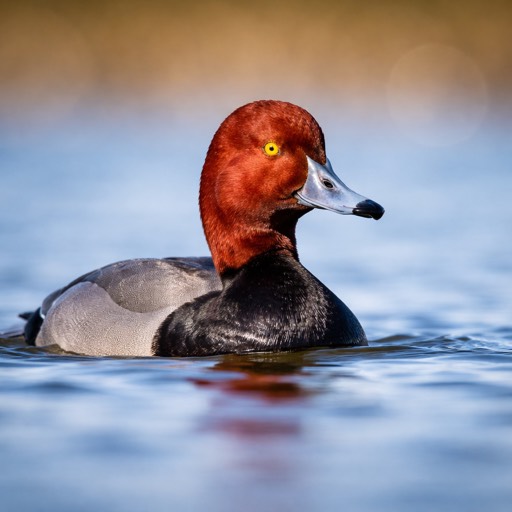
Redhead - M
|
Field Marks to Verify:
- Male: round, rich rufous-red head — bright and smooth
- Male: gray body, black breast and tail
- Blue-gray bill with black tip and white ring
- Rounded head profile — distinguishes from Canvasback
- Female: warm brown overall with pale area at bill base
View on All About Birds →
Report Issue →
|
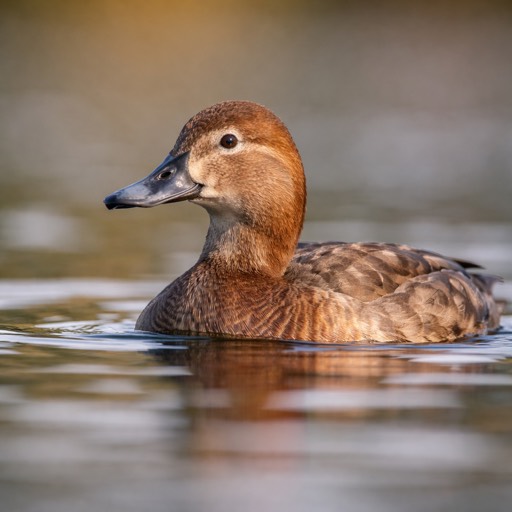
Redhead - F
|
Field Marks to Verify:
- Male: round, rich rufous-red head — bright and smooth
- Male: gray body, black breast and tail
- Blue-gray bill with black tip and white ring
- Rounded head profile — distinguishes from Canvasback
- Female: warm brown overall with pale area at bill base
View on All About Birds →
Report Issue →
|
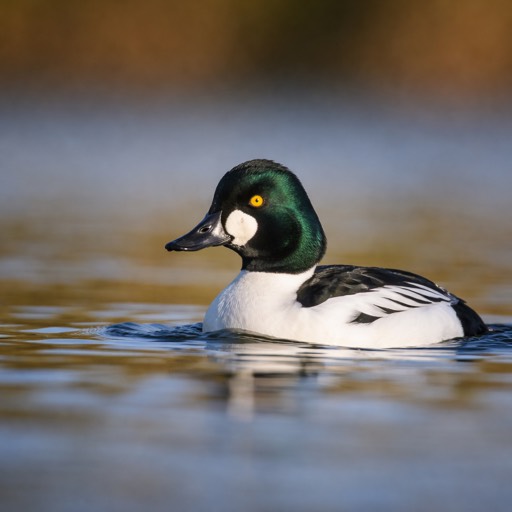
Common Goldeneye - M
|
Field Marks to Verify:
- Male: round white face spot on dark green head
- Male: bright white sides, black back, mostly white scapulars
- Bright golden-yellow eye — both sexes
- Female: chocolate-brown head, gray body, yellow bill tip
- Whistling wing sound in flight — 'whistler'
View on All About Birds →
Report Issue →
|
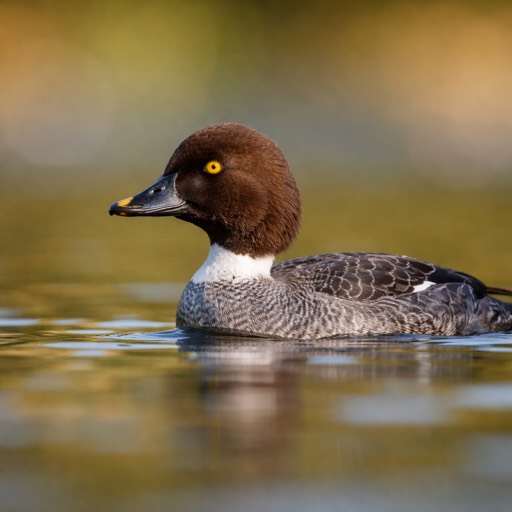
Common Goldeneye - F
|
Field Marks to Verify:
- Male: round white face spot on dark green head
- Male: bright white sides, black back, mostly white scapulars
- Bright golden-yellow eye — both sexes
- Female: chocolate-brown head, gray body, yellow bill tip
- Whistling wing sound in flight — 'whistler'
View on All About Birds →
Report Issue →
|
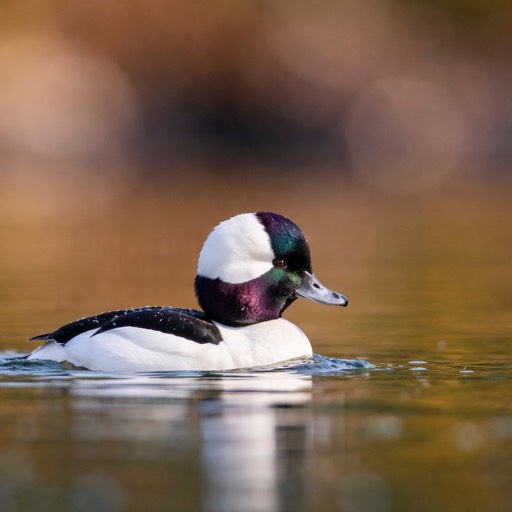
Bufflehead - M
|
Field Marks to Verify:
- Male: large white bonnet wrapping from behind eye over back of head
- Male: mostly white body, dark back
- Tiny — smallest regularly occurring diving duck
- Female: dark with single white cheek patch (oval, not wrap-around)
- Pops up and dives rapidly; fast wingbeats in flight
View on All About Birds →
Report Issue →
|
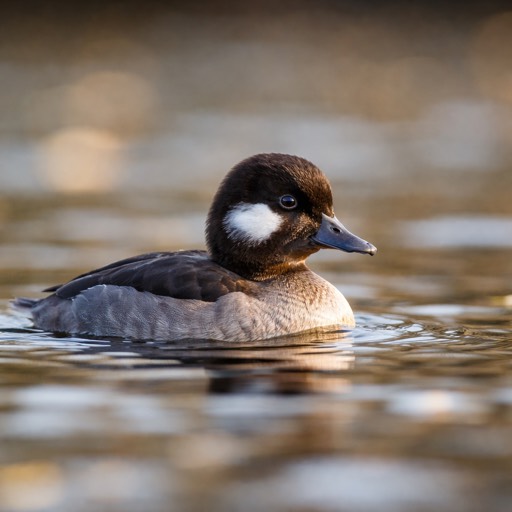
Bufflehead - F
|
Field Marks to Verify:
- Male: large white bonnet wrapping from behind eye over back of head
- Male: mostly white body, dark back
- Tiny — smallest regularly occurring diving duck
- Female: dark with single white cheek patch (oval, not wrap-around)
- Pops up and dives rapidly; fast wingbeats in flight
View on All About Birds →
Report Issue →
|
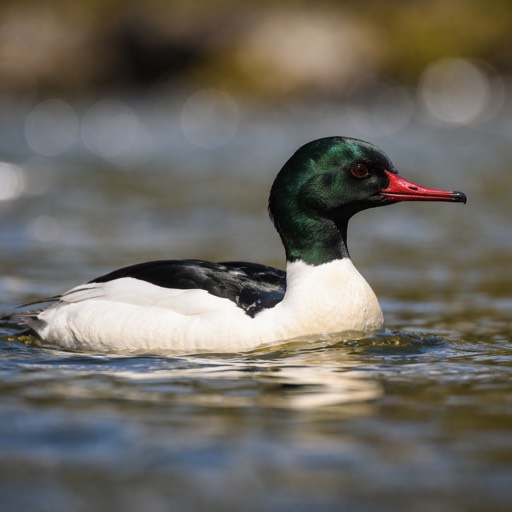
Common Merganser - M
|
Field Marks to Verify:
- Male: dark green head (looks black at distance), white body, red-orange bill
- Female: rufous-brown crested head sharply contrasting with white throat
- Long, thin, serrated red bill — both sexes
- Largest merganser — heavy-bodied and long
- Rides low in water; often seen in rivers
View on All About Birds →
Report Issue →
|
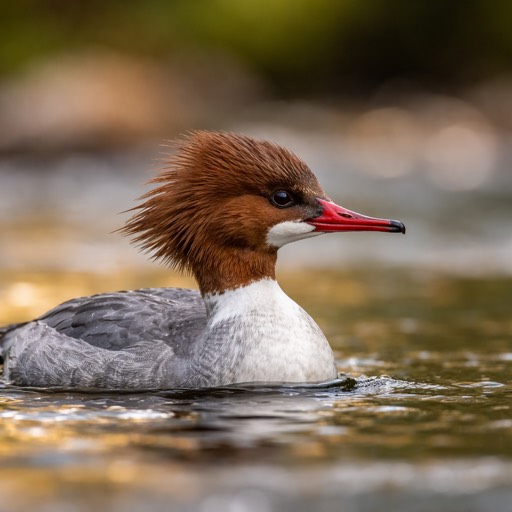
Common Merganser - F
|
Field Marks to Verify:
- Male: dark green head (looks black at distance), white body, red-orange bill
- Female: rufous-brown crested head sharply contrasting with white throat
- Long, thin, serrated red bill — both sexes
- Largest merganser — heavy-bodied and long
- Rides low in water; often seen in rivers
View on All About Birds →
Report Issue →
|
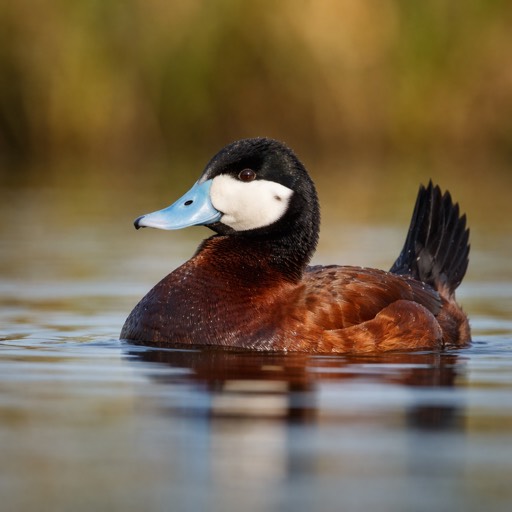
Ruddy Duck - M Breeding
|
Field Marks to Verify:
- Breeding male: bright sky-blue bill, rich chestnut body
- Stiff, often-cocked tail held upright
- Compact, chunky body riding low in water
- Male: bold white cheek patch on dark head
- Non-breeding male: dull gray-brown with same white cheek
View on All About Birds →
Report Issue →
|
Ruddy Duck - M Nonbreeding
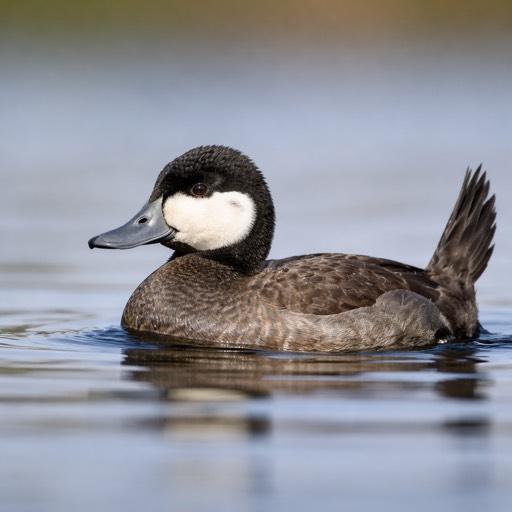
|
Field Marks to Verify:
- Breeding male: bright sky-blue bill, rich chestnut body
- Stiff, often-cocked tail held upright
- Compact, chunky body riding low in water
- Male: bold white cheek patch on dark head
- Non-breeding male: dull gray-brown with same white cheek
View on All About Birds →
Report Issue →
|
American Coot - M
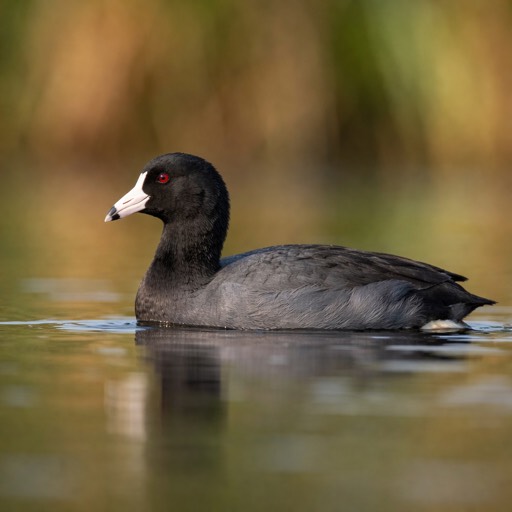
|
Field Marks to Verify:
- Chicken-like white bill on dark slaty body — 'mud hen'
- Not a duck — lobed toes, not webbed feet
- Pumps head while swimming
- Dark body with white undertail and bill
- Red eye and small red frontal shield
View on All About Birds →
Report Issue →
|
Killdeer - M
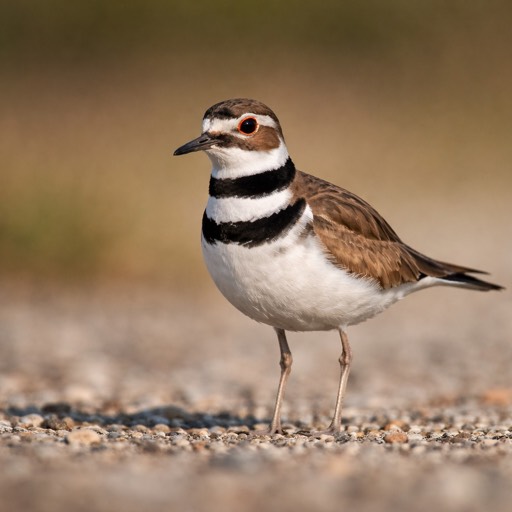
|
Field Marks to Verify:
- Two black breast bands on white chest — diagnostic
- Orange-rufous rump visible in flight
- Brown above, white below with long tail
- Loud, piercing calls — often heard before seen
- Famous 'broken-wing' distraction display near nest
View on All About Birds →
Report Issue →
|
American Avocet - Breeding
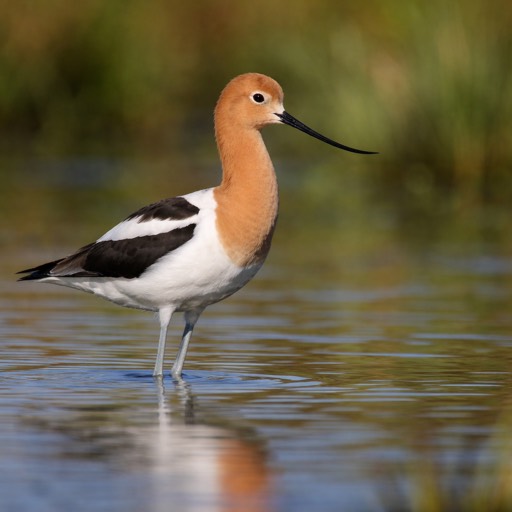
|
Field Marks to Verify:
- Long, thin, upturned bill — sweeps side to side
- Breeding: rusty-orange head and neck
- Black and white bold wing pattern in flight
- Long, blue-gray legs — tallest shorebird in its range
- Non-breeding: pale gray head and neck
View on All About Birds →
Report Issue →
|
American Avocet - Nonbreeding
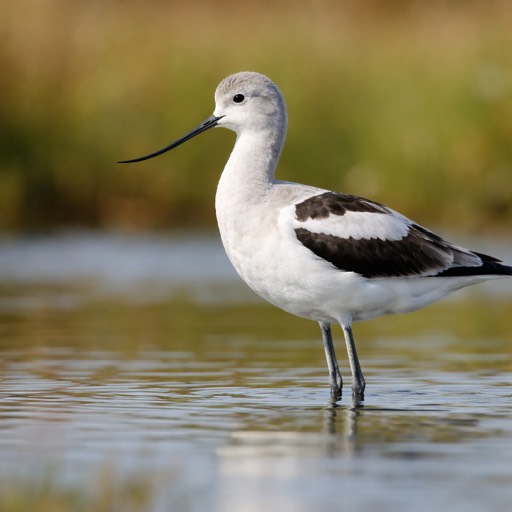
|
Field Marks to Verify:
- Long, thin, upturned bill — sweeps side to side
- Breeding: rusty-orange head and neck
- Black and white bold wing pattern in flight
- Long, blue-gray legs — tallest shorebird in its range
- Non-breeding: pale gray head and neck
View on All About Birds →
Report Issue →
|
Spotted Sandpiper - Breeding
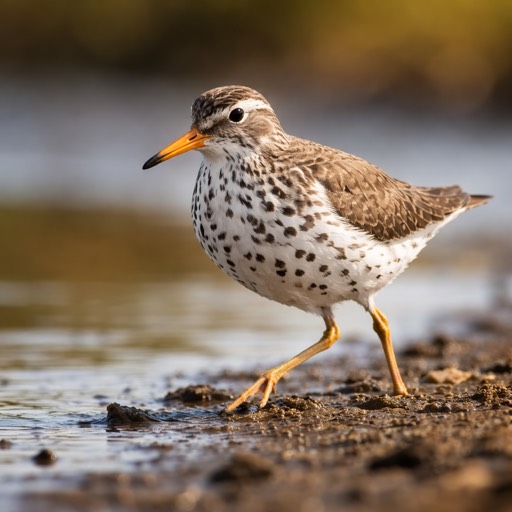
|
Field Marks to Verify:
- Breeding: bold dark spots across white breast and belly
- Constant tail-bobbing and teetering motion — diagnostic
- Stiff, bowed wingbeats low over water — 'butterfly flight'
- Non-breeding: plain brown above, white below, white shoulder notch
- Usually alone along stream/lake edges — not in flocks
View on All About Birds →
Report Issue →
|
Spotted Sandpiper - Nonbreeding
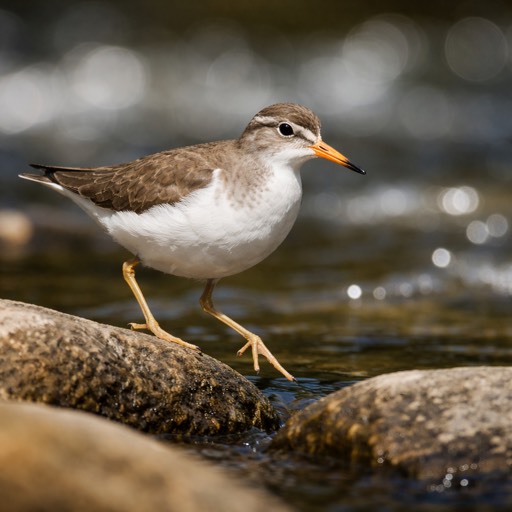
|
Field Marks to Verify:
- Breeding: bold dark spots across white breast and belly
- Constant tail-bobbing and teetering motion — diagnostic
- Stiff, bowed wingbeats low over water — 'butterfly flight'
- Non-breeding: plain brown above, white below, white shoulder notch
- Usually alone along stream/lake edges — not in flocks
View on All About Birds →
Report Issue →
|
White-faced Ibis - Breeding
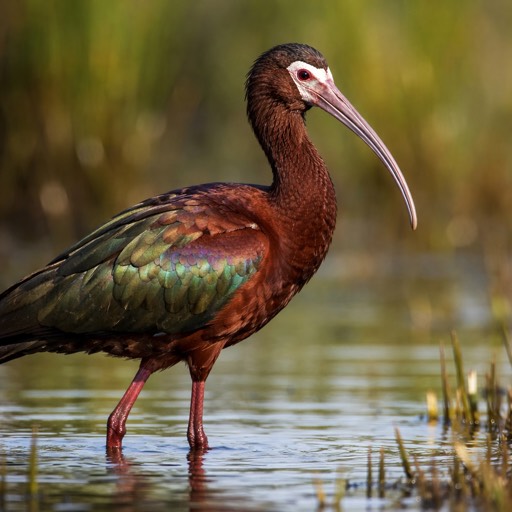
|
Field Marks to Verify:
- Long, downcurved bill — probes in mud
- Breeding: glossy bronze-green body, red eye, white face border
- Dark overall at distance — silhouette shows curved bill
- Non-breeding: duller brownish, less distinct face pattern
- Often in V-formation or lines in flight
View on All About Birds →
Report Issue →
|
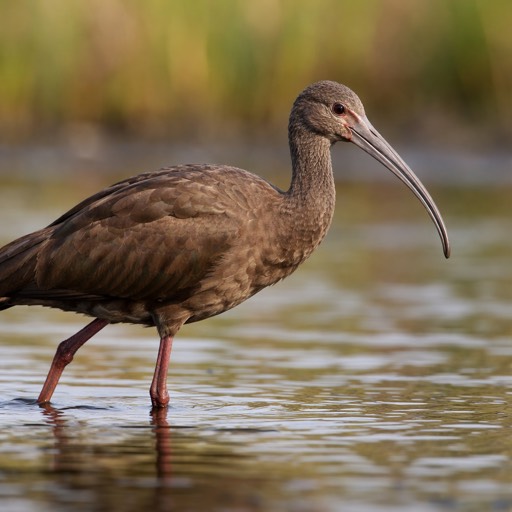
White-faced Ibis - Nonbreeding
|
Field Marks to Verify:
- Long, downcurved bill — probes in mud
- Breeding: glossy bronze-green body, red eye, white face border
- Dark overall at distance — silhouette shows curved bill
- Non-breeding: duller brownish, less distinct face pattern
- Often in V-formation or lines in flight
View on All About Birds →
Report Issue →
|
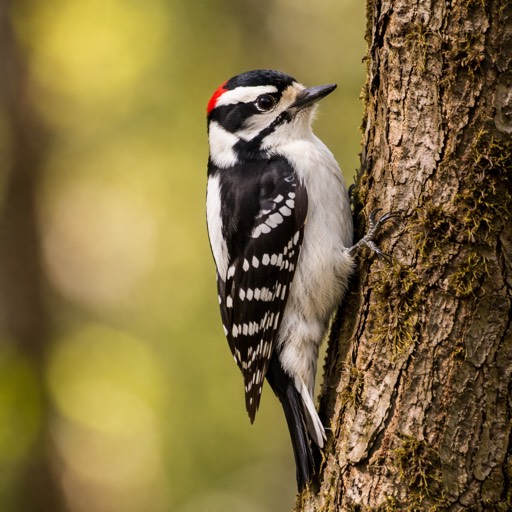
Downy Woodpecker - M
|
Field Marks to Verify:
- Small — sparrow-sized, smallest North American woodpecker
- Short, stubby bill — about 1/3 head depth
- Black and white with white back stripe
- Males: small red nape patch
- Outer tail feathers white with dark bars
View on All About Birds →
Report Issue →
|
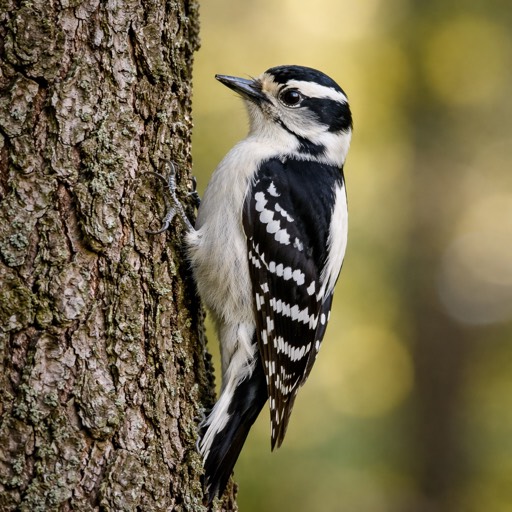
Downy Woodpecker - F
|
Field Marks to Verify:
- Small — sparrow-sized, smallest North American woodpecker
- Short, stubby bill — about 1/3 head depth
- Black and white with white back stripe
- Males: small red nape patch
- Outer tail feathers white with dark bars
View on All About Birds →
Report Issue →
|
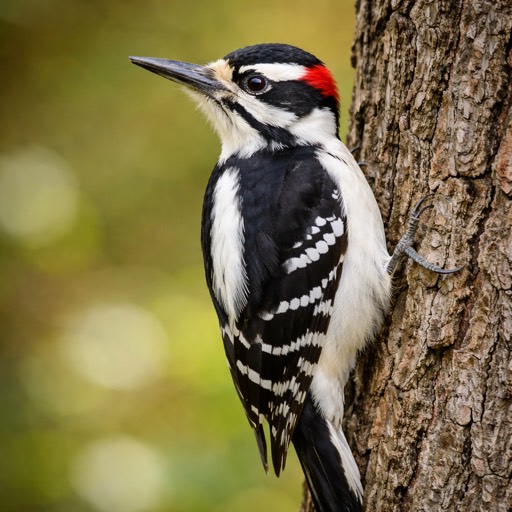
Hairy Woodpecker - M
|
Field Marks to Verify:
- Medium — robin-sized; larger than Downy
- Long, chisel-like bill — nearly as long as head depth
- Black and white with white back stripe — like big Downy
- Males: small red nape patch
- Clean white outer tail feathers (no bars — vs Downy's barred)
View on All About Birds →
Report Issue →
|
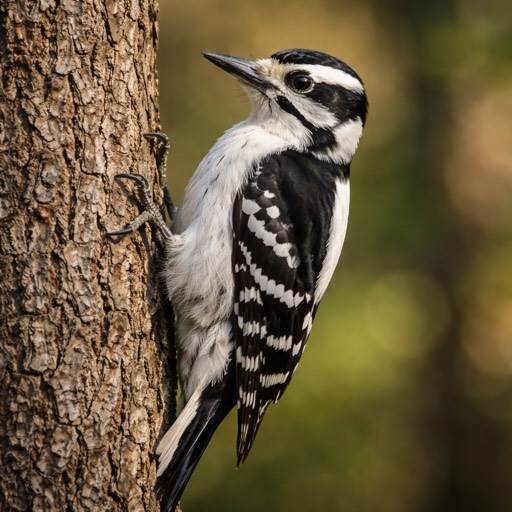
Hairy Woodpecker - F
|
Field Marks to Verify:
- Medium — robin-sized; larger than Downy
- Long, chisel-like bill — nearly as long as head depth
- Black and white with white back stripe — like big Downy
- Males: small red nape patch
- Clean white outer tail feathers (no bars — vs Downy's barred)
View on All About Birds →
Report Issue →
|
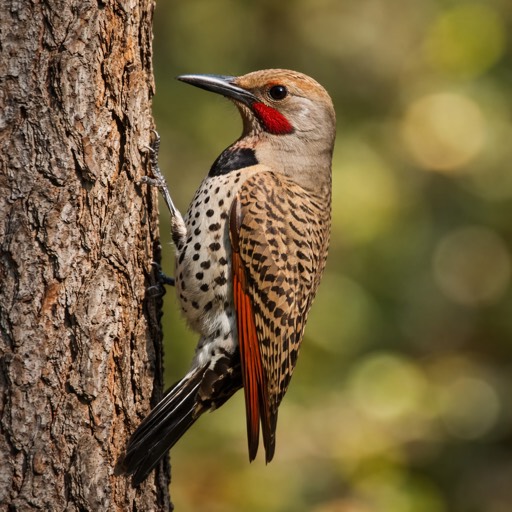
Northern Flicker - Red Shafted M
|
Field Marks to Verify:
- Brown with black barring above, spotted below
- Black bib on upper chest
- Bright white rump patch — obvious in undulating flight
- Red-shafted (West): red under wings/tail, gray face, red moustache (male)
- Often feeds on ground for ants — unusual for a woodpecker
View on All About Birds →
Report Issue →
|
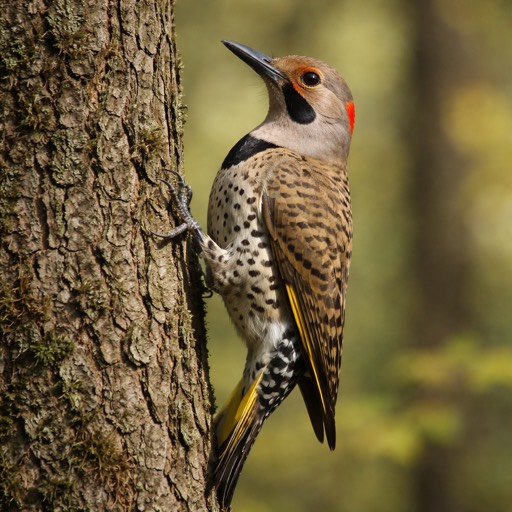
Northern Flicker - Yellow Shafted M
|
Field Marks to Verify:
- Brown with black barring above, spotted below
- Black bib on upper chest
- Bright white rump patch — obvious in undulating flight
- Red-shafted (West): red under wings/tail, gray face, red moustache (male)
- Often feeds on ground for ants — unusual for a woodpecker
View on All About Birds →
Report Issue →
|
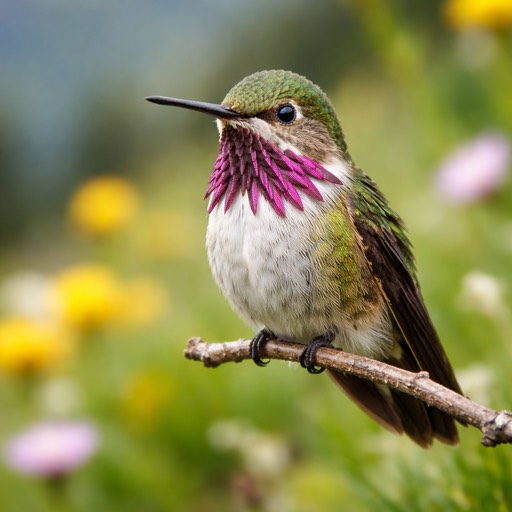
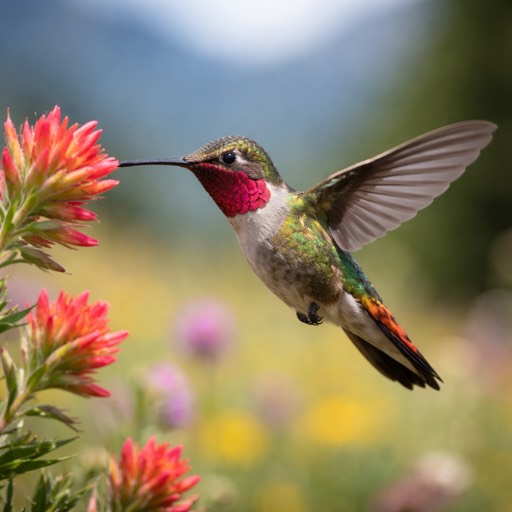
Broad-tailed Hummingbird - M
|
Field Marks to Verify:
- Male: rose-magenta gorget (throat), green back
- Male: metallic wing trill in flight — diagnostic buzzy whistle
- Female: buffy flanks, rufous at base of tail
- Medium-sized hummingbird for the West
- Breeds at higher elevations — common in mountain meadows
View on All About Birds →
Report Issue →
|
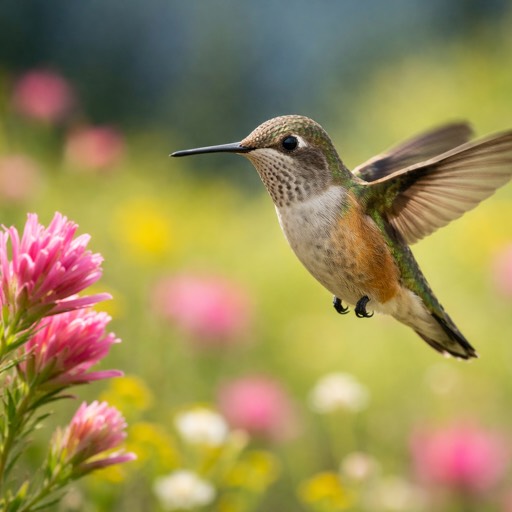
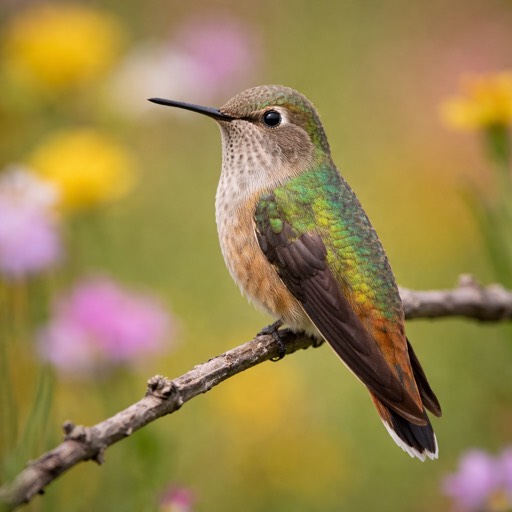
Broad-tailed Hummingbird - F
|
Field Marks to Verify:
- Male: rose-magenta gorget (throat), green back
- Male: metallic wing trill in flight — diagnostic buzzy whistle
- Female: buffy flanks, rufous at base of tail
- Medium-sized hummingbird for the West
- Breeds at higher elevations — common in mountain meadows
View on All About Birds →
Report Issue →
|
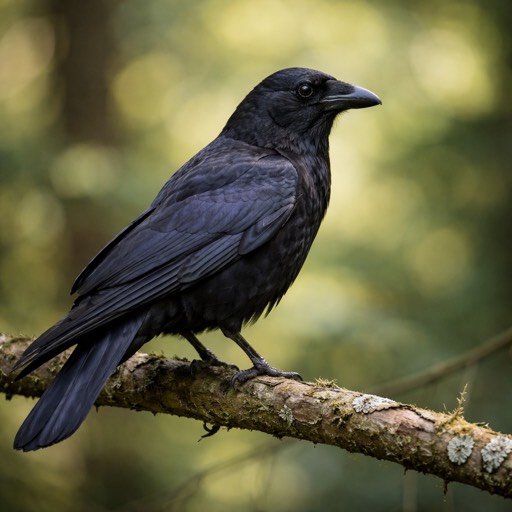
American Crow - M
|
Field Marks to Verify:
- All black — bill, legs, plumage, everything
- Fan-shaped tail in flight (vs Raven's wedge shape)
- Familiar 'caw' call — higher-pitched than Raven
- Smaller than Raven — about 18 inches
- Flaps more than soars (vs Raven's frequent soaring)
View on All About Birds →
Report Issue →
|
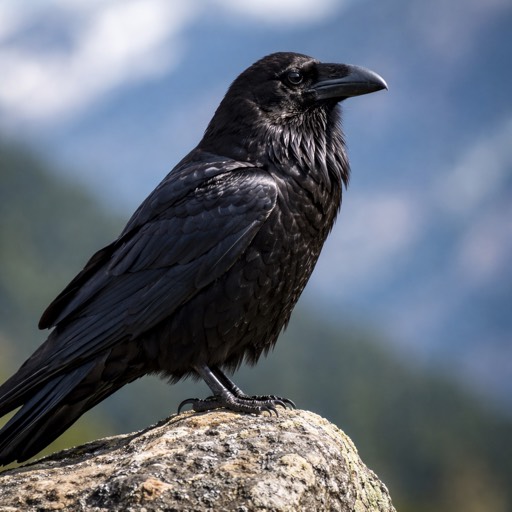
Common Raven - M
|
Field Marks to Verify:
- Large — hawk-sized, much bigger than a crow
- Wedge-shaped tail in flight (vs Crow's fan shape)
- Heavy, thick bill with shaggy throat feathers
- Deep, resonant 'cronk' call — much lower than Crow
- Soars and performs aerial acrobatics — rolls and tumbles
View on All About Birds →
Report Issue →
|
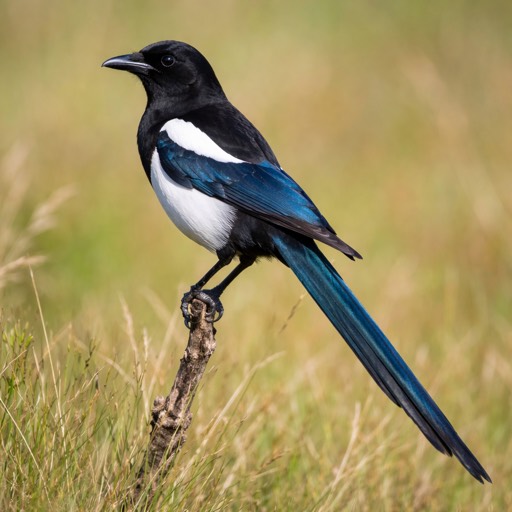
Black-billed Magpie - M
|
Field Marks to Verify:
- Long, streaming tail — more than half total body length
- Bold black and white body with iridescent blue-green wings and tail
- Black bill (vs Yellow-billed Magpie in California)
- Undulating flight with rapid wingbeats between glides
- Builds large, domed stick nests
View on All About Birds →
Report Issue →
|
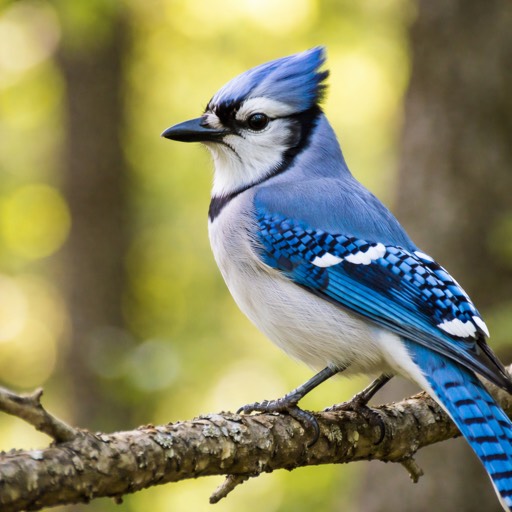
Blue Jay - M
|
Field Marks to Verify:
- Blue crest, wings, and tail with white and black barring
- Black necklace across throat and around head
- White face with blue crest — bold and noisy
- White wing bars and tail corners visible in flight
- Less common west of the Front Range (Steller's takes over)
View on All About Birds →
Report Issue →
|
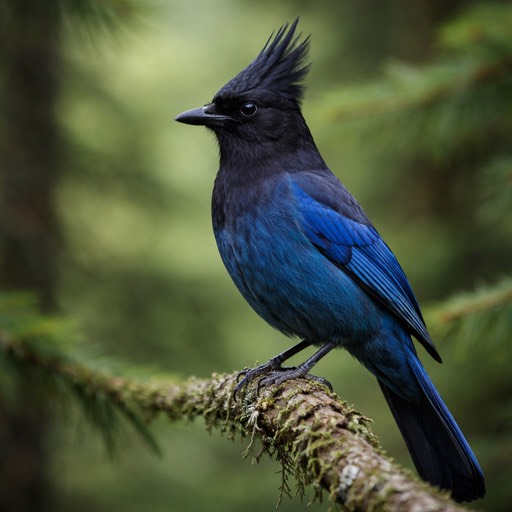
Steller's Jay - M
|
Field Marks to Verify:
- Black crested head transitioning to deep blue body
- Prominent pointed crest — tallest of any North American jay
- No white patches — all dark blue and black (vs Blue Jay's white)
- Blue barring on wings and tail
- Mountain forests — replaces Blue Jay in western mountains
View on All About Birds →
Report Issue →
|
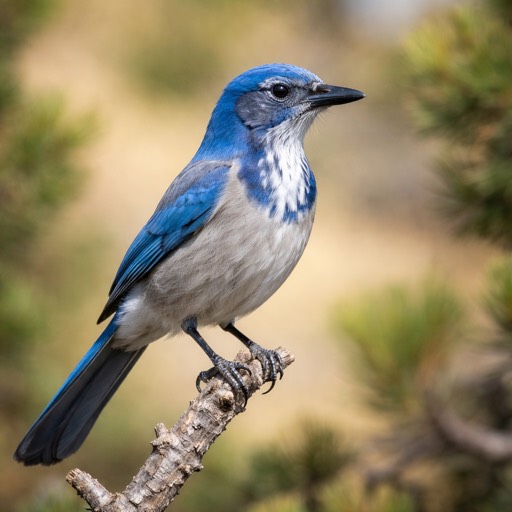
Woodhouse's Scrub-Jay - M
|
Field Marks to Verify:
- Blue head, wings, and tail with gray-brown back — no crest
- White eyebrow stripe and throat, blue necklace
- Long tail — overall lean, angular shape
- Duller and grayer than California Scrub-Jay
- Pinyon-juniper and oak scrub habitat
View on All About Birds →
Report Issue →
|
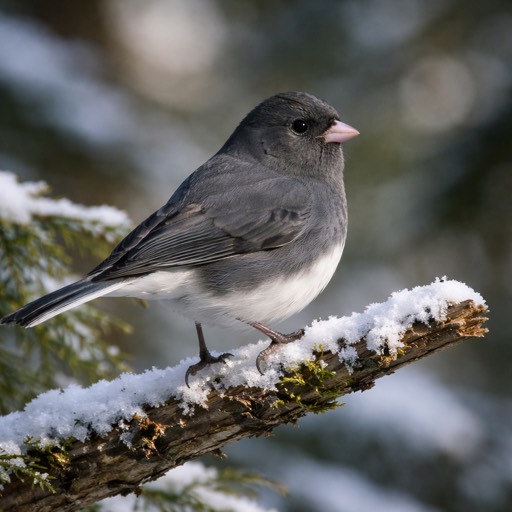
Dark-eyed Junco - Slate Colored
|
Field Marks to Verify:
- Dark hood contrasting with white belly — like a 'tuxedo'
- White outer tail feathers flash in flight — diagnostic
- Pink conical bill
- Several forms in CO: Oregon (brown back), Gray-headed (red back), Slate-colored (uniform dark)
- Common feeder bird in winter — 'snowbird'
View on All About Birds →
Report Issue →
|
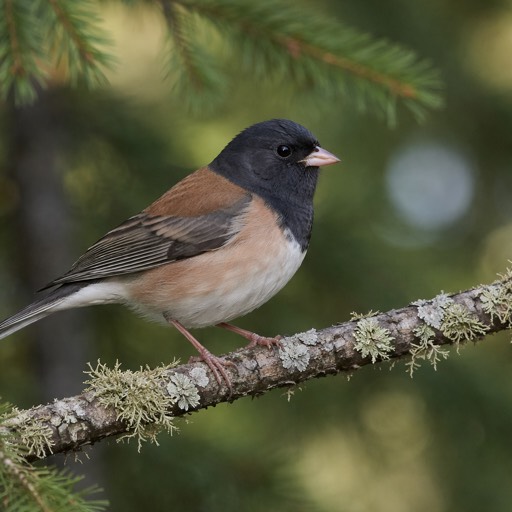
Dark-eyed Junco - Oregon
|
Field Marks to Verify:
- Dark hood contrasting with white belly — like a 'tuxedo'
- White outer tail feathers flash in flight — diagnostic
- Pink conical bill
- Several forms in CO: Oregon (brown back), Gray-headed (red back), Slate-colored (uniform dark)
- Common feeder bird in winter — 'snowbird'
View on All About Birds →
Report Issue →
|
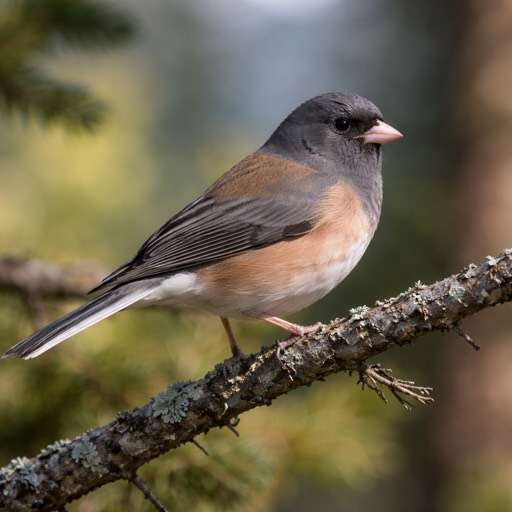
Dark-eyed Junco - Pink Sided
|
Field Marks to Verify:
- Dark hood contrasting with white belly — like a 'tuxedo'
- White outer tail feathers flash in flight — diagnostic
- Pink conical bill
- Several forms in CO: Oregon (brown back), Gray-headed (red back), Slate-colored (uniform dark)
- Common feeder bird in winter — 'snowbird'
View on All About Birds →
Report Issue →
|
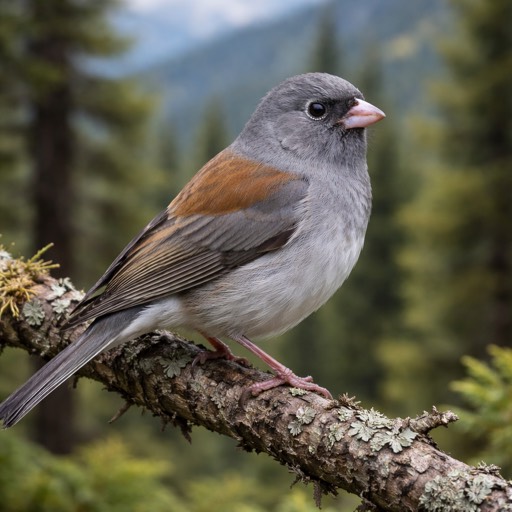
Dark-eyed Junco - Gray Headed
|
Field Marks to Verify:
- Dark hood contrasting with white belly — like a 'tuxedo'
- White outer tail feathers flash in flight — diagnostic
- Pink conical bill
- Several forms in CO: Oregon (brown back), Gray-headed (red back), Slate-colored (uniform dark)
- Common feeder bird in winter — 'snowbird'
View on All About Birds →
Report Issue →
|
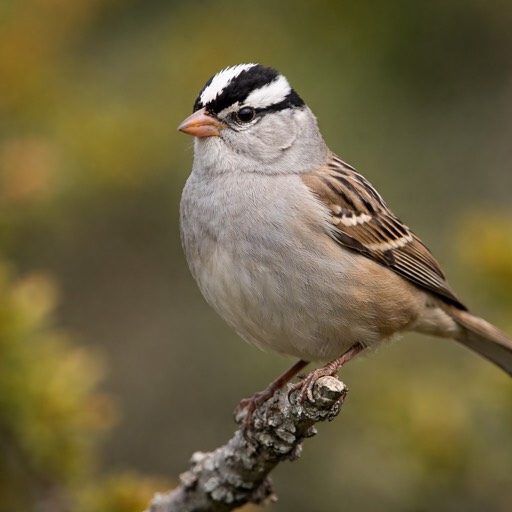
White-crowned Sparrow - Adult
|
Field Marks to Verify:
- Bold black and white crown stripes (adults)
- Clean gray breast — unstreaked
- Pink or orange bill
- Immatures: brown and tan crown stripes (same pattern, warmer color)
- Upright posture, medium-large sparrow
View on All About Birds →
Report Issue →
|
White-crowned Sparrow - Immature
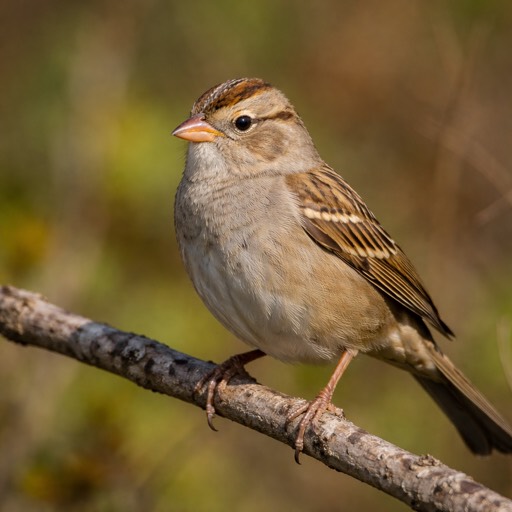
|
Field Marks to Verify:
- Bold black and white crown stripes (adults)
- Clean gray breast — unstreaked
- Pink or orange bill
- Immatures: brown and tan crown stripes (same pattern, warmer color)
- Upright posture, medium-large sparrow
View on All About Birds →
Report Issue →
|
Song Sparrow - M
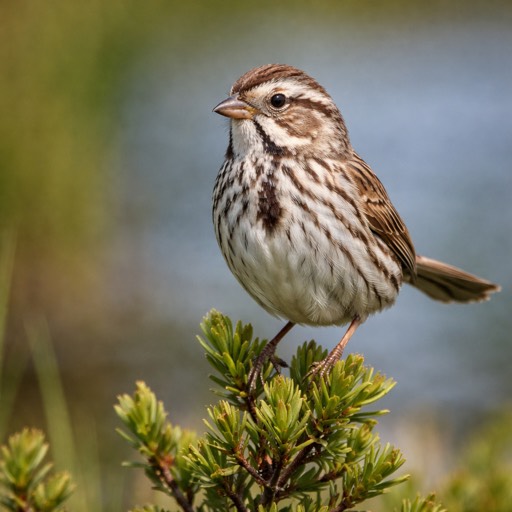
|
Field Marks to Verify:
- Central breast spot amid heavy brown streaking
- Pumps tail in flight — distinctive habit
- Brown-streaked overall with rounded head
- Pale median crown stripe bordered by brown
- Highly variable plumage across range
View on All About Birds →
Report Issue →
|
House Sparrow - M
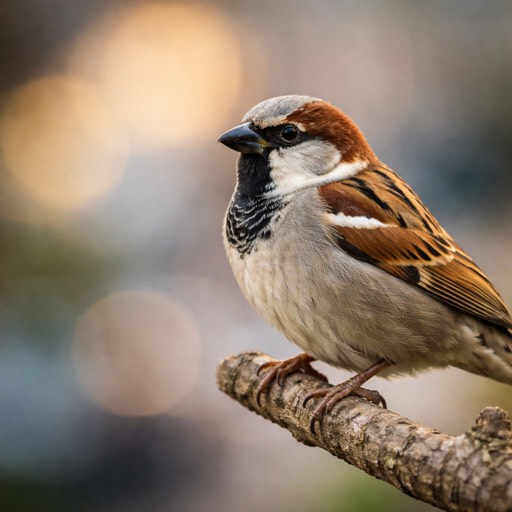
|
Field Marks to Verify:
- Male: gray crown, chestnut nape, black bib
- Male: single bold white wing bar
- Female: plain brownish with pale eyebrow and unstreaked breast
- Chunky, short-tailed, thick-billed
- Introduced species — almost always near buildings
View on All About Birds →
Report Issue →
|
House Sparrow - F
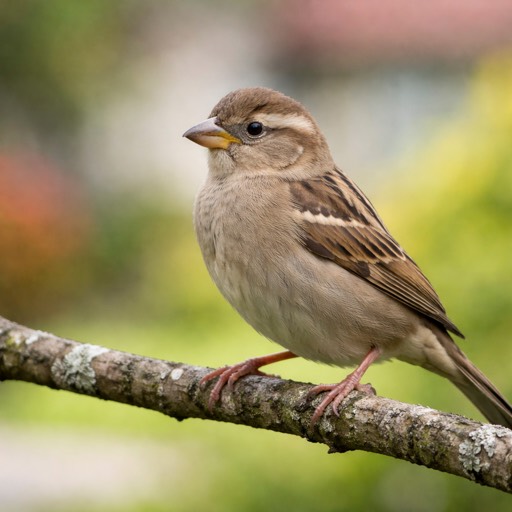
|
Field Marks to Verify:
- Male: gray crown, chestnut nape, black bib
- Male: single bold white wing bar
- Female: plain brownish with pale eyebrow and unstreaked breast
- Chunky, short-tailed, thick-billed
- Introduced species — almost always near buildings
View on All About Birds →
Report Issue →
|
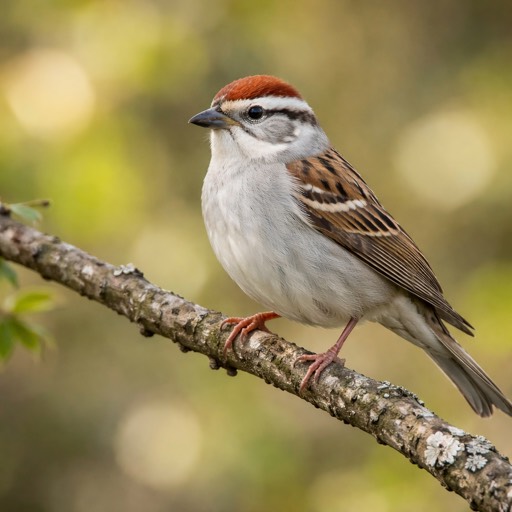
Chipping Sparrow - Breeding
|
Field Marks to Verify:
- Bright rufous cap (breeding adults)
- Clean white eyebrow, black eye-line
- Small, slim sparrow with unstreaked gray breast
- Winter: duller cap, buffy face with less contrast
- Thin, dark bill — smaller than most sparrows
View on All About Birds →
Report Issue →
|
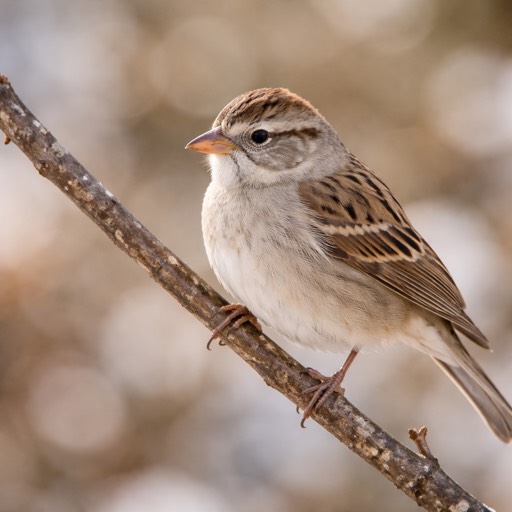
Chipping Sparrow - Nonbreeding
|
Field Marks to Verify:
- Bright rufous cap (breeding adults)
- Clean white eyebrow, black eye-line
- Small, slim sparrow with unstreaked gray breast
- Winter: duller cap, buffy face with less contrast
- Thin, dark bill — smaller than most sparrows
View on All About Birds →
Report Issue →
|
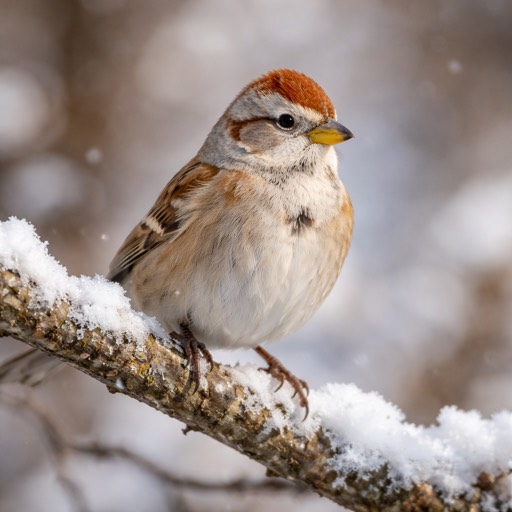
American Tree Sparrow - M
|
Field Marks to Verify:
- Rufous cap and eye-line — bicolored bill (dark upper, yellow lower)
- Single dark breast spot on otherwise unstreaked gray breast
- Two white wing bars
- Winter visitor — arrives when Chipping Sparrows leave
- Rusty side streaking
View on All About Birds →
Report Issue →
|
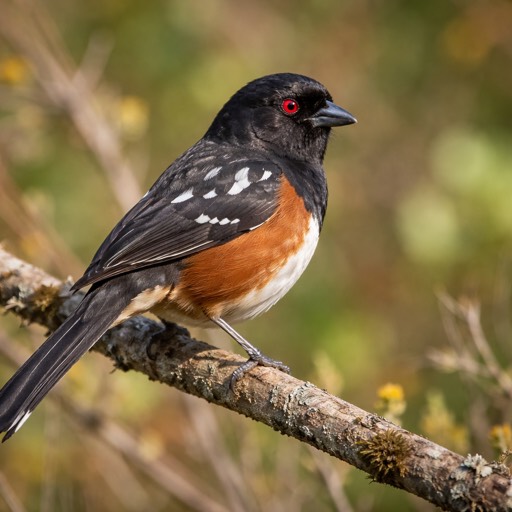
Spotted Towhee - M
|
Field Marks to Verify:
- Black hood and upperparts (male) with rufous sides and white belly
- White spots on black wings and back — 'spotted'
- Red eye
- Scratches in leaf litter with both feet — loud rustling
- Female: similar pattern but dark brown instead of black
View on All About Birds →
Report Issue →
|
Spotted Towhee - F
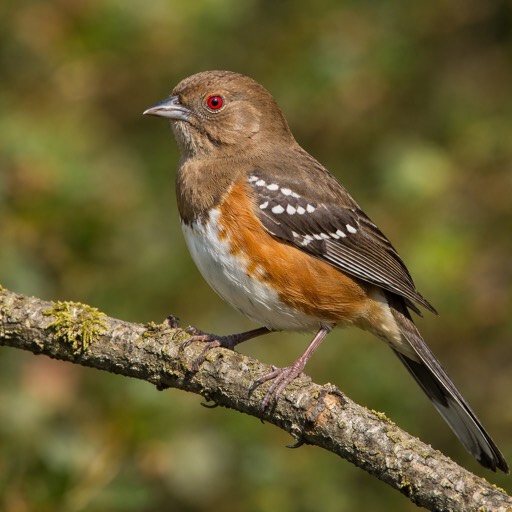
|
Field Marks to Verify:
- Black hood and upperparts (male) with rufous sides and white belly
- White spots on black wings and back — 'spotted'
- Red eye
- Scratches in leaf litter with both feet — loud rustling
- Female: similar pattern but dark brown instead of black
View on All About Birds →
Report Issue →
|
House Finch - M
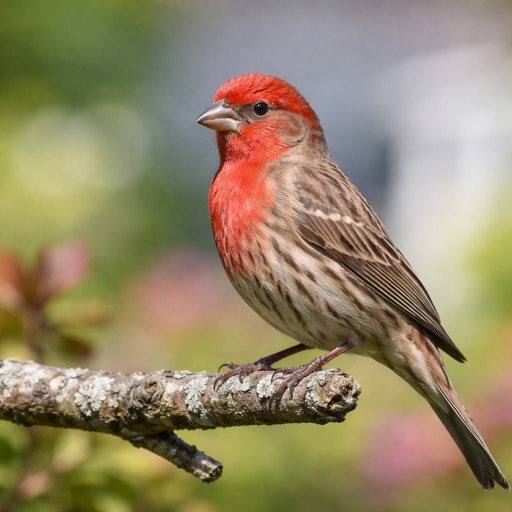
|
Field Marks to Verify:
- Male: red head, breast, and rump (can be orange or yellow)
- Male: brown-streaked flanks even within red areas
- Female: plain brown-streaked with no distinctive markings — 'LBB'
- Thick, curved bill — seed-cracking finch bill
- Extremely common at feeders and around buildings
View on All About Birds →
Report Issue →
|
House Finch - F
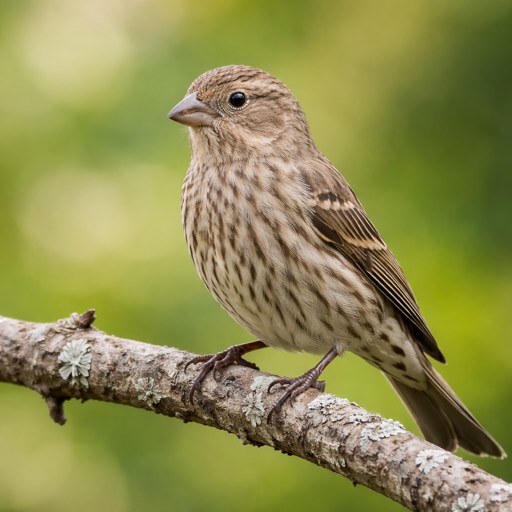
|
Field Marks to Verify:
- Male: red head, breast, and rump (can be orange or yellow)
- Male: brown-streaked flanks even within red areas
- Female: plain brown-streaked with no distinctive markings — 'LBB'
- Thick, curved bill — seed-cracking finch bill
- Extremely common at feeders and around buildings
View on All About Birds →
Report Issue →
|
Pine Siskin - M
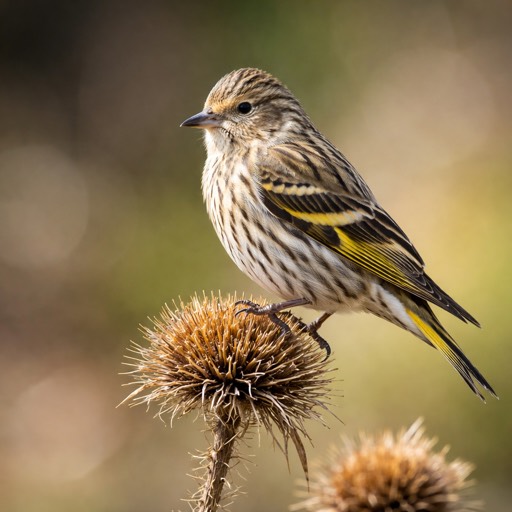
|
Field Marks to Verify:
- Heavily streaked brown — nondescript until it flies
- Yellow flash in wings and at tail base — visible in flight
- Thin, sharply pointed bill (vs other finches' stubbier bills)
- Nomadic — abundant some years, absent others (irruptive)
- Often in tight, noisy flocks at feeders or in conifers
View on All About Birds →
Report Issue →
|
American Goldfinch - M Breeding
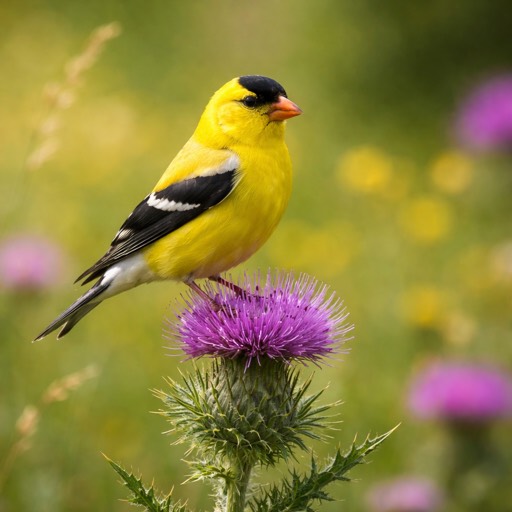
|
Field Marks to Verify:
- Breeding male: brilliant yellow with black cap and black wings
- White wing bars and white undertail on black wings
- Undulating flight: 'po-ta-to chip' on each dip
- Non-breeding: dull olive-yellow, still shows wing bars
- Black forehead (breeding) distinguishes from Lesser Goldfinch
View on All About Birds →
Report Issue →
|
American Goldfinch - M Nonbreeding
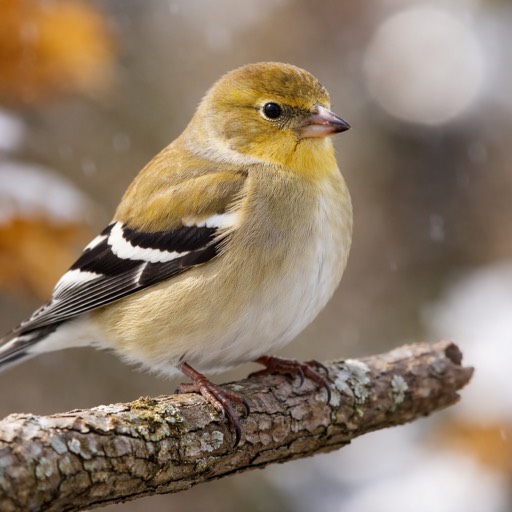
|
Field Marks to Verify:
- Breeding male: brilliant yellow with black cap and black wings
- White wing bars and white undertail on black wings
- Undulating flight: 'po-ta-to chip' on each dip
- Non-breeding: dull olive-yellow, still shows wing bars
- Black forehead (breeding) distinguishes from Lesser Goldfinch
View on All About Birds →
Report Issue →
|
American Goldfinch - F
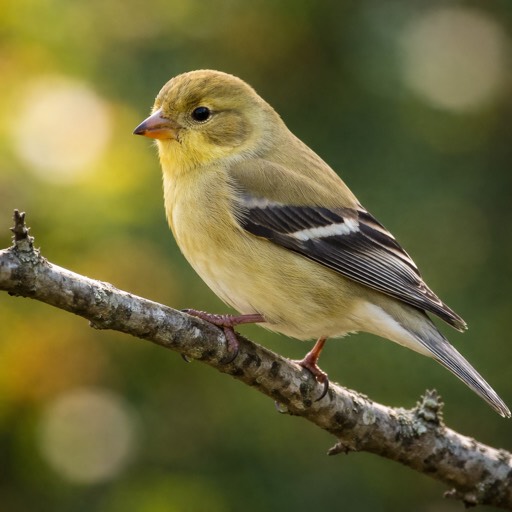
|
Field Marks to Verify:
- Breeding male: brilliant yellow with black cap and black wings
- White wing bars and white undertail on black wings
- Undulating flight: 'po-ta-to chip' on each dip
- Non-breeding: dull olive-yellow, still shows wing bars
- Black forehead (breeding) distinguishes from Lesser Goldfinch
View on All About Birds →
Report Issue →
|
Lesser Goldfinch - M Green Backed
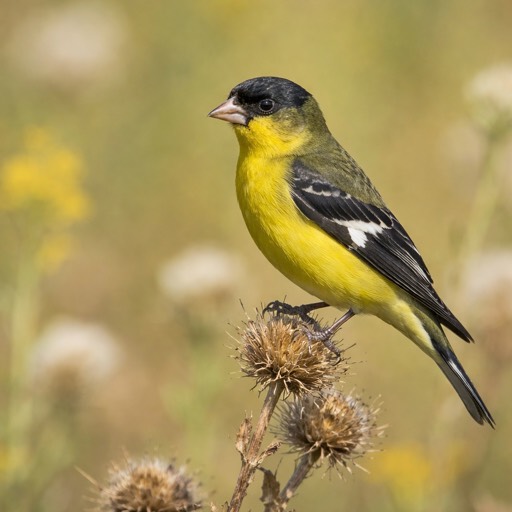
|
Field Marks to Verify:
- Male: black cap extends to eye (no yellow forehead — vs American's black cap above bill)
- Male: green or black back depending on population
- Bright yellow underparts (both sexes)
- Smaller and more compact than American Goldfinch
- White wing patch at base of primaries
View on All About Birds →
Report Issue →
|
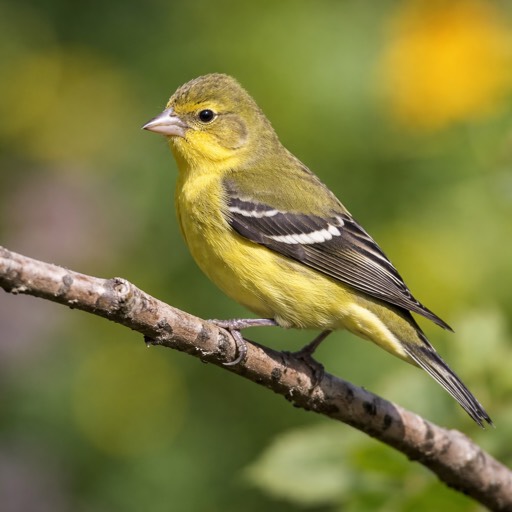
Lesser Goldfinch - F
|
Field Marks to Verify:
- Male: black cap extends to eye (no yellow forehead — vs American's black cap above bill)
- Male: green or black back depending on population
- Bright yellow underparts (both sexes)
- Smaller and more compact than American Goldfinch
- White wing patch at base of primaries
View on All About Birds →
Report Issue →
|
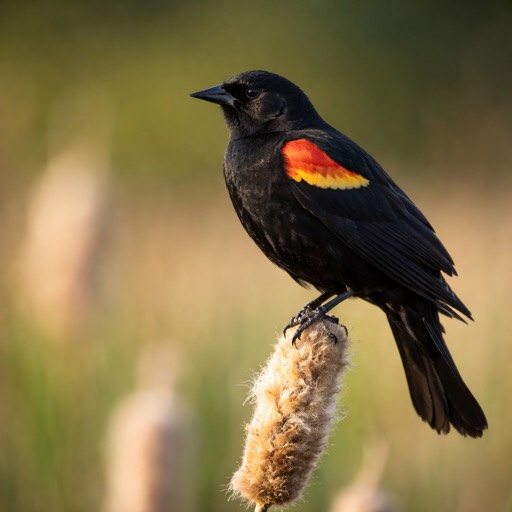
Red-winged Blackbird - M
|
Field Marks to Verify:
- Male: glossy black with red-and-yellow shoulder patches (epaulets)
- Female: heavily streaked dark brown — looks like a sparrow
- Males flash red epaulets in territorial display
- Polygynous — males with multiple females in territory
- Ubiquitous in marshes, fields, and roadsides
View on All About Birds →
Report Issue →
|
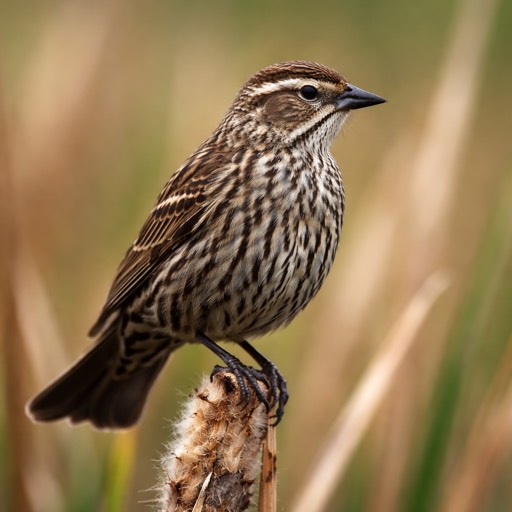
Red-winged Blackbird - F
|
Field Marks to Verify:
- Male: glossy black with red-and-yellow shoulder patches (epaulets)
- Female: heavily streaked dark brown — looks like a sparrow
- Males flash red epaulets in territorial display
- Polygynous — males with multiple females in territory
- Ubiquitous in marshes, fields, and roadsides
View on All About Birds →
Report Issue →
|
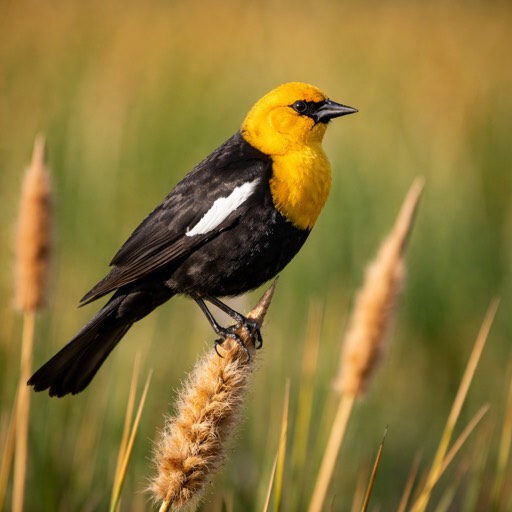
Yellow-headed Blackbird - M
|
Field Marks to Verify:
- Male: bright yellow head and breast on black body — unmistakable
- Male: white wing patch visible in flight
- Female: dusky brown with yellow breast and face — subdued but recognizable
- Larger than Red-winged; dominates it in shared marshes
- Bizarre, strangled buzzing song
View on All About Birds →
Report Issue →
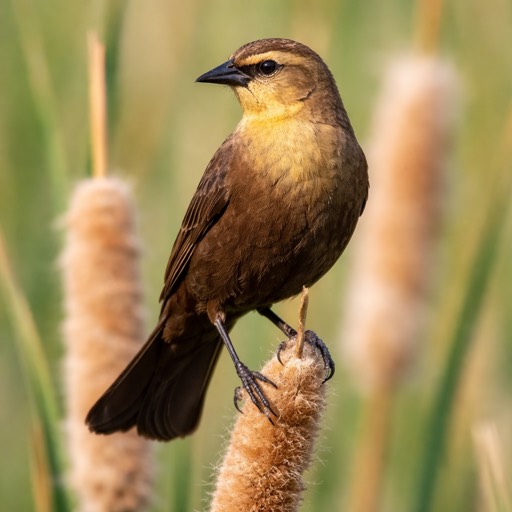
|
Yellow-headed Blackbird - F
|
Field Marks to Verify:
- Male: bright yellow head and breast on black body — unmistakable
- Male: white wing patch visible in flight
- Female: dusky brown with yellow breast and face — subdued but recognizable
- Larger than Red-winged; dominates it in shared marshes
- Bizarre, strangled buzzing song
View on All About Birds →
Report Issue →
|
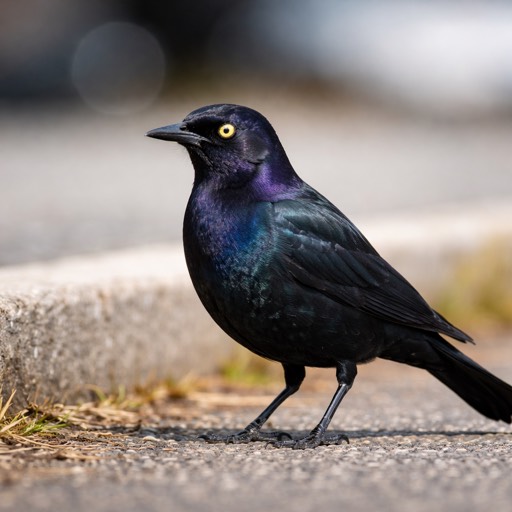
Brewer's Blackbird - M
|
Field Marks to Verify:
- Male: glossy black with purplish head and greenish body sheen
- Bright yellow eye (male) — distinctive
- Female: plain dark brown with dark eye
- Walks on ground in parking lots and fields
- Thinner bill than grackles; shorter tail
View on All About Birds →
Report Issue →
|
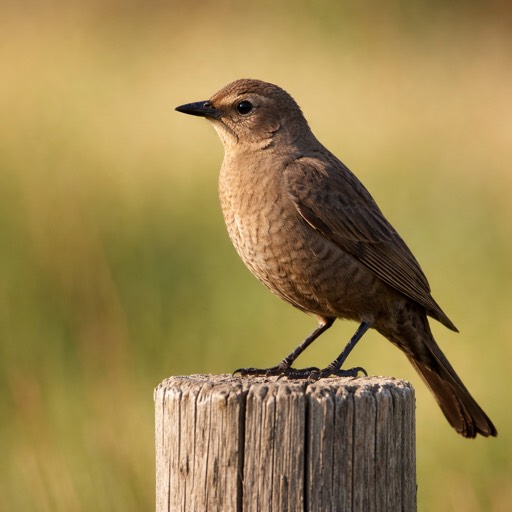
Brewer's Blackbird - F
|
Field Marks to Verify:
- Male: glossy black with purplish head and greenish body sheen
- Bright yellow eye (male) — distinctive
- Female: plain dark brown with dark eye
- Walks on ground in parking lots and fields
- Thinner bill than grackles; shorter tail
View on All About Birds →
Report Issue →
|
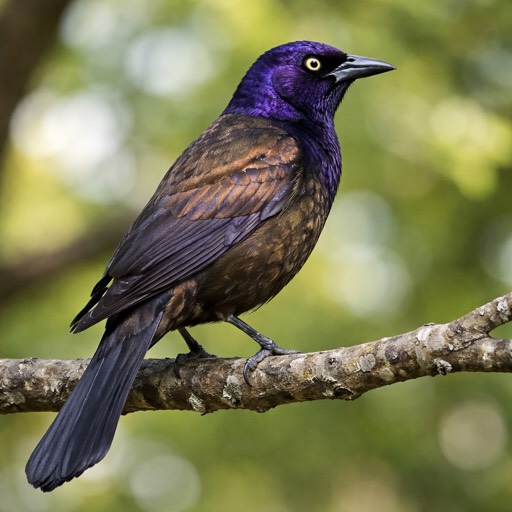
Common Grackle - M
|
Field Marks to Verify:
- Iridescent purplish-bronze plumage — glossy in good light
- Bright yellow eye
- Long, keel-shaped tail — held in V-shape in flight
- Larger and longer-tailed than blackbirds but smaller than Great-tailed
- Walks with a strut — confident and bold
View on All About Birds →
Report Issue →
|
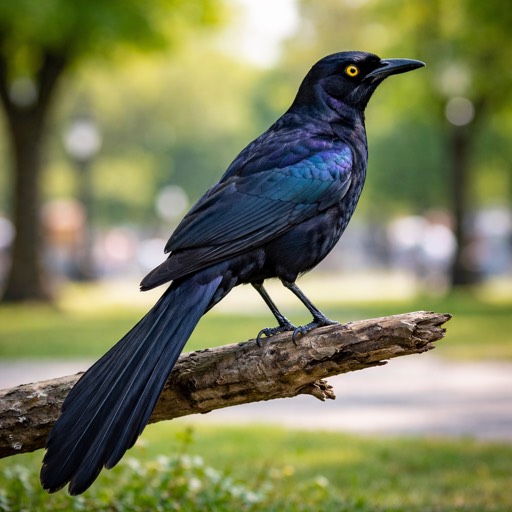
Great-tailed Grackle - M
|
Field Marks to Verify:
- Male: very long, V-shaped tail — longer than body seems to warrant
- Male: glossy purple-black, massive
- Female: brown above, buffy below — much smaller than male
- Yellow eye — both sexes
- Extremely vocal — parking lot symphony of wild sounds
View on All About Birds →
Report Issue →
|
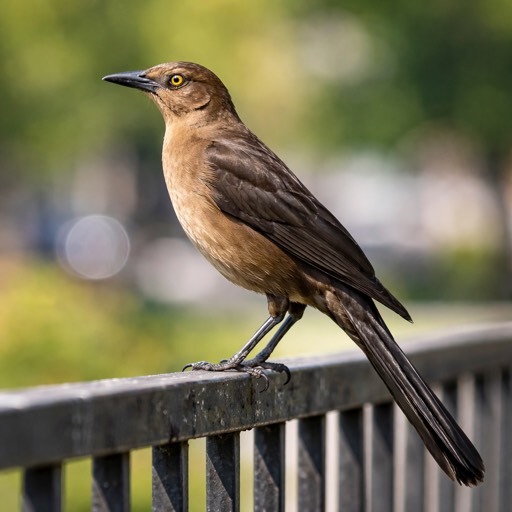
Great-tailed Grackle - F
|
Field Marks to Verify:
- Male: very long, V-shaped tail — longer than body seems to warrant
- Male: glossy purple-black, massive
- Female: brown above, buffy below — much smaller than male
- Yellow eye — both sexes
- Extremely vocal — parking lot symphony of wild sounds
View on All About Birds →
Report Issue →
|
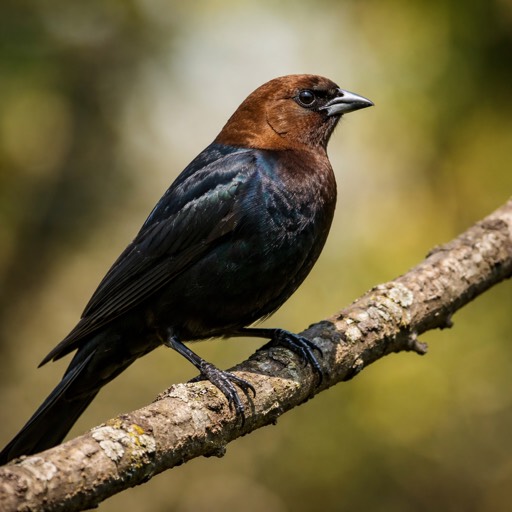
Brown-headed Cowbird - M
|
Field Marks to Verify:
- Male: glossy black body with chocolate-brown head
- Short, thick, conical bill — finch-like
- Female: plain gray-brown overall — nondescript
- Brood parasite — lays eggs in other birds' nests
- Smaller than most blackbirds; compact and short-tailed
View on All About Birds →
Report Issue →
|
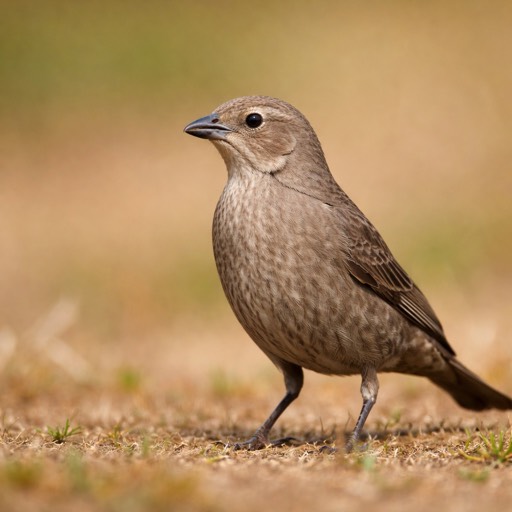
Brown-headed Cowbird - F
|
Field Marks to Verify:
- Male: glossy black body with chocolate-brown head
- Short, thick, conical bill — finch-like
- Female: plain gray-brown overall — nondescript
- Brood parasite — lays eggs in other birds' nests
- Smaller than most blackbirds; compact and short-tailed
View on All About Birds →
Report Issue →
|
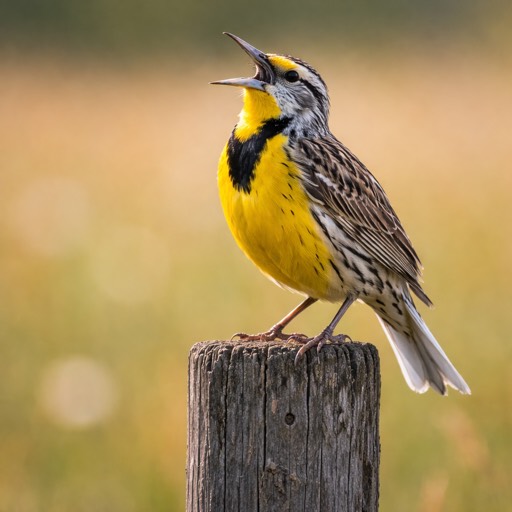
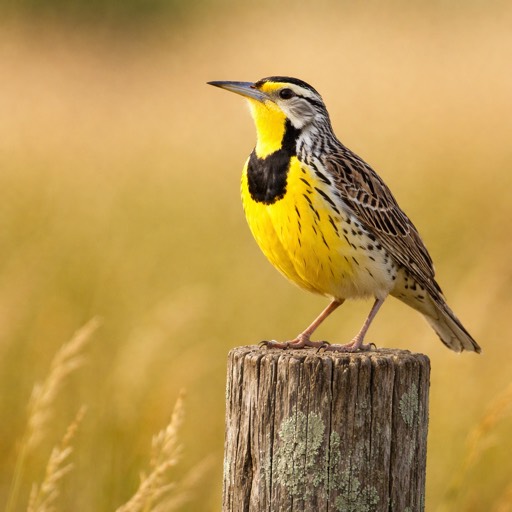
Western Meadowlark - M
|
Field Marks to Verify:
- Bright yellow underparts with bold black V on chest
- Brown-streaked upperparts — cryptic from above
- White outer tail feathers flash in flight
- Flat-headed, short-tailed profile on fence posts
- State bird of 6 western states
View on All About Birds →
Report Issue →
|
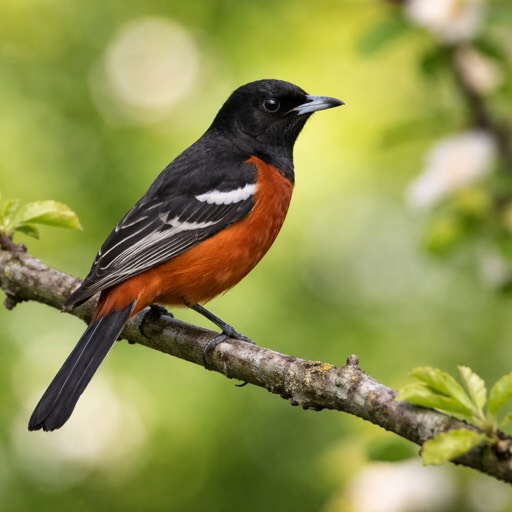
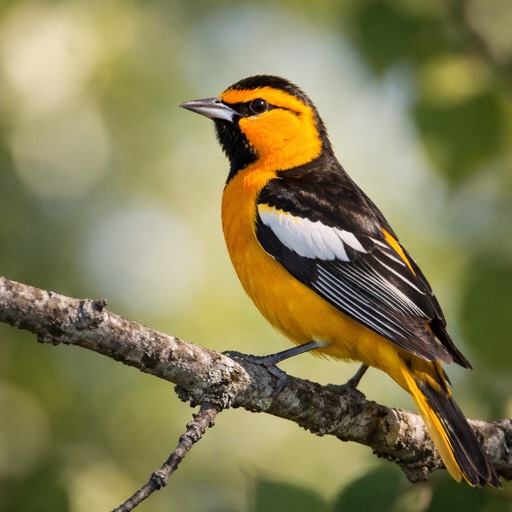
Bullock's Oriole - M
|
Field Marks to Verify:
- Male: bright orange face, underparts, and outer tail with black cap and eye-line
- Male: large white wing patch
- Female: yellowish head and breast, gray back
- Hanging, woven nest — pendulous pouch in cottonwoods
- Slender, pointed bill for nectar and insects
View on All About Birds →
Report Issue →
|
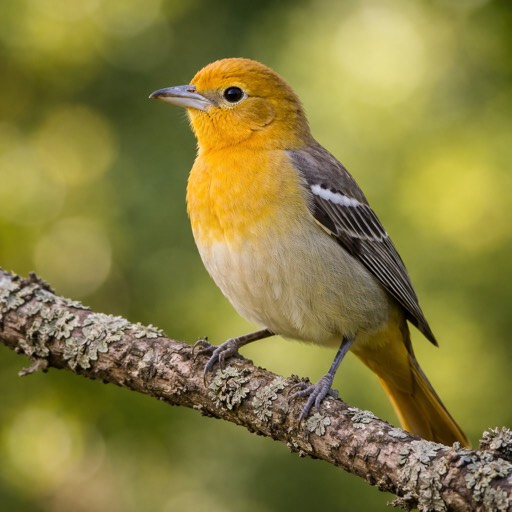
Bullock's Oriole - F
|
Field Marks to Verify:
- Male: bright orange face, underparts, and outer tail with black cap and eye-line
- Male: large white wing patch
- Female: yellowish head and breast, gray back
- Hanging, woven nest — pendulous pouch in cottonwoods
- Slender, pointed bill for nectar and insects
View on All About Birds →
Report Issue →
|
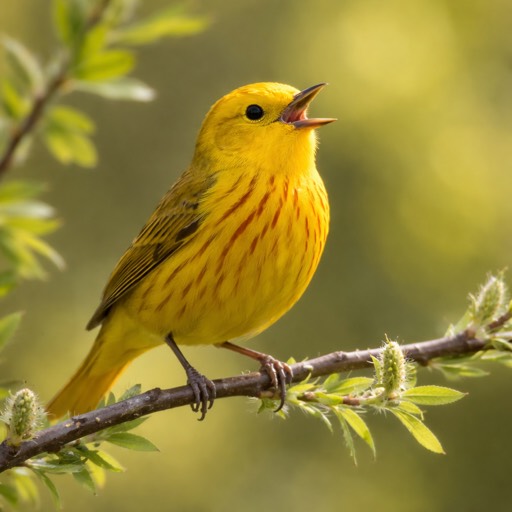
Yellow Warbler - M
|
Field Marks to Verify:
- Bright yellow overall — yellowest North American warbler
- Male: reddish streaks on yellow breast
- Beady black eye on plain yellow face
- Yellow tail spots visible from below in flight
- Inhabits willows and riparian areas
View on All About Birds →
Report Issue →
|
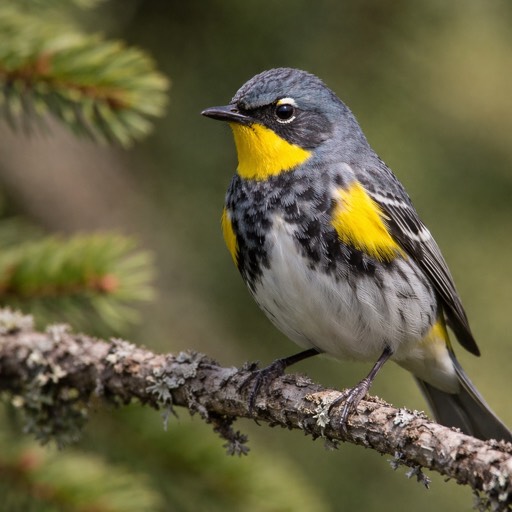
Yellow-rumped Warbler - Audubon'S M
|
Field Marks to Verify:
- Yellow rump patch — visible in any plumage ('butter butt')
- Yellow side patches on flanks
- Audubon's form (West): yellow throat, white wing patch
- Myrtle form (East): white throat, two white wing bars
- Most abundant and widespread warbler; winters farther north than others
View on All About Birds →
Report Issue →
|
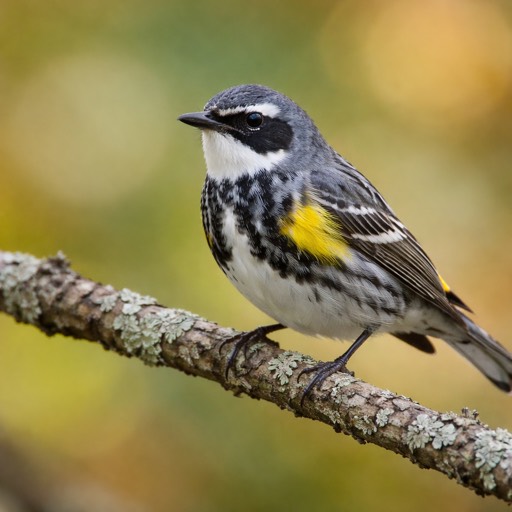
Yellow-rumped Warbler - Myrtle M
|
Field Marks to Verify:
- Yellow rump patch — visible in any plumage ('butter butt')
- Yellow side patches on flanks
- Audubon's form (West): yellow throat, white wing patch
- Myrtle form (East): white throat, two white wing bars
- Most abundant and widespread warbler; winters farther north than others
View on All About Birds →
Report Issue →
|
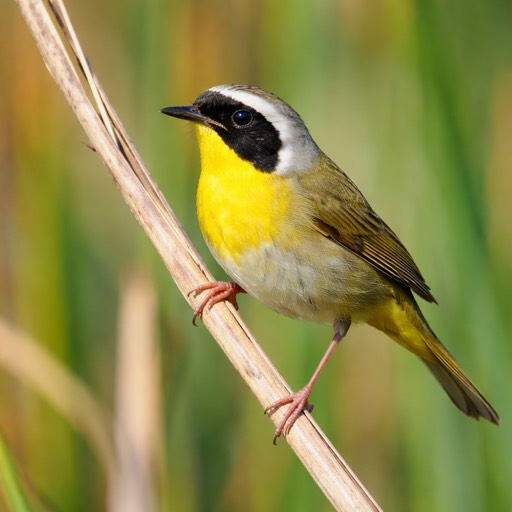
Common Yellowthroat - M
|
Field Marks to Verify:
- Male: bold black mask with white border above — 'bandit warbler'
- Female: plain olive above, yellow throat and breast, no mask
- Skulks in dense marsh vegetation
- Wren-like behavior — stays low in cattails and reeds
- White belly contrasts with yellow breast
View on All About Birds →
Report Issue →
|
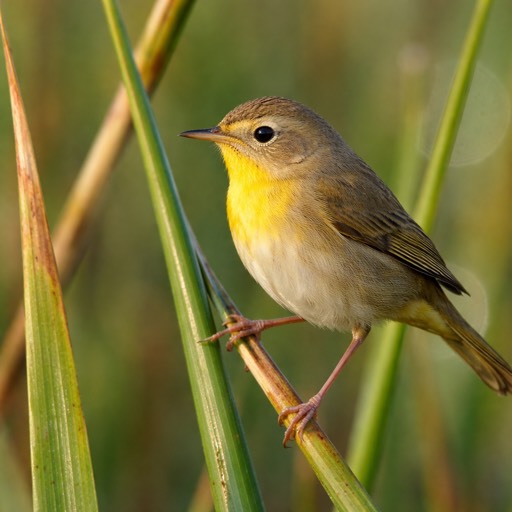
Common Yellowthroat - F
|
Field Marks to Verify:
- Male: bold black mask with white border above — 'bandit warbler'
- Female: plain olive above, yellow throat and breast, no mask
- Skulks in dense marsh vegetation
- Wren-like behavior — stays low in cattails and reeds
- White belly contrasts with yellow breast
View on All About Birds →
Report Issue →
|
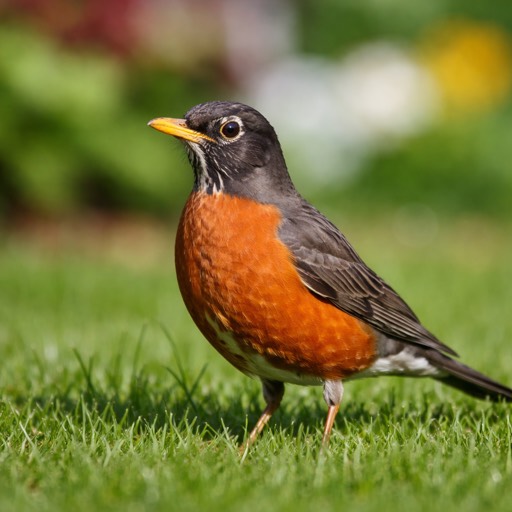
American Robin - M
|
Field Marks to Verify:
- Red-orange breast — the bird everyone knows
- Dark gray-black head and back
- White eye arcs (broken eye-ring)
- Yellow bill
- White lower belly and undertail — not red all the way down
View on All About Birds →
Report Issue →
|
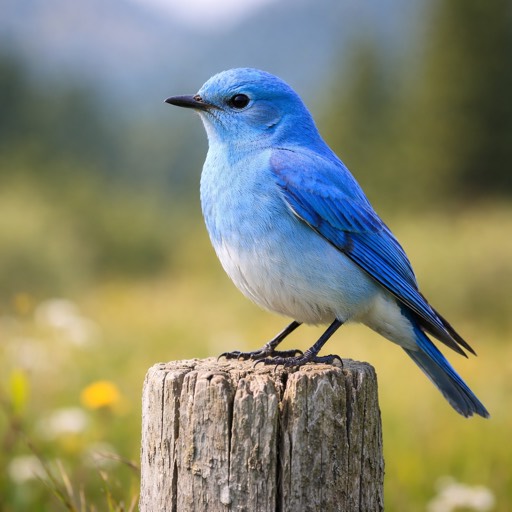
Mountain Bluebird - M
|
Field Marks to Verify:
- Male: entirely sky-blue — the purest blue of any North American bird
- Female: gray with blue wings and tail — muted but distinctive
- Hovers while hunting — more than other bluebirds
- Slimmer build than Western or Eastern Bluebird
- Open mountain meadows and sagebrush — higher elevation than others
View on All About Birds →
Report Issue →
|
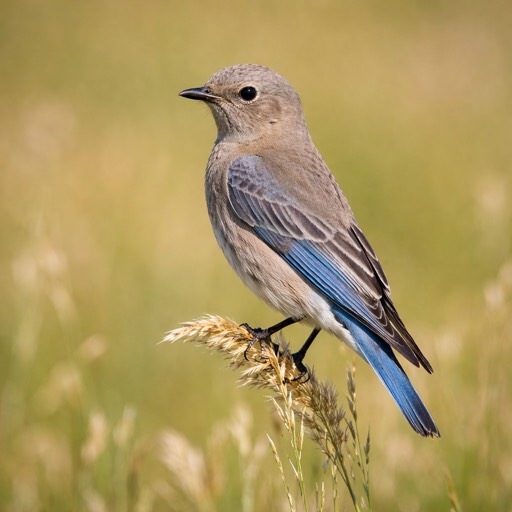
Mountain Bluebird - F
|
Field Marks to Verify:
- Male: entirely sky-blue — the purest blue of any North American bird
- Female: gray with blue wings and tail — muted but distinctive
- Hovers while hunting — more than other bluebirds
- Slimmer build than Western or Eastern Bluebird
- Open mountain meadows and sagebrush — higher elevation than others
View on All About Birds →
Report Issue →
|
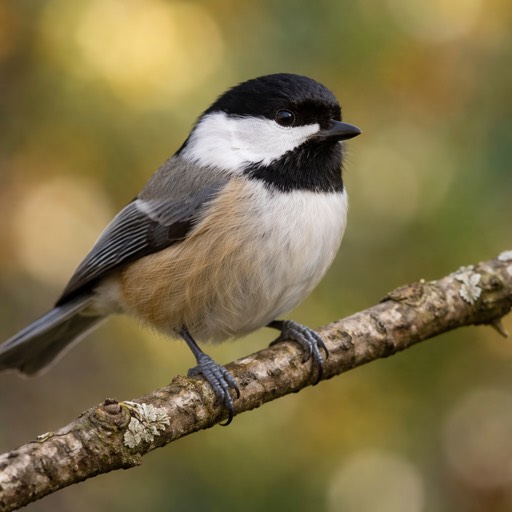
Black-capped Chickadee - M
|
Field Marks to Verify:
- Black cap and bib with white cheeks — the classic chickadee face
- Buffy flanks, gray back, white edges on wing feathers
- Acrobatic — hangs upside down while foraging
- Lower elevation — below Mountain Chickadee's range
- White cheek patch larger and brighter than Mountain's
View on All About Birds →
Report Issue →
|
Mountain Chickadee - M
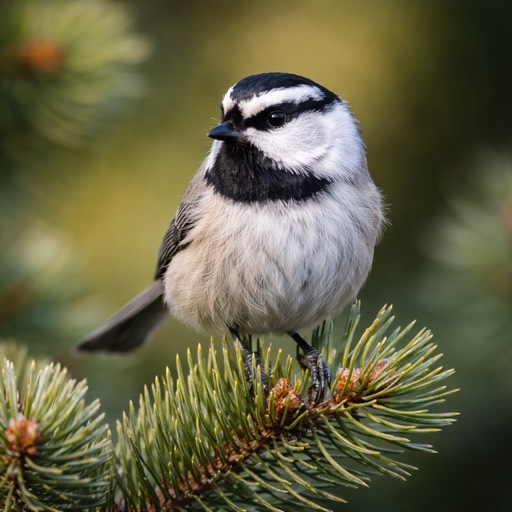
|
Field Marks to Verify:
- White eyebrow stripe through black cap — diagnostic (Black-capped lacks this)
- Otherwise similar to Black-capped: black bib, gray back
- Slightly less buffy on flanks than Black-capped
- Higher elevation — montane conifer forests
- Hoarser, buzzy 'chick-a-dee' call vs Black-capped's clear version
View on All About Birds →
Report Issue →
|
White-breasted Nuthatch - M
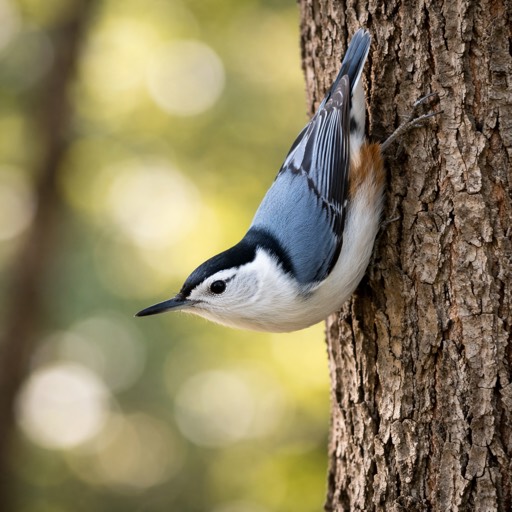
|
Field Marks to Verify:
- Walks headfirst down tree trunks — unique behavior
- White face and breast, blue-gray back, black cap
- Largest nuthatch — the one on your suet feeder
- Short tail, big head, long bill — compact proportions
- Males: jet black cap; females: dark gray cap
View on All About Birds →
Report Issue →
|
Red-breasted Nuthatch - M
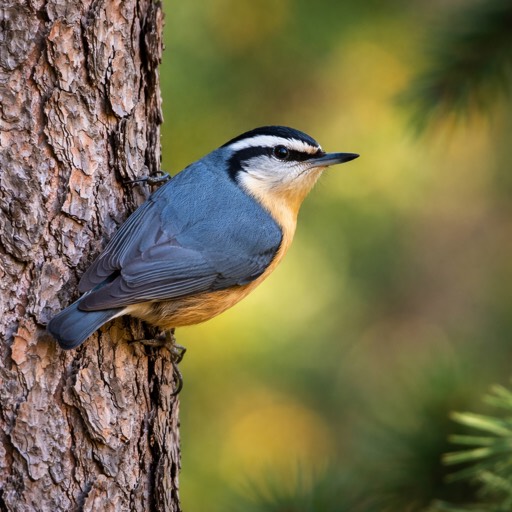
|
Field Marks to Verify:
- Black eye-line through white eyebrow — 'bandit face'
- Rusty-orange underparts (both sexes, brighter in males)
- Blue-gray back, black cap
- Smaller than White-breasted; higher-pitched nasal call
- Conifer specialist — irruptive in winter
View on All About Birds →
Report Issue →
|
Red-breasted Nuthatch - F
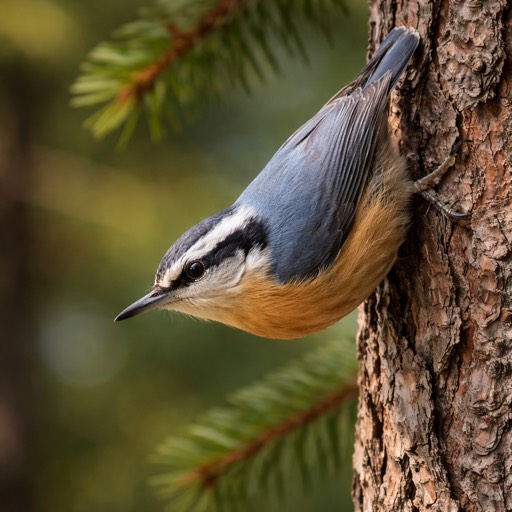
|
Field Marks to Verify:
- Black eye-line through white eyebrow — 'bandit face'
- Rusty-orange underparts (both sexes, brighter in males)
- Blue-gray back, black cap
- Smaller than White-breasted; higher-pitched nasal call
- Conifer specialist — irruptive in winter
View on All About Birds →
Report Issue →
|
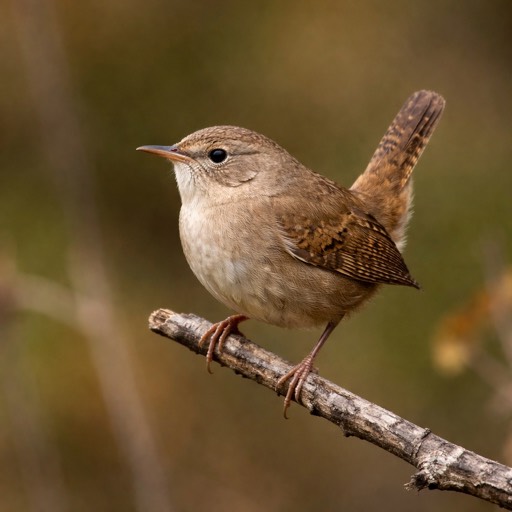
House Wren - M
|
Field Marks to Verify:
- Small, plain brown overall — no bold markings
- Faint barring on wings and tail
- Cocked tail — often held upright
- Loud, bubbling song disproportionate to tiny size
- Aggressively fills all nearby nest boxes — destroys competitors' eggs
View on All About Birds →
Report Issue →
|
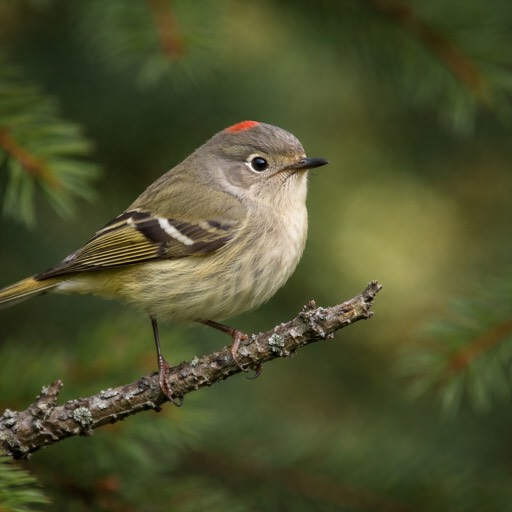
Ruby-crowned Kinglet - M
|
Field Marks to Verify:
- Olive-green with bold white eye-ring (broken at top)
- Two white wing bars with dark bar below upper one
- Ruby crown patch usually hidden — flashed when excited
- Tiny — among smallest songbirds (4 inches)
- Constant wing-flicking habit — diagnostic behavior
View on All About Birds →
Report Issue →
|
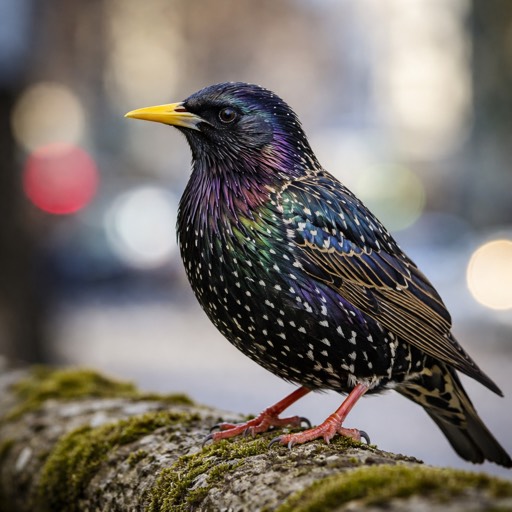
European Starling - Breeding
|
Field Marks to Verify:
- Breeding: glossy black with purple-green iridescence, yellow bill
- Winter: covered in white spots ('stars'), dark bill
- Short, squared tail and triangular wings in flight
- Walks (not hops) on ground with purposeful stride
- Introduced species — now one of North America's most abundant birds
View on All About Birds →
Report Issue →
|
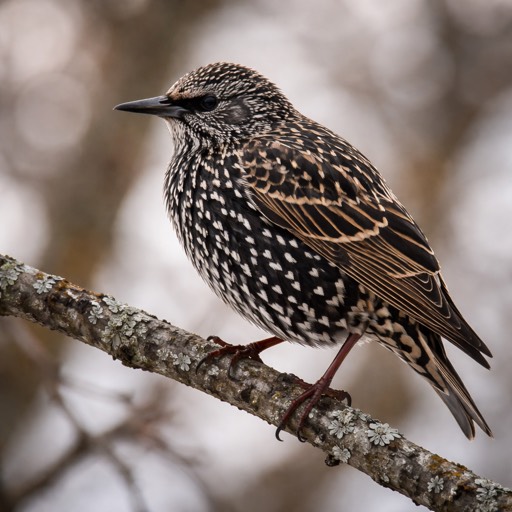
European Starling - Nonbreeding
|
Field Marks to Verify:
- Breeding: glossy black with purple-green iridescence, yellow bill
- Winter: covered in white spots ('stars'), dark bill
- Short, squared tail and triangular wings in flight
- Walks (not hops) on ground with purposeful stride
- Introduced species — now one of North America's most abundant birds
View on All About Birds →
Report Issue →
|
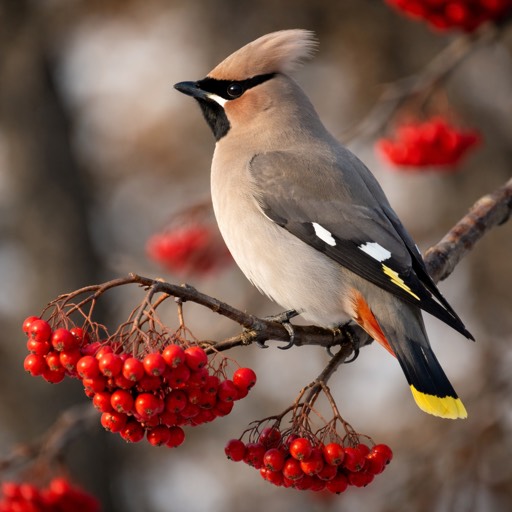
Cedar Waxwing - M
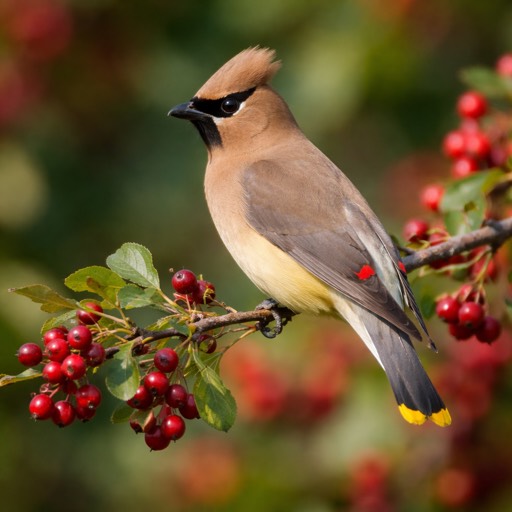
|
Field Marks to Verify:
- Sleek brown crest swept back from head
- Black mask edged in white
- Yellow band across tail tip
- Waxy red tips on secondary feathers — the 'wax' in waxwing
- Travels in flocks; feeds on berries — passing them beak to beak
View on All About Birds →
Report Issue →
|
Northern Mockingbird - M
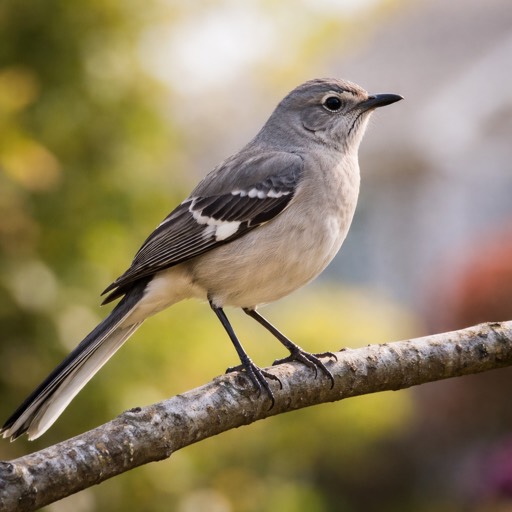
|
Field Marks to Verify:
- Gray above, pale below — plain looking
- White wing patches flash conspicuously in flight
- Long tail often raised and lowered (wing-flashing display)
- Sings incredibly varied repertoire — mimics dozens of species
- Sings at night — sometimes all night in spring
View on All About Birds →
Report Issue →
|
Tree Swallow - M
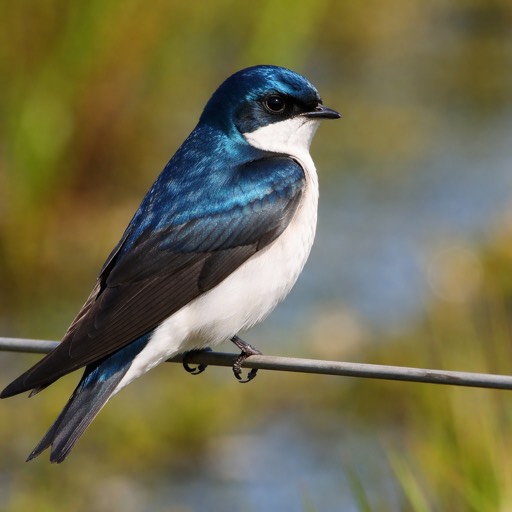
|
Field Marks to Verify:
- Iridescent blue-green above, clean white below
- Sharp line between dark upperparts and white underparts
- First swallow to arrive in spring
- Immatures: brown above instead of blue-green
- Eats berries in cold weather — unusual for a swallow
View on All About Birds →
Report Issue →
|
Tree Swallow - F
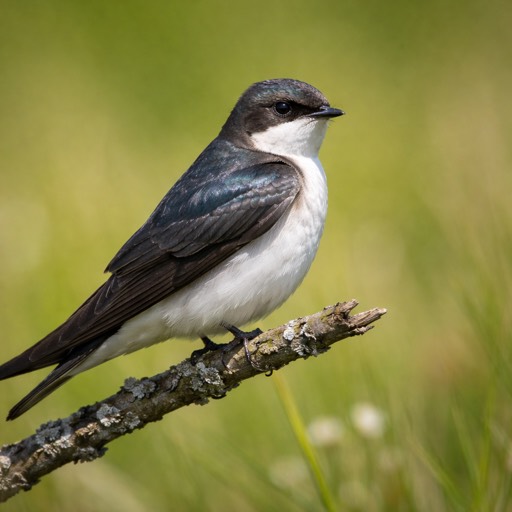
|
Field Marks to Verify:
- Iridescent blue-green above, clean white below
- Sharp line between dark upperparts and white underparts
- First swallow to arrive in spring
- Immatures: brown above instead of blue-green
- Eats berries in cold weather — unusual for a swallow
View on All About Birds →
Report Issue →
|
Violet-green Swallow - M
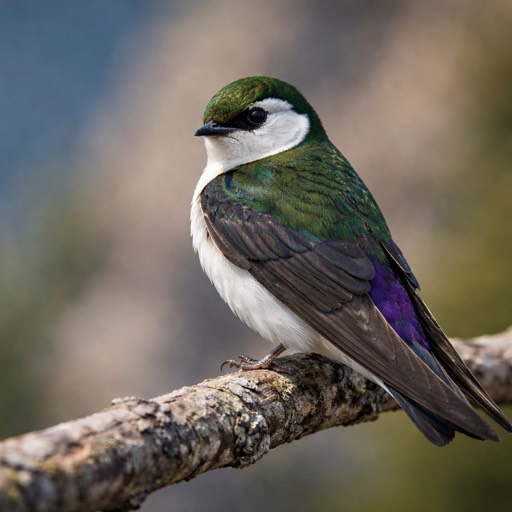
|
Field Marks to Verify:
- Green back and purple rump — brightest swallow
- White extends above eye and wraps around rump sides
- White flank patches nearly meet over tail
- Smaller and more compact than Tree Swallow
- More common at higher elevations than Tree Swallow
View on All About Birds →
Report Issue →
|
Barn Swallow - M
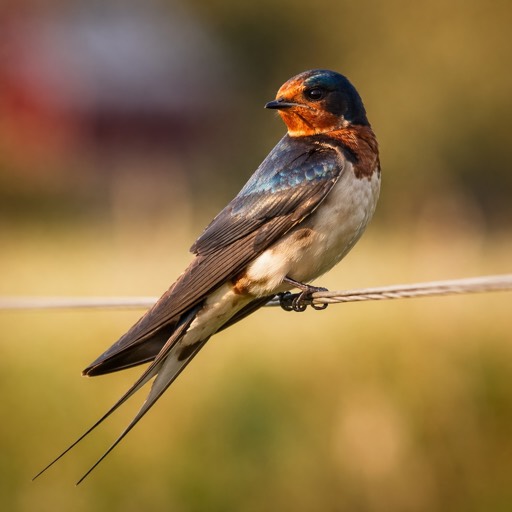
|
Field Marks to Verify:
- Deeply forked tail — longest of any North American swallow
- Blue-black above with orange-rufous underparts
- Rufous forehead and throat
- Graceful, swooping flight low over fields
- Builds mud cup nests on buildings and bridges
View on All About Birds →
Report Issue →
|
Cliff Swallow - M
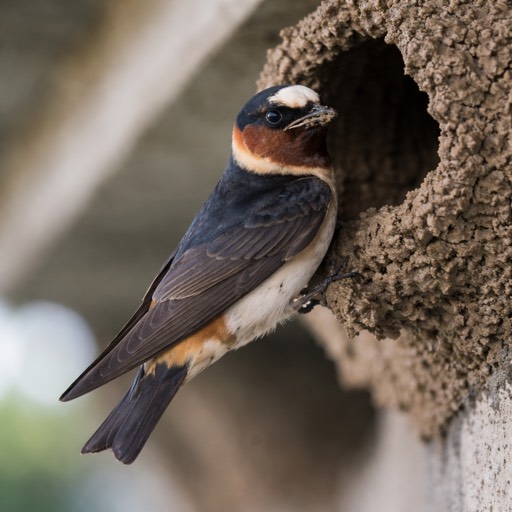
|
Field Marks to Verify:
- Square tail (vs Barn Swallow's forked tail)
- Pale buffy rump patch — visible in flight
- Dark throat with pale forehead (pale or dark varies)
- Builds gourd-shaped mud nests in colonies under overhangs
- Often in large flocks — the famous Capistrano swallows
View on All About Birds →
Report Issue →
|
Western Kingbird - M
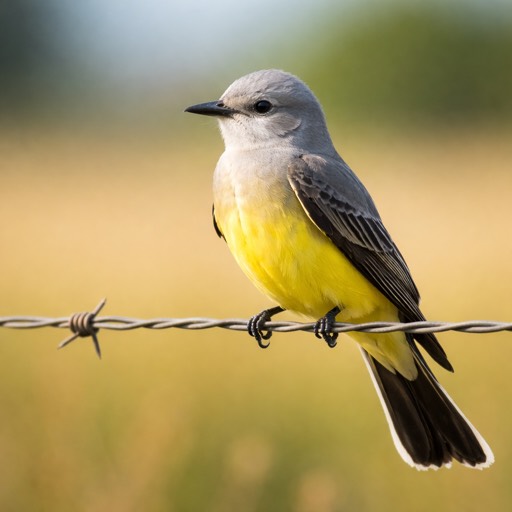
|
Field Marks to Verify:
- Yellow belly, gray head and breast
- Black tail with white outer edges
- Pale gray breast blending into yellow belly
- Sits on wires and fences — sallies out for insects
- Most common kingbird in Colorado
View on All About Birds →
Report Issue →
|
Eastern Kingbird - M
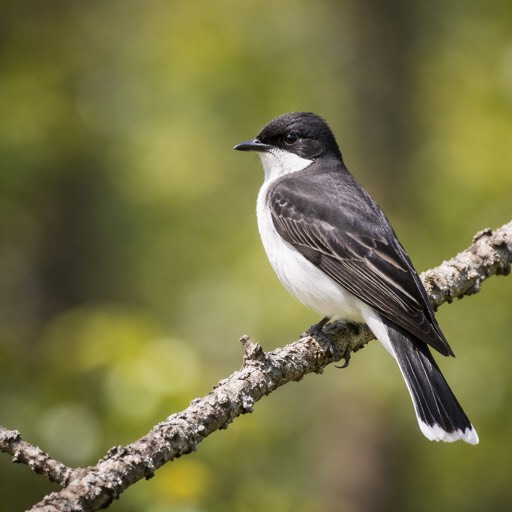
|
Field Marks to Verify:
- Dark blackish above, white below — sharp contrast
- White terminal tail band — like it was dipped in white paint
- Hidden red-orange crown patch (rarely seen)
- Aggressive — attacks much larger birds including hawks
- Upright posture on exposed perches
View on All About Birds →
Report Issue →
|
Say's Phoebe - M
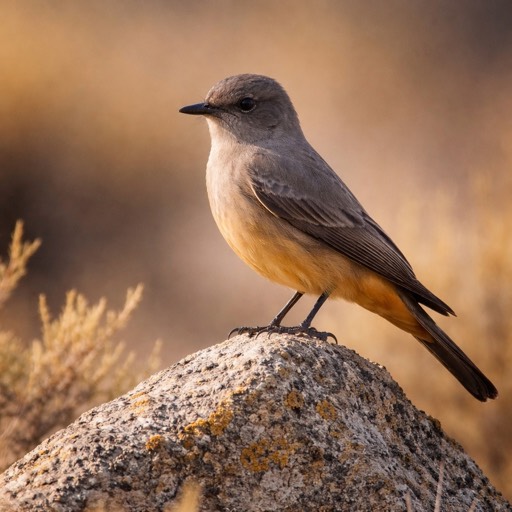
|
Field Marks to Verify:
- Pale grayish-brown above, cinnamon-orange belly and undertail
- No wing bars, no eye-ring — plain face
- Pumps tail while perched — classic phoebe behavior
- Open, arid habitats — often on ranch buildings
- Earliest flycatcher to return in spring
View on All About Birds →
Report Issue →
|
Belted Kingfisher - M
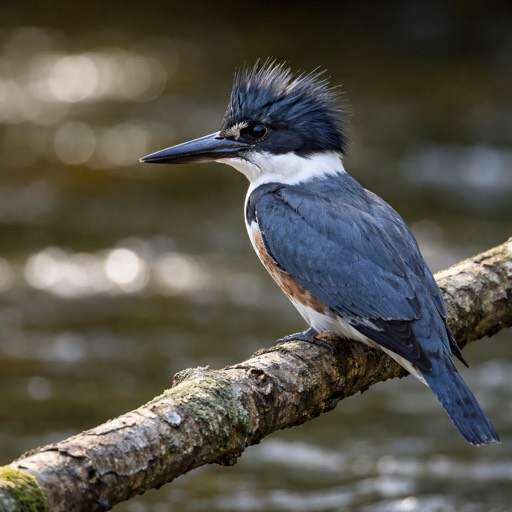
|
Field Marks to Verify:
- Large shaggy crest — disheveled look
- Blue-gray above, white below with blue-gray breast band
- Female: additional rufous belly band (female more colorful — unusual)
- Large head and dagger-like bill on small body
- Hovers over water then plunges headfirst for fish
View on All About Birds →
Report Issue →
|
Belted Kingfisher - F
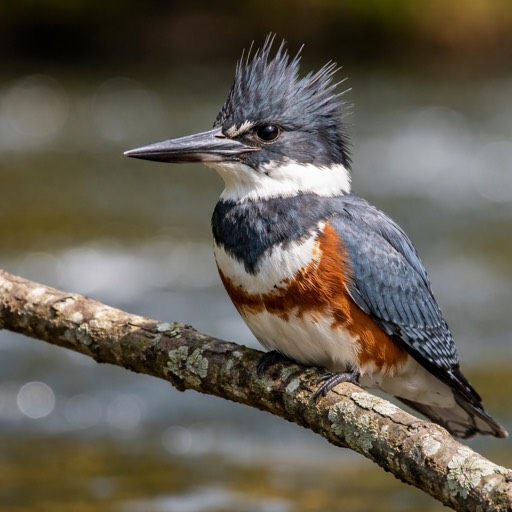
|
Field Marks to Verify:
- Large shaggy crest — disheveled look
- Blue-gray above, white below with blue-gray breast band
- Female: additional rufous belly band (female more colorful — unusual)
- Large head and dagger-like bill on small body
- Hovers over water then plunges headfirst for fish
View on All About Birds →
Report Issue →
|
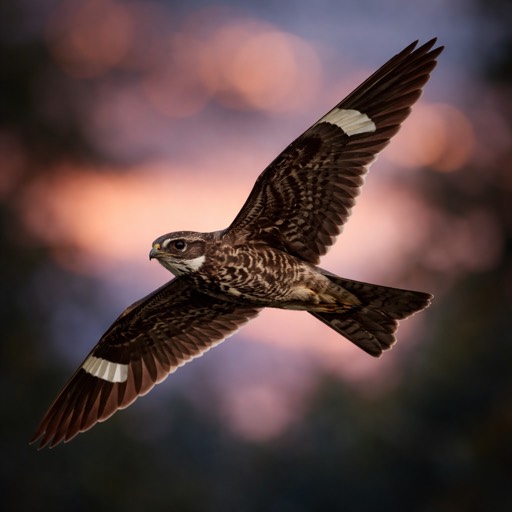
Common Nighthawk - Flight
|
Field Marks to Verify:
- Long, pointed wings with bold white wing bars — visible in flight
- Active at dawn and dusk — erratic, bat-like flight
- Tiny bill but enormous mouth for catching flying insects
- Males: white throat; females: buffy throat
- Roosts lengthwise on branches — cryptic
View on All About Birds →
Report Issue →
|
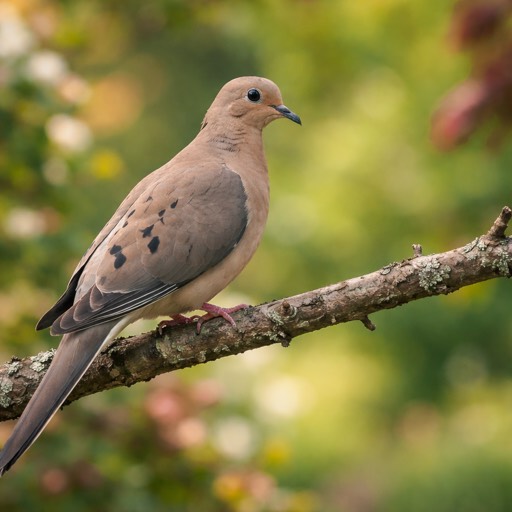
Mourning Dove - M
|
Field Marks to Verify:
- Slim, graceful with long, pointed tail
- Pinkish-brown body with black spots on wings
- White-edged tail visible in flight
- Small head, thin neck — gentle proportions
- Whistling wing sound on takeoff
View on All About Birds →
Report Issue →
|
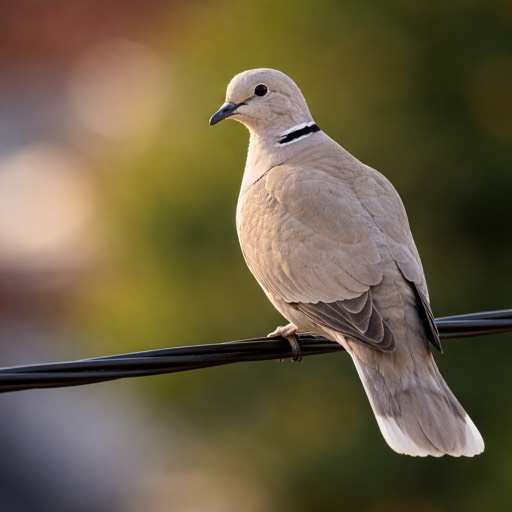
Eurasian Collared-Dove - M
|
Field Marks to Verify:
- Pale sandy-gray overall — larger and paler than Mourning Dove
- Black crescent on back of neck ('collar') — diagnostic
- Square tail (vs Mourning Dove's pointed tail)
- Dark primaries contrast with pale body from below
- Invasive species — rapidly expanding across North America since 1980s
View on All About Birds →
Report Issue →
|
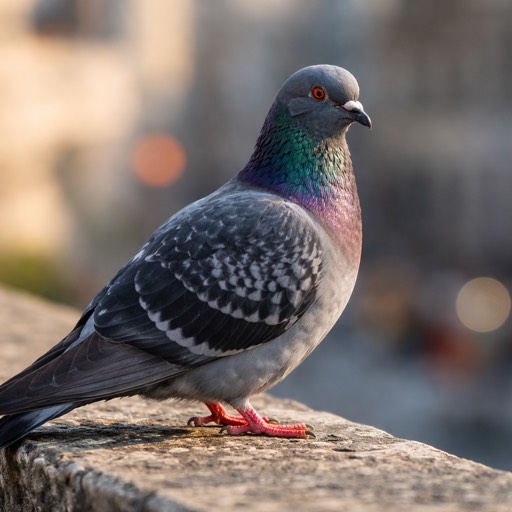
Rock Pigeon - M
|
Field Marks to Verify:
- Highly variable — blue-gray, checkered, red, white, mixed
- Classic: gray with iridescent green/purple neck, two black wing bars
- White rump visible in flight (wild-type birds)
- Thick, fleshy cere at bill base
- The common 'city pigeon' — found worldwide
View on All About Birds →
Report Issue →
|
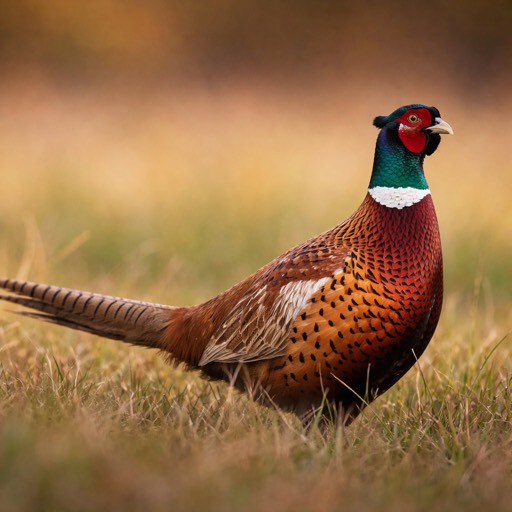
Ring-necked Pheasant - M
|
Field Marks to Verify:
- Male: iridescent green head, red eye wattles, white neck ring
- Male: copper body, extremely long pointed tail
- Female: cryptic brown — like a large, long-tailed quail
- Explosive, cackling flush from cover
- Introduced from Asia — now established in grasslands and cropfields
View on All About Birds →
Report Issue →
|
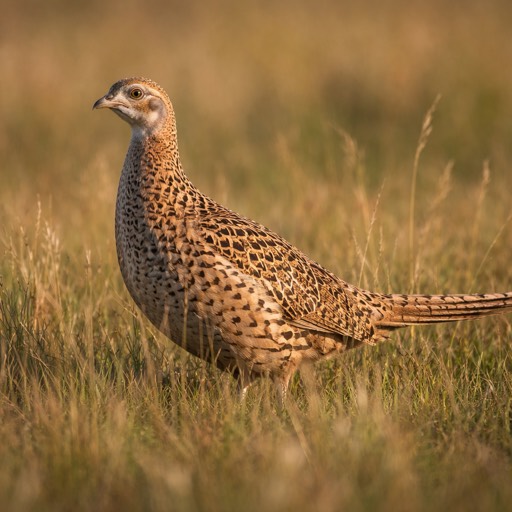
Ring-necked Pheasant - F
|
Field Marks to Verify:
- Male: iridescent green head, red eye wattles, white neck ring
- Male: copper body, extremely long pointed tail
- Female: cryptic brown — like a large, long-tailed quail
- Explosive, cackling flush from cover
- Introduced from Asia — now established in grasslands and cropfields
View on All About Birds →
Report Issue →
|
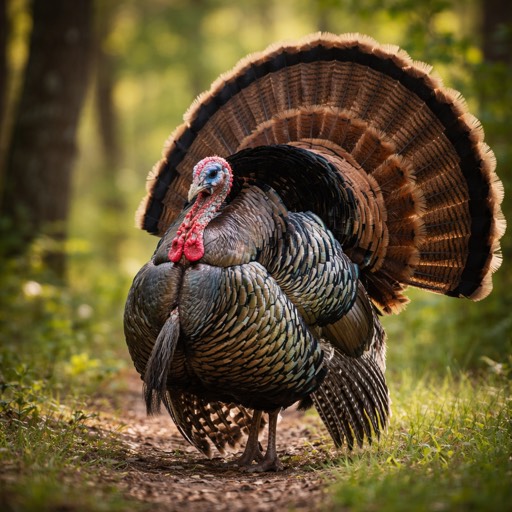
Wild Turkey - M
|
Field Marks to Verify:
- Large, dark-bodied with iridescent bronze plumage
- Male: bare red-and-blue head, long beard, fan tail in display
- Female: smaller, duller, small head with feathers
- Strong legs — roosts in trees despite heavy body
- Travels in flocks on the ground — scratches for food
View on All About Birds →
Report Issue →
|
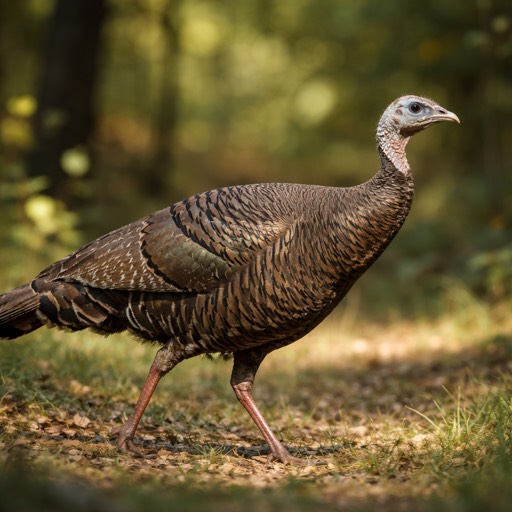
Wild Turkey - F
|
Field Marks to Verify:
- Large, dark-bodied with iridescent bronze plumage
- Male: bare red-and-blue head, long beard, fan tail in display
- Female: smaller, duller, small head with feathers
- Strong legs — roosts in trees despite heavy body
- Travels in flocks on the ground — scratches for food
View on All About Birds →
Report Issue →
|
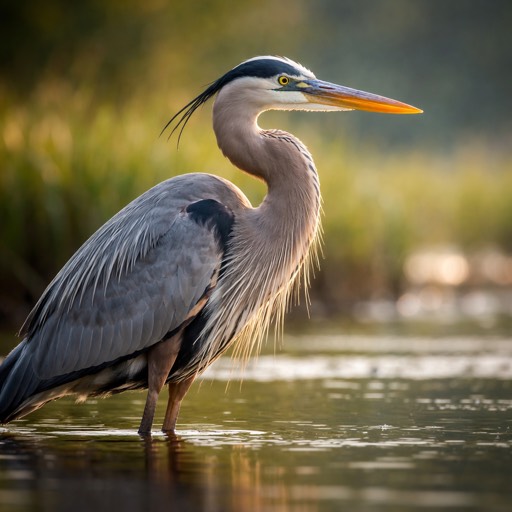
Great Blue Heron - M
|
Field Marks to Verify:
- Large — stands 4 feet tall, 6-foot wingspan
- Blue-gray body, black stripe over eye extending to plumes
- S-curved neck in flight (retracted, not extended like cranes)
- Yellow-orange dagger-like bill
- Often stands motionless at water's edge, waiting to strike
View on All About Birds →
Report Issue →
|
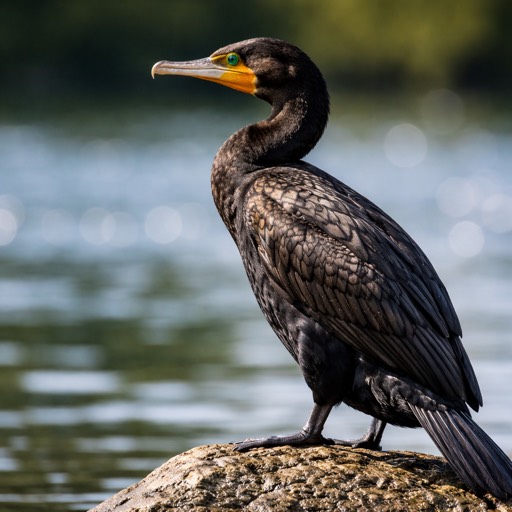
Double-crested Cormorant - M
|
Field Marks to Verify:
- Black overall with orange throat patch and facial skin
- Holds wings out to dry — characteristic spread-wing pose
- Swims low in water with neck kinked upward — snake-like
- Hooked bill for catching fish
- Breeding: small tufted crests above eyes (rarely seen well)
View on All About Birds →
Report Issue →
|
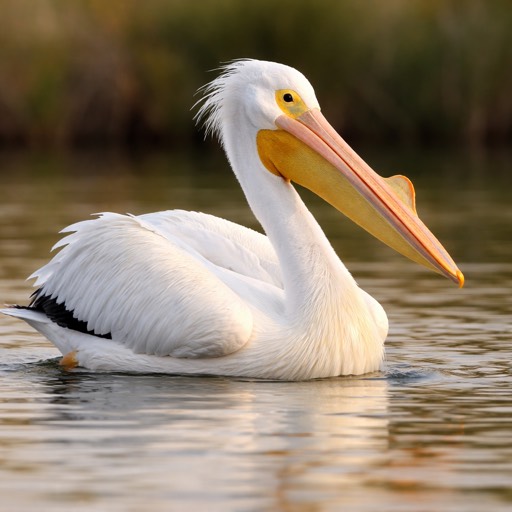
American White Pelican - M
|
Field Marks to Verify:
- Massive white body with black flight feathers — visible in soaring flight
- Enormous orange-yellow bill with throat pouch
- Soars on thermals in group formations — often very high
- Cooperative feeder — groups drive fish together
- Breeding: horn-like knob on upper bill
View on All About Birds →
Report Issue →
|
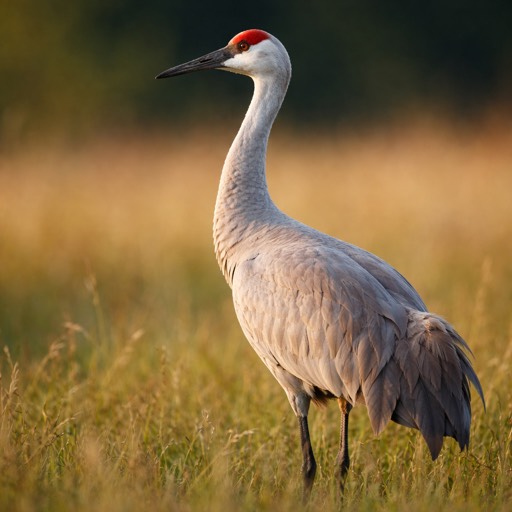
Sandhill Crane - Adult
|
Field Marks to Verify:
- Tall (4 feet), gray body with red crown patch (adults)
- Flies with neck extended straight out (vs herons' retracted S-neck)
- Bustle of drooping tail feathers giving rear-heavy look
- Often seen in large flocks during migration
- Dancing display — leaping and bowing
View on All About Birds →
Report Issue →
|
Tier 2
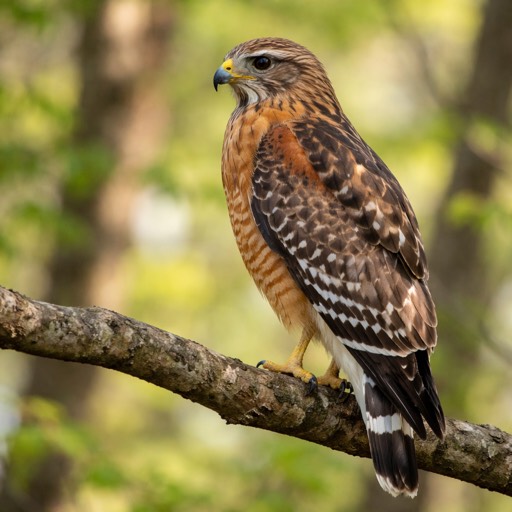
Red-shouldered Hawk - M Perch
|
Field Marks to Verify:
- Rufous chest and shoulder patches (adults)
- Bold black-and-white banding on tail and flight feathers
- Translucent crescent 'windows' near wingtips from below
- Medium-sized buteo — smaller than Red-tailed
- Checkered black-and-white wings from above
View on All About Birds →
Report Issue →
|
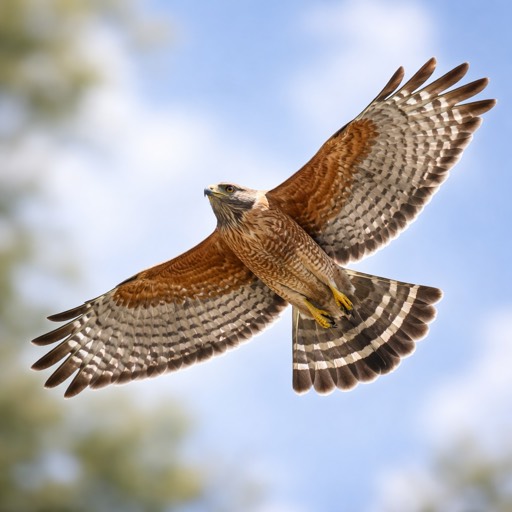
Red-shouldered Hawk - M Flight
|
Field Marks to Verify:
- Rufous chest and shoulder patches (adults)
- Bold black-and-white banding on tail and flight feathers
- Translucent crescent 'windows' near wingtips from below
- Medium-sized buteo — smaller than Red-tailed
- Checkered black-and-white wings from above
View on All About Birds →
Report Issue →
|
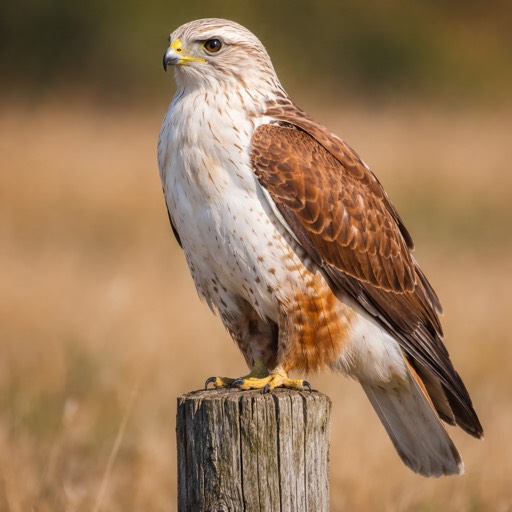
Ferruginous Hawk - Light Perch
|
Field Marks to Verify:
- Largest North American buteo — massive and pale
- Rufous legs feathered to toes — form dark V from below in flight
- White underparts and underwings with dark wrist commas
- Rich rufous back and shoulders
- Large gape gives 'smiling' appearance
View on All About Birds →
Report Issue →
|
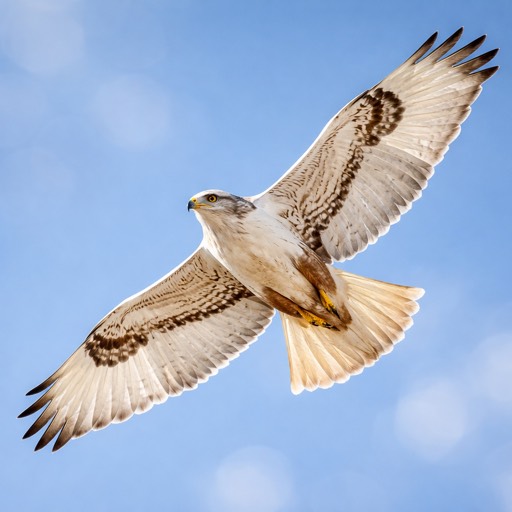
Ferruginous Hawk - Light Flight
|
Field Marks to Verify:
- Largest North American buteo — massive and pale
- Rufous legs feathered to toes — form dark V from below in flight
- White underparts and underwings with dark wrist commas
- Rich rufous back and shoulders
- Large gape gives 'smiling' appearance
View on All About Birds →
Report Issue →
|
Ferruginous Hawk - Dark Perch
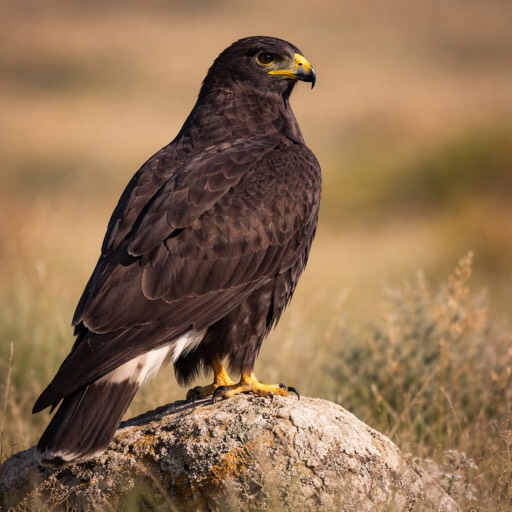
|
Field Marks to Verify:
- Largest North American buteo — massive and pale
- Rufous legs feathered to toes — form dark V from below in flight
- White underparts and underwings with dark wrist commas
- Rich rufous back and shoulders
- Large gape gives 'smiling' appearance
View on All About Birds →
Report Issue →
|
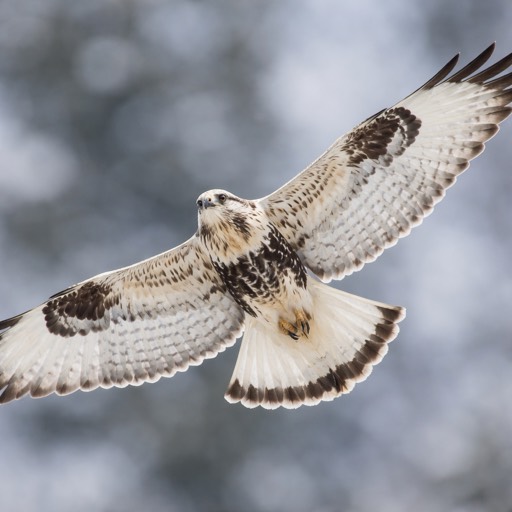
Rough-legged Hawk - Light Flight
|
Field Marks to Verify:
- Dark belly patch on white underparts (light morph)
- Dark carpal patches on pale underwings
- White tail base with broad dark terminal band
- Feathered legs to toes (shared with Ferruginous)
- Hovers frequently while hunting — unusual for a buteo
View on All About Birds →
Report Issue →
|
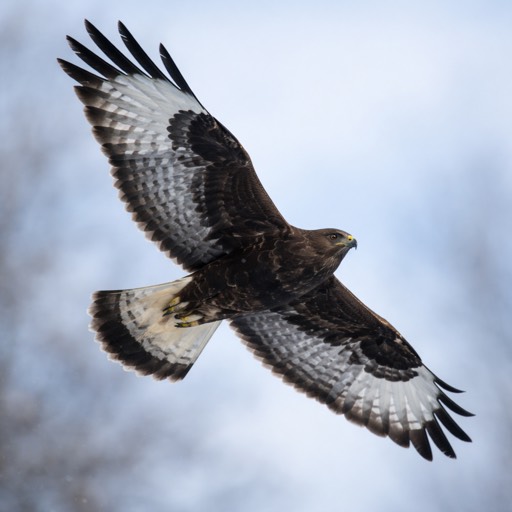
Rough-legged Hawk - Dark Flight
|
Field Marks to Verify:
- Dark belly patch on white underparts (light morph)
- Dark carpal patches on pale underwings
- White tail base with broad dark terminal band
- Feathered legs to toes (shared with Ferruginous)
- Hovers frequently while hunting — unusual for a buteo
View on All About Birds →
Report Issue →
|
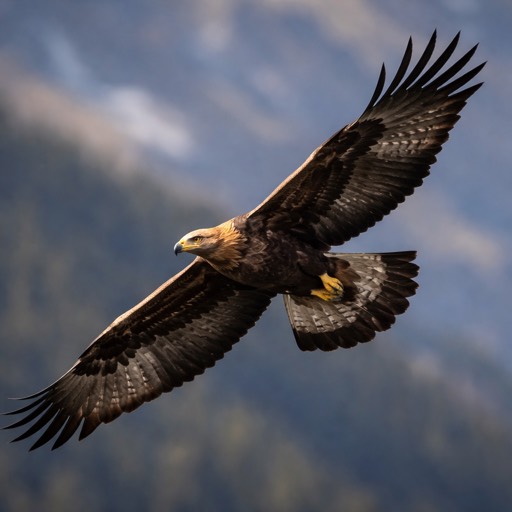
Golden Eagle - Adult Flight
|
Field Marks to Verify:
- Golden-tawny nape feathers — visible at closer range
- All-dark body with slight dihedral in soaring flight
- Immatures: white patches at base of tail and in wings
- Massive size but more agile than Bald Eagle
- Legs feathered to toes (Bald Eagle's legs are bare)
View on All About Birds →
Report Issue →
|
Golden Eagle - Immature Flight
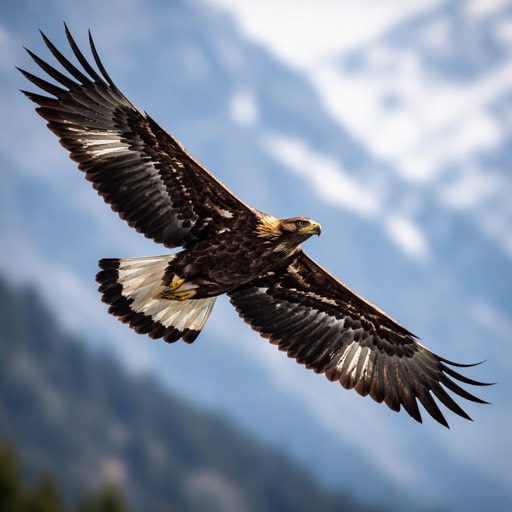
|
Field Marks to Verify:
- Golden-tawny nape feathers — visible at closer range
- All-dark body with slight dihedral in soaring flight
- Immatures: white patches at base of tail and in wings
- Massive size but more agile than Bald Eagle
- Legs feathered to toes (Bald Eagle's legs are bare)
View on All About Birds →
Report Issue →
|
Prairie Falcon - M Perch
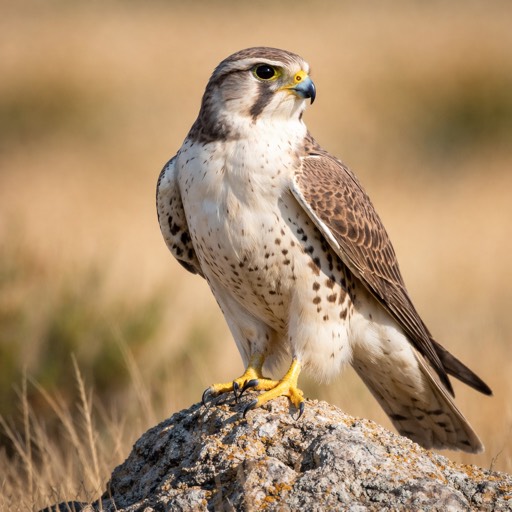
|
Field Marks to Verify:
- Dark 'wingpit' patches (axillars) visible from below
- Sandy-brown above — paler than Peregrine
- Thin moustache stripe — less bold than Peregrine
- Pointed wings, fast low-level flight over open terrain
- White between eye and dark ear patch
View on All About Birds →
Report Issue →
|
Prairie Falcon - M Flight
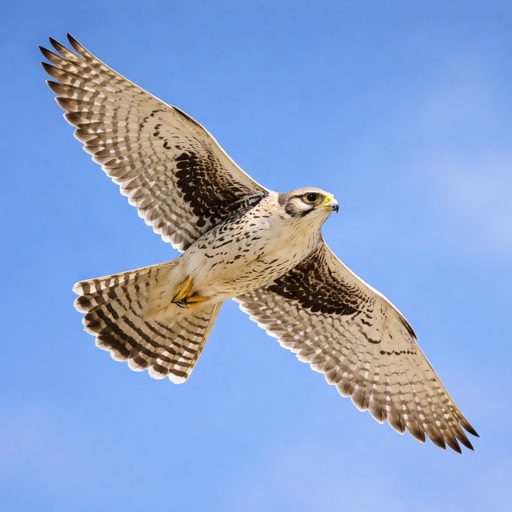
|
Field Marks to Verify:
- Dark 'wingpit' patches (axillars) visible from below
- Sandy-brown above — paler than Peregrine
- Thin moustache stripe — less bold than Peregrine
- Pointed wings, fast low-level flight over open terrain
- White between eye and dark ear patch
View on All About Birds →
Report Issue →
|
Peregrine Falcon - M Perch
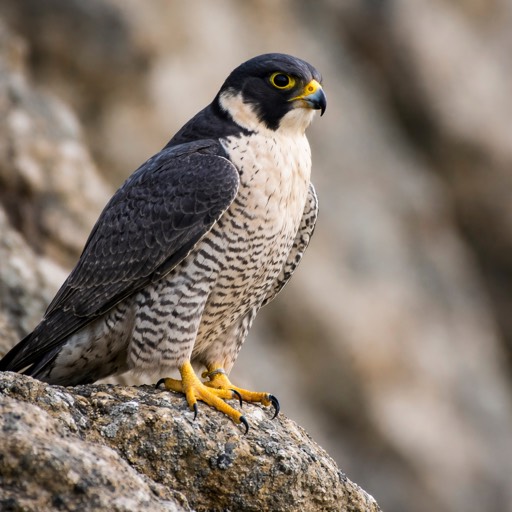
|
Field Marks to Verify:
- Dark helmet and thick black moustache stripe
- Slate-blue back (adults), barred underparts
- Pointed wings, powerful chest
- Steep, fast dives (stoops) exceeding 200 mph
- Immatures: brown with heavy streaking below
View on All About Birds →
Report Issue →
|
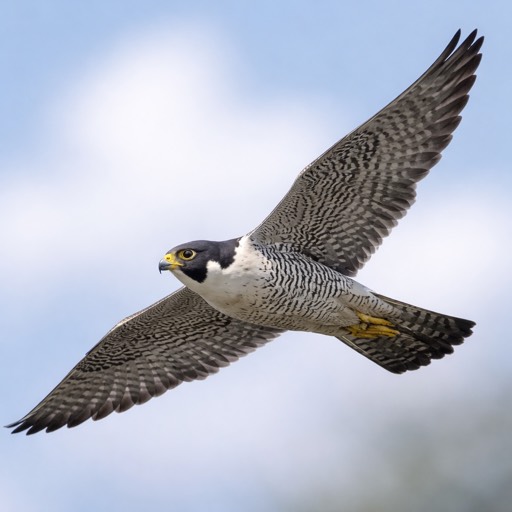
Peregrine Falcon - M Flight
|
Field Marks to Verify:
- Dark helmet and thick black moustache stripe
- Slate-blue back (adults), barred underparts
- Pointed wings, powerful chest
- Steep, fast dives (stoops) exceeding 200 mph
- Immatures: brown with heavy streaking below
View on All About Birds →
Report Issue →
|
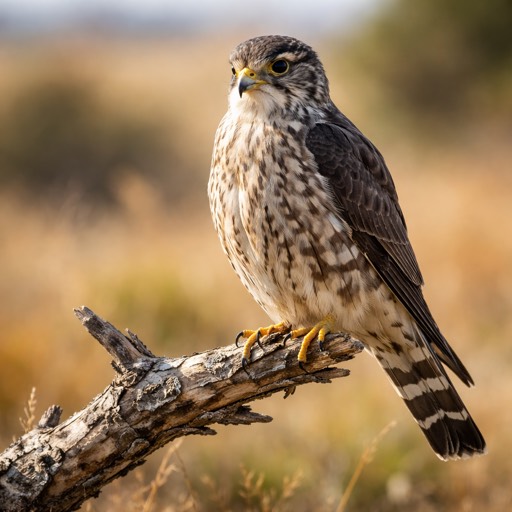
Merlin - M Perch
|
Field Marks to Verify:
- Stocky, powerful small falcon — no hovering
- Heavily streaked underparts
- Dark tail with narrow pale bands
- No bold facial pattern (vs Kestrel's two stripes)
- Fast, direct flight with rapid wingbeats — 'tiny Peregrine'
View on All About Birds →
Report Issue →
|
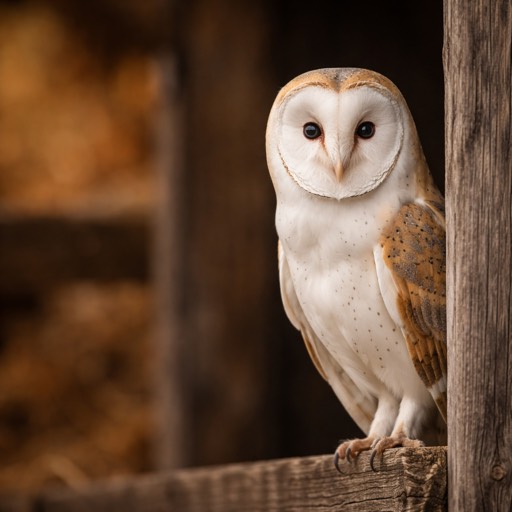
Barn Owl - M Perch
|
Field Marks to Verify:
- White, heart-shaped facial disk — unmistakable
- Pale golden-buff above with gray and white markings
- White to pale cinnamon underparts with small dark spots
- Dark eyes in pale face
- Long legs; buoyant, mothlike flight
View on All About Birds →
Report Issue →
|
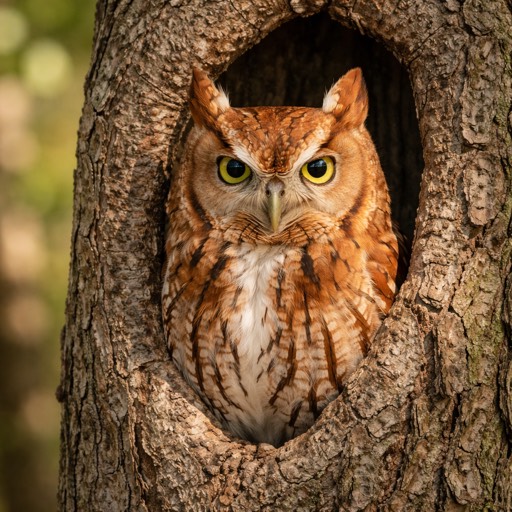
Eastern Screech-Owl - Red Morph
|
Field Marks to Verify:
- Small with ear tufts — compact and stocky
- Gray or rufous morph (rufous more common in East)
- Yellow eyes, pale bill
- Complex bark-like camouflage plumage
- Descending whinny call (vs Western's bouncing-ball trill)
View on All About Birds →
Report Issue →
|
Eastern Screech-Owl - Gray Morph
|
Field Marks to Verify:
- Small with ear tufts — compact and stocky
- Gray or rufous morph (rufous more common in East)
- Yellow eyes, pale bill
- Complex bark-like camouflage plumage
- Descending whinny call (vs Western's bouncing-ball trill)
View on All About Birds →
Report Issue →
|
Western Screech-Owl - M Perch
|
Field Marks to Verify:
- Small with ear tufts — nearly identical to Eastern
- Gray morph only in Colorado (no rufous)
- Dark bill (vs Eastern's pale bill)
- Fine crossbarring on underparts
- Bouncing-ball trill call (vs Eastern's descending whinny)
View on All About Birds →
Report Issue →
|
Short-eared Owl - M Flight
|
Field Marks to Verify:
- Buoyant, floppy flight low over open fields — mothlike
- Dark wrist patches on pale underwings from below
- Pale facial disk with dark eye patches — 'panda face'
- Tiny ear tufts rarely visible
- Active at dawn and dusk — often seen hunting in daylight
View on All About Birds →
Report Issue →
|
Greater Scaup - M
|
Field Marks to Verify:
- Male: black head with green sheen (vs Lesser's purple)
- Rounded head shape (vs Lesser Scaup's peaked head)
- White wing stripe extends onto primaries in flight
- Larger and heavier-billed than Lesser Scaup
- Female: broad white face patch at bill base
View on All About Birds →
Report Issue →
|
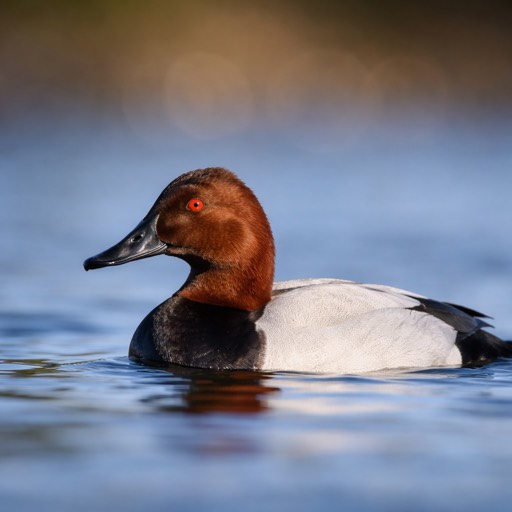
Canvasback - M
|
Field Marks to Verify:
- Long, sloping forehead blending smoothly into bill — distinctive profile
- Male: dark rufous head darker than Redhead's, white body
- Male: 'canvas-white' back — very pale, visible at distance
- Larger and longer-billed than Redhead
- Female: pale brown with same sloping profile
View on All About Birds →
Report Issue →
|
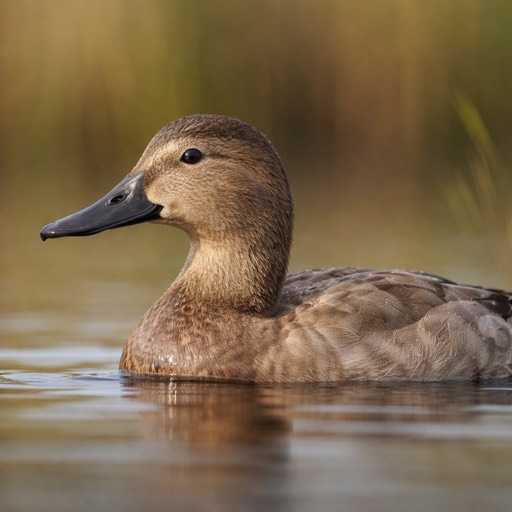
Canvasback - F
|
Field Marks to Verify:
- Long, sloping forehead blending smoothly into bill — distinctive profile
- Male: dark rufous head darker than Redhead's, white body
- Male: 'canvas-white' back — very pale, visible at distance
- Larger and longer-billed than Redhead
- Female: pale brown with same sloping profile
View on All About Birds →
Report Issue →
|
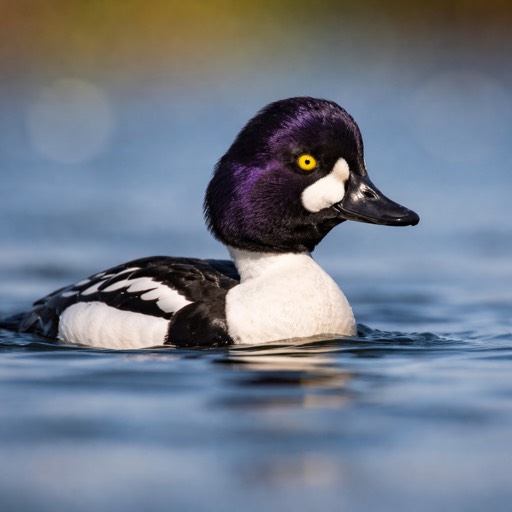
Barrow's Goldeneye - M
|
Field Marks to Verify:
- Male: white crescent (not round spot) on purple-black head
- Male: more black on sides than Common Goldeneye
- Female: entirely orange-yellow bill (vs Common's yellow-tipped black bill)
- Purple (not green) head gloss on male
- Prefers mountain lakes; less common than Common Goldeneye
View on All About Birds →
Report Issue →
|
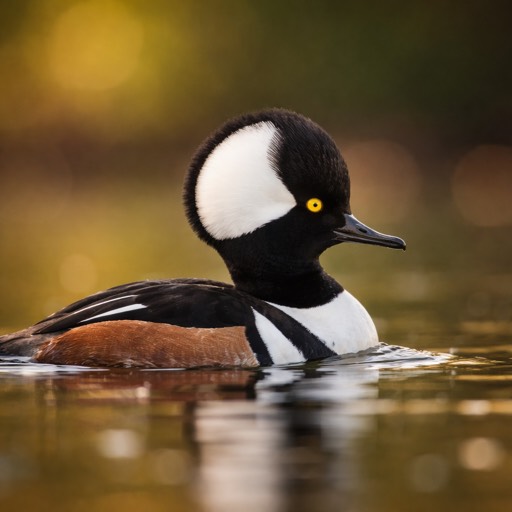
Hooded Merganser - M
|
Field Marks to Verify:
- Male: spectacular fan-shaped crest — white with black border
- Male: black and white body, thin serrated bill
- Female: shaggy rusty-brown crest
- Smallest merganser — compact and fast
- Bright yellow eye (male)
View on All About Birds →
Report Issue →
|
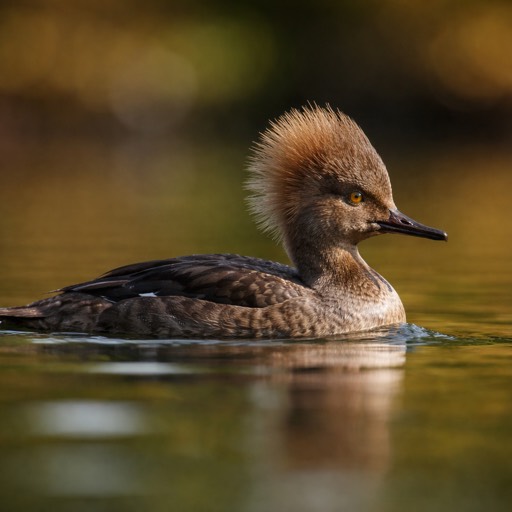
Hooded Merganser - F
|
Field Marks to Verify:
- Male: spectacular fan-shaped crest — white with black border
- Male: black and white body, thin serrated bill
- Female: shaggy rusty-brown crest
- Smallest merganser — compact and fast
- Bright yellow eye (male)
View on All About Birds →
Report Issue →
|
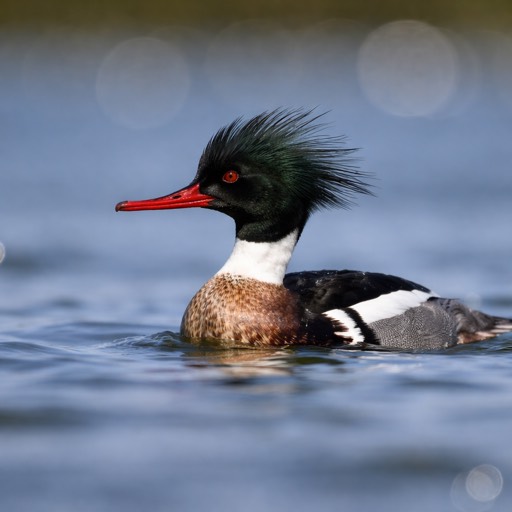
Red-breasted Merganser - M
|
Field Marks to Verify:
- Male: shaggy, spiky green crest (messier than Common Merganser)
- Male: rusty breast band, white collar, gray sides
- Female: rufous head blends gradually into gray neck (vs Common's sharp contrast)
- Thinner and more streamlined than Common Merganser
- Red eye and thin red bill — both sexes
View on All About Birds →
Report Issue →
|
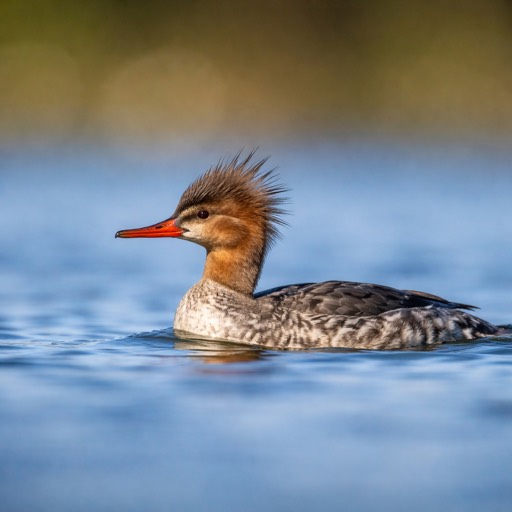
Red-breasted Merganser - F
|
Field Marks to Verify:
- Male: shaggy, spiky green crest (messier than Common Merganser)
- Male: rusty breast band, white collar, gray sides
- Female: rufous head blends gradually into gray neck (vs Common's sharp contrast)
- Thinner and more streamlined than Common Merganser
- Red eye and thin red bill — both sexes
View on All About Birds →
Report Issue →
|
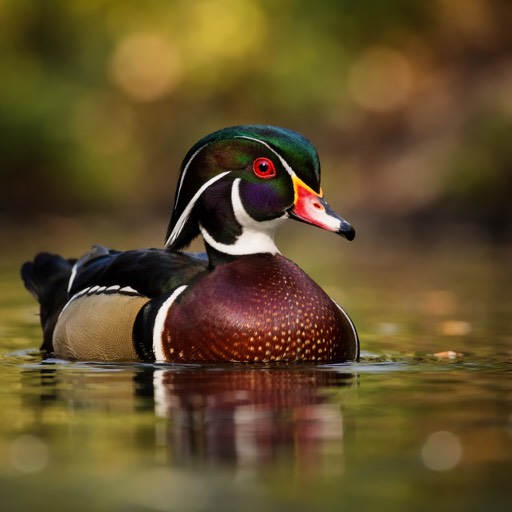
Wood Duck - M
|
Field Marks to Verify:
- Male: ornate head pattern — iridescent green and purple with white stripes
- Male: red eye, red bill base, chestnut breast with white flecks
- Female: teardrop-shaped white eye patch
- Rectangular head shape, long tail — sleek profile
- Often perches in trees — nests in tree cavities
View on All About Birds →
Report Issue →
|
Wood Duck - F
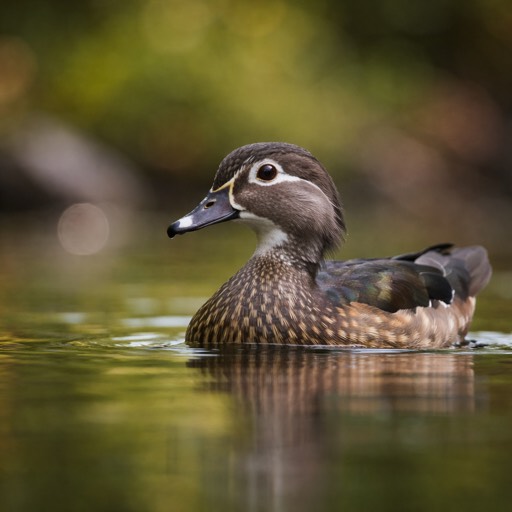
|
Field Marks to Verify:
- Male: ornate head pattern — iridescent green and purple with white stripes
- Male: red eye, red bill base, chestnut breast with white flecks
- Female: teardrop-shaped white eye patch
- Rectangular head shape, long tail — sleek profile
- Often perches in trees — nests in tree cavities
View on All About Birds →
Report Issue →
|
Snow Goose - White Morph
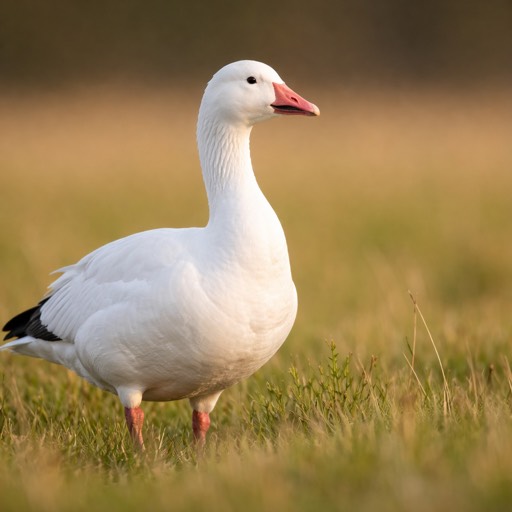
|
Field Marks to Verify:
- White morph: all white with black wingtips ('frosty tips')
- Pink bill with dark 'grinning patch' along edges
- Blue morph: dark body, white head and upper neck
- Massive migrating flocks, often mixed with Ross's
- Orange-pink legs — both morphs
View on All About Birds →
Report Issue →
|
Snow Goose - Blue Morph
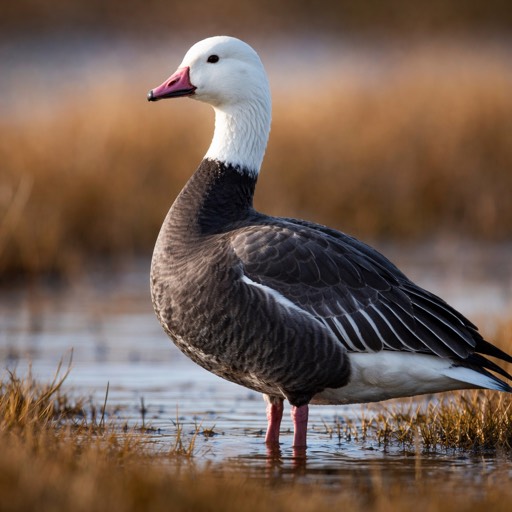
|
Field Marks to Verify:
- White morph: all white with black wingtips ('frosty tips')
- Pink bill with dark 'grinning patch' along edges
- Blue morph: dark body, white head and upper neck
- Massive migrating flocks, often mixed with Ross's
- Orange-pink legs — both morphs
View on All About Birds →
Report Issue →
|
Ross's Goose - M
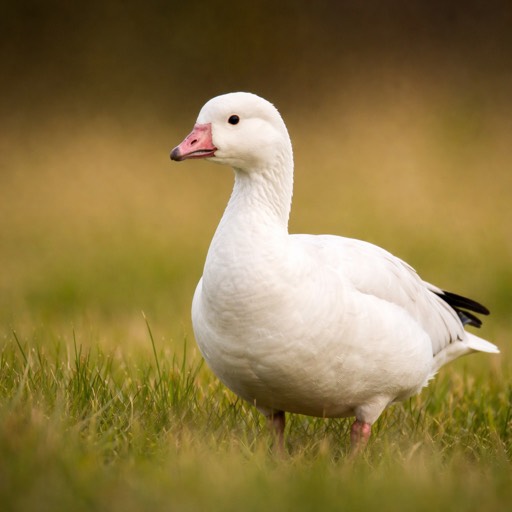
|
Field Marks to Verify:
- Smallest white goose — Mallard-sized
- Stubby, triangular pink bill — no grinning patch (vs Snow)
- Shorter neck and rounder head than Snow Goose
- White plumage with black wingtips — like mini Snow Goose
- Often found mixed in Snow Goose flocks
View on All About Birds →
Report Issue →
|
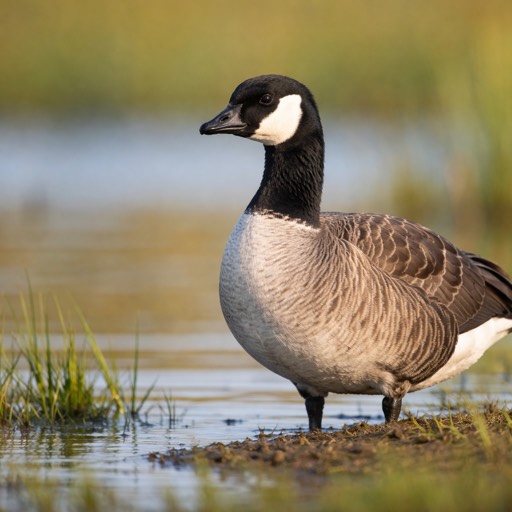
Cackling Goose - M
|
Field Marks to Verify:
- Miniature Canada Goose — notably smaller
- Short, stubby bill (vs Canada's longer bill)
- Shorter neck — often looks neckless
- Steeper forehead angle than Canada Goose
- Higher-pitched call than Canada Goose
View on All About Birds →
Report Issue →
|
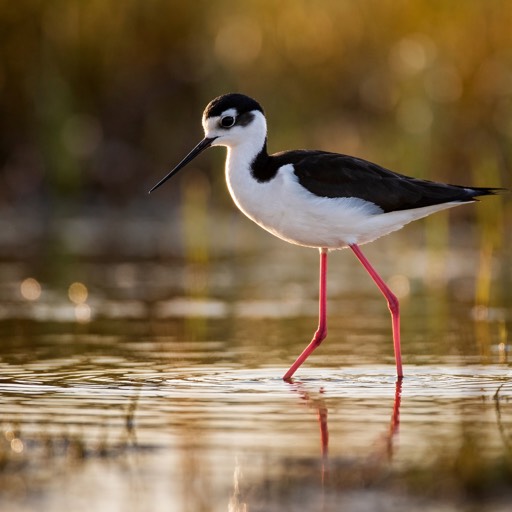
Black-necked Stilt - M
|
Field Marks to Verify:
- Black above, white below — extreme contrast
- Absurdly long pink-red legs — longest relative to body of any bird
- Thin, straight, needle-like black bill
- Red eye
- Noisy and aggressive around nests
View on All About Birds →
Report Issue →
|
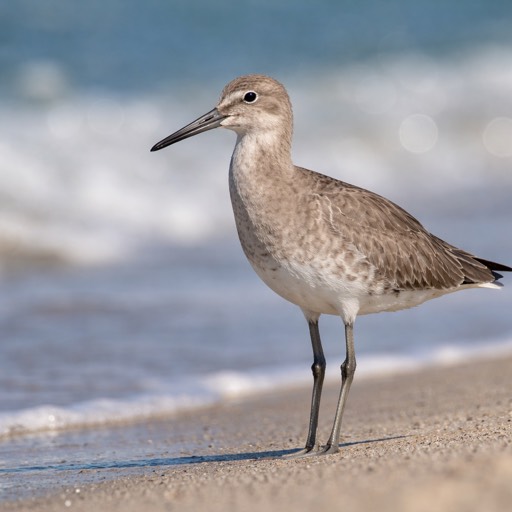
Willet - Standing
|
Field Marks to Verify:
- Drab gray-brown when standing — unremarkable
- Dramatic bold black-and-white wing pattern in flight
- Large, heavy, straight bill — thick at base
- Sturdy build — larger than most shorebirds
- Loud 'pill-will-WILLET' call
View on All About Birds →
Report Issue →
|
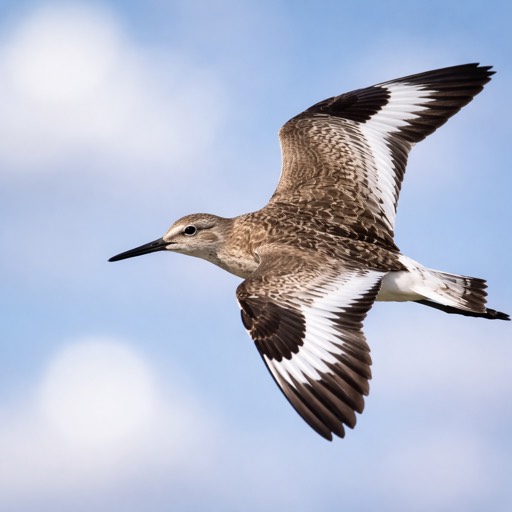
Willet - Flight
|
Field Marks to Verify:
- Drab gray-brown when standing — unremarkable
- Dramatic bold black-and-white wing pattern in flight
- Large, heavy, straight bill — thick at base
- Sturdy build — larger than most shorebirds
- Loud 'pill-will-WILLET' call
View on All About Birds →
Report Issue →
|
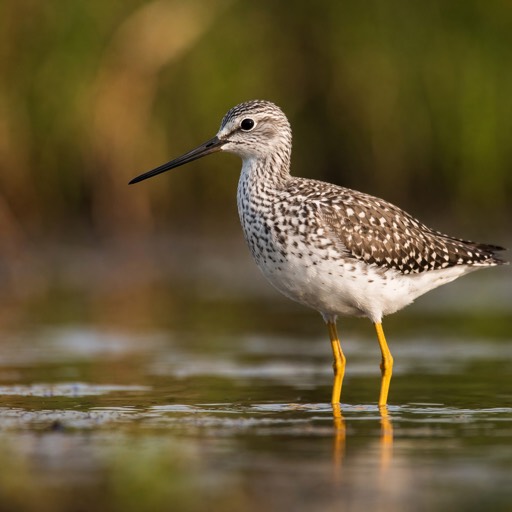
Greater Yellowlegs - M
|
Field Marks to Verify:
- Bright yellow legs, long and slender
- Slightly upturned bill — 1.5x head length
- Gray-brown and white speckled plumage
- Larger than Lesser Yellowlegs (robin-to-pigeon sized)
- 3-note call: 'tew-tew-tew'
View on All About Birds →
Report Issue →
|
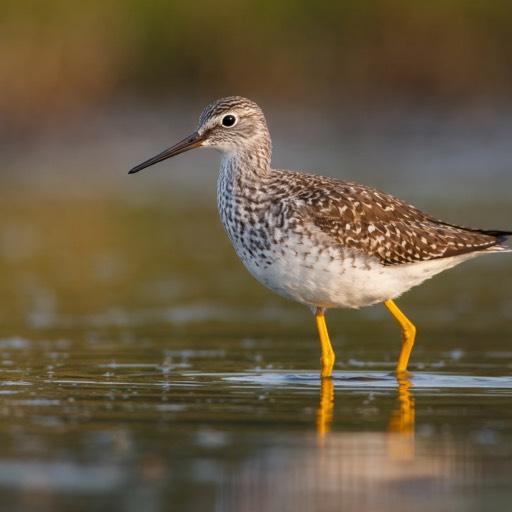
Lesser Yellowlegs - M
|
Field Marks to Verify:
- Bright yellow legs — like Greater but smaller (robin-sized)
- Straight, thin bill — about 1x head length (shorter than Greater's)
- More delicate and elegant than Greater Yellowlegs
- Mottled gray-brown above, white below
- 1-2 note call: 'tew' or 'tew-tew' (vs Greater's 3-note)
View on All About Birds →
Report Issue →
|
Least Sandpiper - M
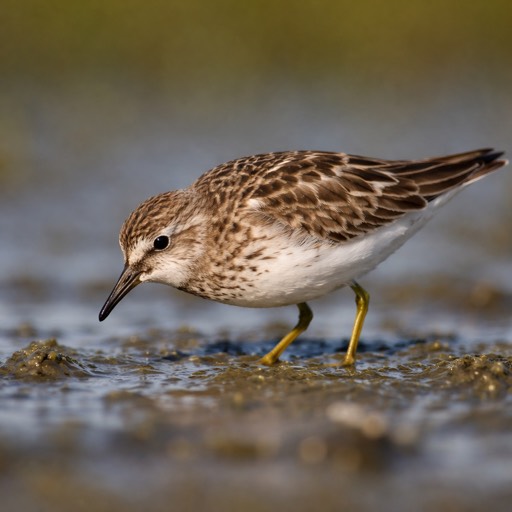
|
Field Marks to Verify:
- Smallest shorebird in the world — sparrow-sized
- Yellow-green legs — only small peep with yellow legs
- Brown, streaky overall — warm-toned
- Thin, slightly drooped bill
- Feeds in muddy edges, often crouched low
View on All About Birds →
Report Issue →
|
Western Sandpiper - M
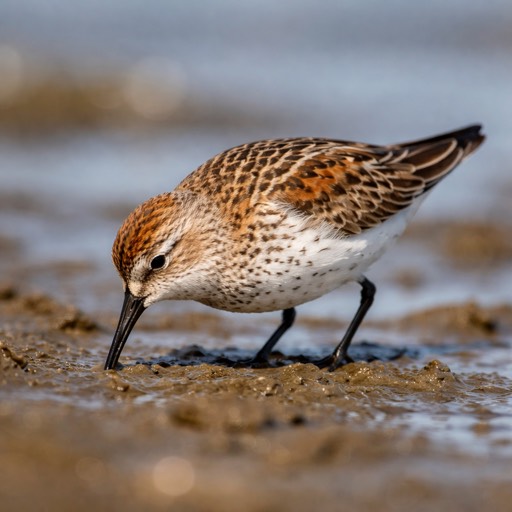
|
Field Marks to Verify:
- Slightly drooped bill tip — longer than Least's
- Black legs (vs Least Sandpiper's yellow-green)
- Rufous scapulars in breeding plumage
- Larger and grayer than Least Sandpiper
- Chevron-shaped flank streaks (vs Least's streaked breast)
View on All About Birds →
Report Issue →
|
Baird's Sandpiper - M
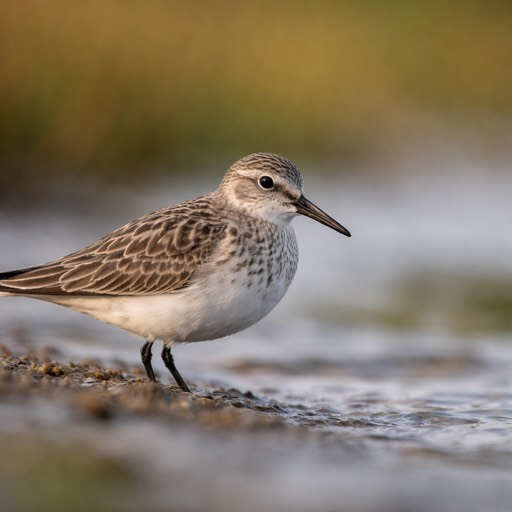
|
Field Marks to Verify:
- Long wings extending past tail tip when standing
- Buffy breast with fine streaking fading into white belly
- Scaly-patterned back from pale feather edges
- Black legs, thin straight bill
- Prefers drier habitats than other peeps — upland fields, mudflat edges
View on All About Birds →
Report Issue →
|
Long-billed Dowitcher - M
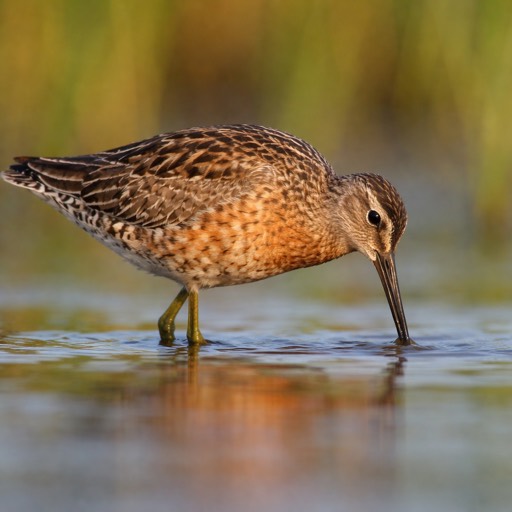
|
Field Marks to Verify:
- Very long, straight bill — probes in sewing-machine motion
- Chunky body with short legs — stocky shorebird
- Breeding: rufous underparts with barred flanks
- White wedge on back visible in flight
- Sharp 'keek!' call — single note (vs Short-billed's 'tu-tu-tu')
View on All About Birds →
Report Issue →
|
Wilson's Snipe - M
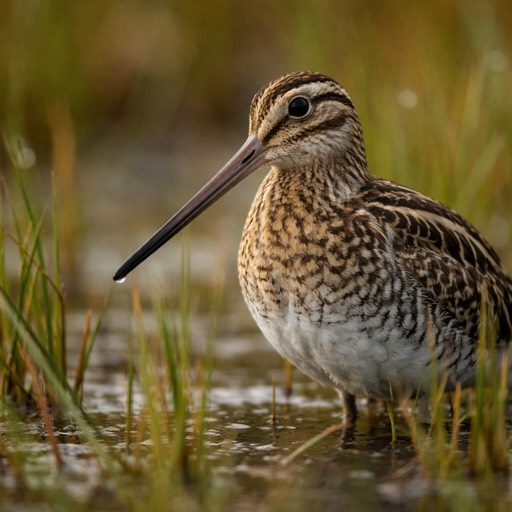
|
Field Marks to Verify:
- Extremely long, straight bill — longest proportionally of any shorebird
- Cryptic brown-and-gold striped plumage — nearly invisible in marsh
- Explosive, zigzag flush when surprised
- Dark stripes through eye and across crown
- Winnowing display: tail feathers vibrate in flight creating eerie sound
View on All About Birds →
Report Issue →
|
Wilson's Phalarope - F Breeding
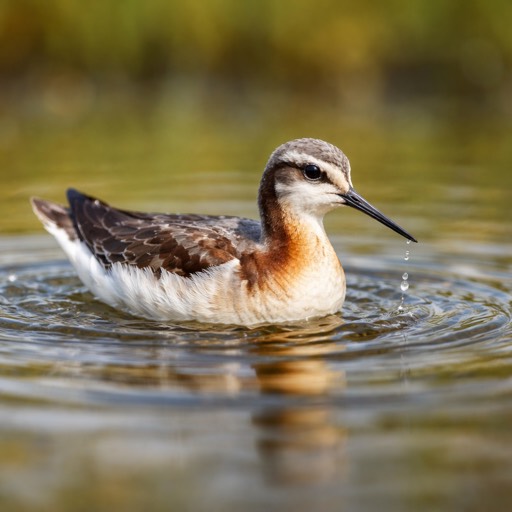
|
Field Marks to Verify:
- Female more colorful than male — reversed sex roles
- Breeding female: gray crown, black eye-line continuing as rufous neck stripe
- Spins in circles on water to stir up food
- Thin, needle-like bill — longest of the phalaropes
- Non-breeding: very plain gray and white, yellowish legs
View on All About Birds →
Report Issue →
|
Wilson's Phalarope - Nonbreeding
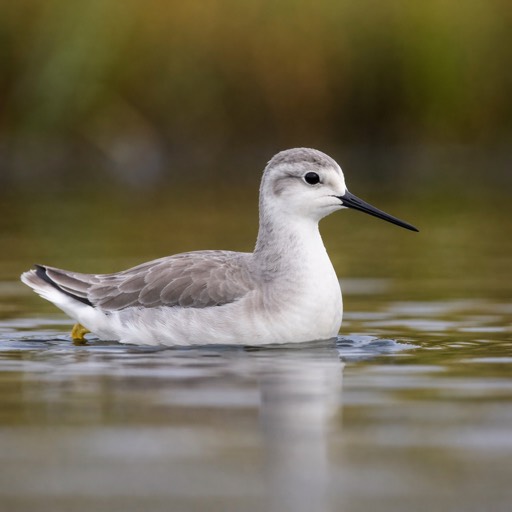
|
Field Marks to Verify:
- Female more colorful than male — reversed sex roles
- Breeding female: gray crown, black eye-line continuing as rufous neck stripe
- Spins in circles on water to stir up food
- Thin, needle-like bill — longest of the phalaropes
- Non-breeding: very plain gray and white, yellowish legs
View on All About Birds →
Report Issue →
|
Semipalmated Plover - M
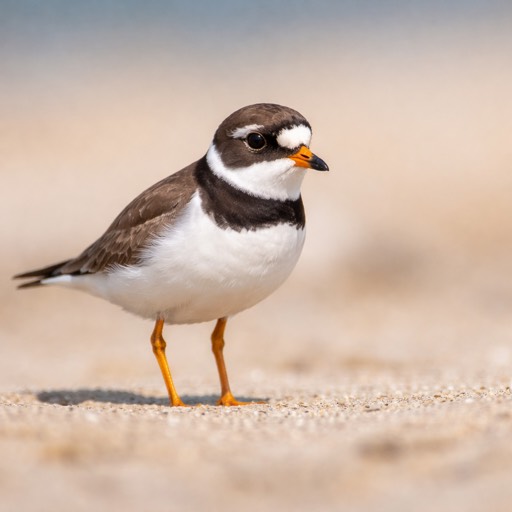
|
Field Marks to Verify:
- Single black breast band on white chest (vs Killdeer's two bands)
- Small, compact plover — sparrow-sized
- Orange legs and orange bill base with black tip
- Brown above, white below — like a mini-Killdeer
- Short bill — typical plover run-stop-peck feeding style
View on All About Birds →
Report Issue →
|
Mountain Plover - Breeding
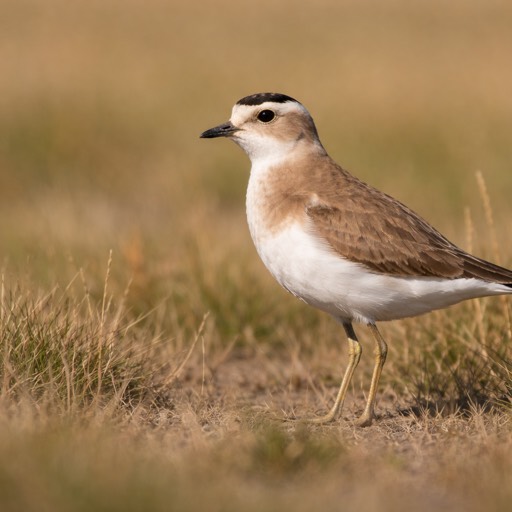
|
Field Marks to Verify:
- No breast bands — unusually plain for a plover
- Sandy-brown above, white below — cryptic on bare ground
- Breeding: black forecrown and lore stripe on white face
- Prefers short-grass prairie and plowed fields — rarely near water
- White wing stripe visible in flight
View on All About Birds →
Report Issue →
|
Marbled Godwit - M
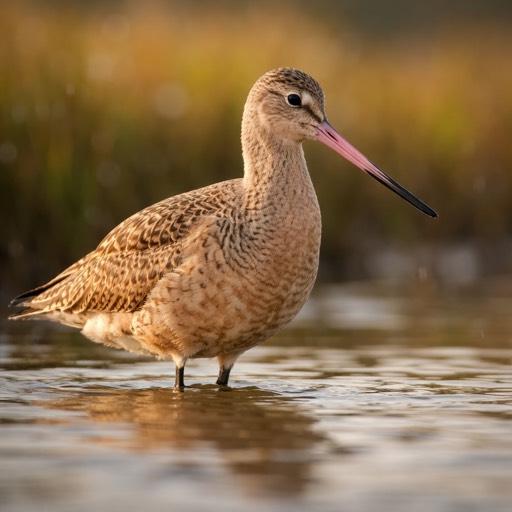
|
Field Marks to Verify:
- Large shorebird with long, slightly upturned bicolored bill (pink base, dark tip)
- Warm cinnamon-buff overall — marbled brown pattern
- Cinnamon underwings visible in flight
- Larger than Willet, smaller than Curlew
- Often feeds in shallow water, probing deeply
View on All About Birds →
Report Issue →
|
Long-billed Curlew - M
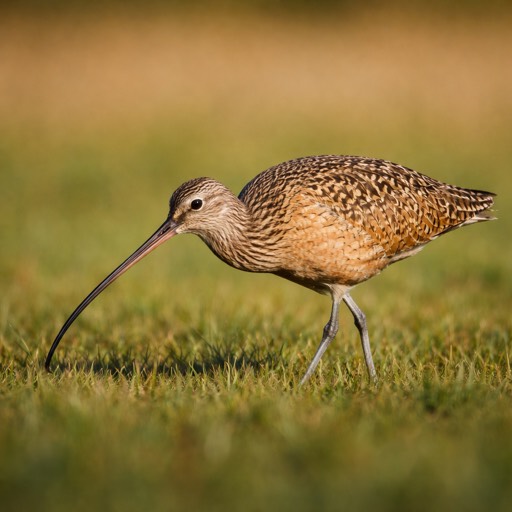
|
Field Marks to Verify:
- Extremely long, downcurved bill — longest of any North American shorebird
- Warm buffy-brown overall
- Cinnamon underwings visible in flight
- Large — nearly crow-sized
- Grassland breeder; dramatic flight displays
View on All About Birds →
Report Issue →
|
Red-naped Sapsucker - M
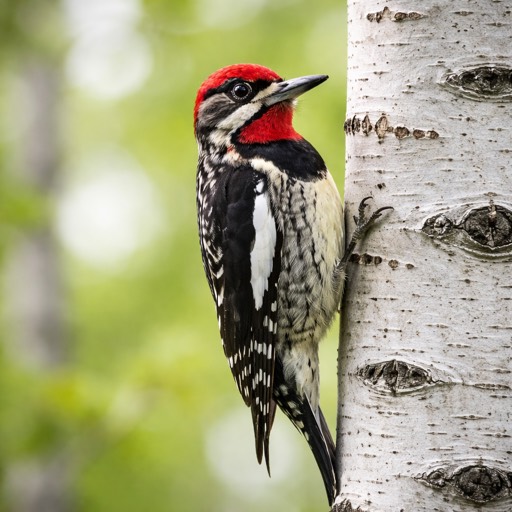
|
Field Marks to Verify:
- Red crown and nape (red 'cap')
- Black and white striped face with red throat
- Neat rows of sap wells drilled in trees
- White wing patch visible at rest
- Black breast patch between red throat and yellow belly
View on All About Birds →
Report Issue →
|
Red-naped Sapsucker - F
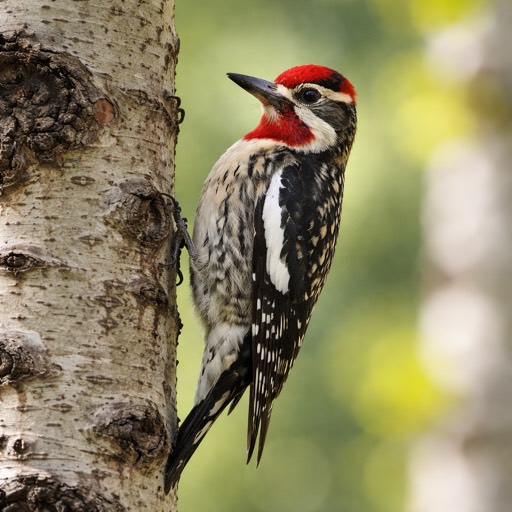
|
Field Marks to Verify:
- Red crown and nape (red 'cap')
- Black and white striped face with red throat
- Neat rows of sap wells drilled in trees
- White wing patch visible at rest
- Black breast patch between red throat and yellow belly
View on All About Birds →
Report Issue →
|
Williamson's Sapsucker - M
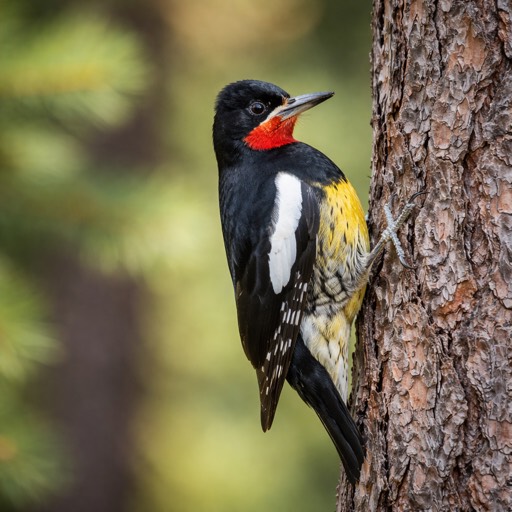
|
Field Marks to Verify:
- Extreme sexual dimorphism — male and female look like different species
- Male: mostly black with white face stripes, red throat, yellow belly
- Female: brown-barred body, no red — resembles a different woodpecker
- White rump and wing patch
- Found in high-elevation conifer forests
View on All About Birds →
Report Issue →
|
Williamson's Sapsucker - F
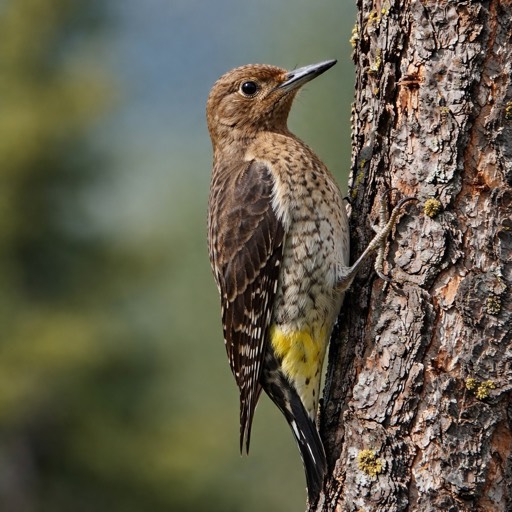
|
Field Marks to Verify:
- Extreme sexual dimorphism — male and female look like different species
- Male: mostly black with white face stripes, red throat, yellow belly
- Female: brown-barred body, no red — resembles a different woodpecker
- White rump and wing patch
- Found in high-elevation conifer forests
View on All About Birds →
Report Issue →
|
Red-headed Woodpecker - Adult
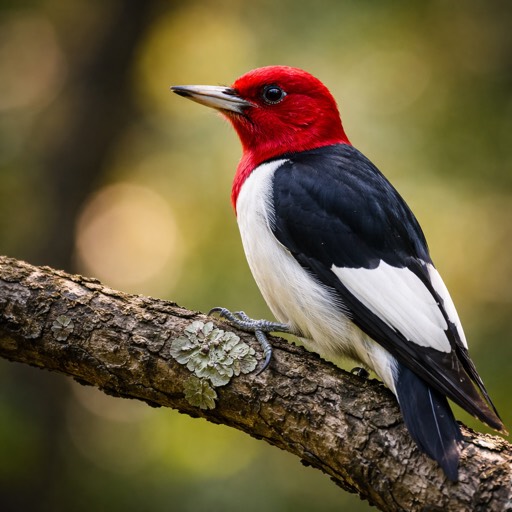
|
Field Marks to Verify:
- Entirely red head — solid crimson, unmistakable
- Bold black and white body — large white wing patches
- In flight: half-black, half-white wings from above
- Catches insects in flight — flycatcher-like behavior
- Immatures: brown head (not red) — often confuse birders
View on All About Birds →
Report Issue →
|
Red-headed Woodpecker - Juvenile
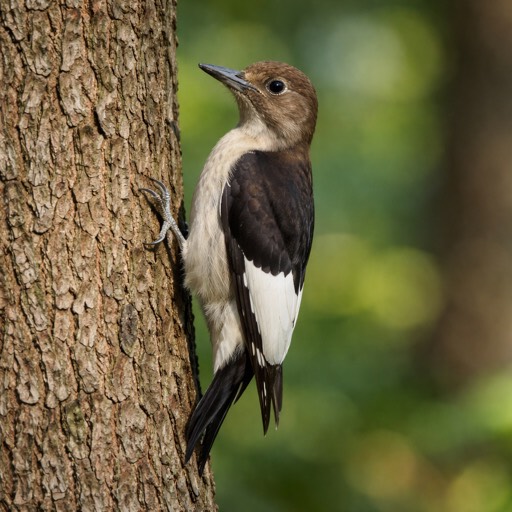
|
Field Marks to Verify:
- Entirely red head — solid crimson, unmistakable
- Bold black and white body — large white wing patches
- In flight: half-black, half-white wings from above
- Catches insects in flight — flycatcher-like behavior
- Immatures: brown head (not red) — often confuse birders
View on All About Birds →
Report Issue →
|
Lewis's Woodpecker - M
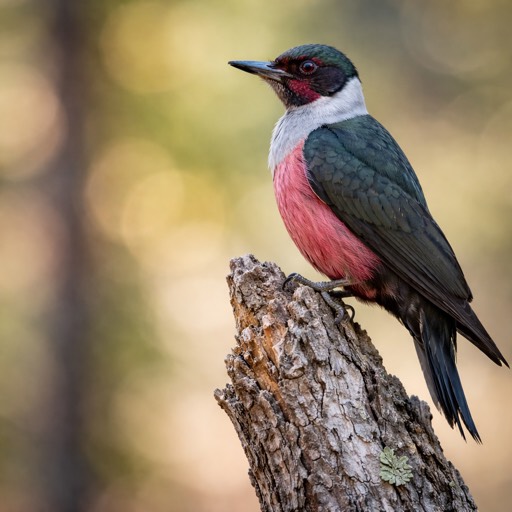
|
Field Marks to Verify:
- Dark greenish-black back — no white patches or barring
- Pink-red belly, gray collar, dark red face
- Slow, buoyant, crow-like flight — unusual for a woodpecker
- Catches insects on the wing like a flycatcher
- Acorn-caching behavior in winter
View on All About Birds →
Report Issue →
|
Rufous Hummingbird - M
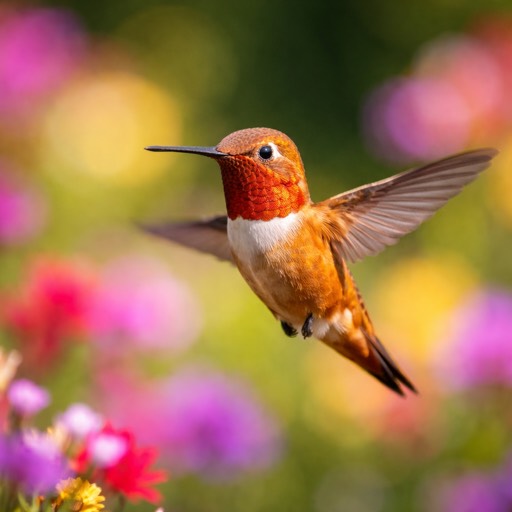
|
Field Marks to Verify:
- Male: brilliant orange-rufous body, iridescent red-orange gorget
- Female: rufous on flanks and tail base, green back
- Extremely aggressive and territorial at feeders
- Rufous tail with dark central feathers (both sexes)
- Common fall migrant through Colorado
View on All About Birds →
Report Issue →
|
Rufous Hummingbird - F
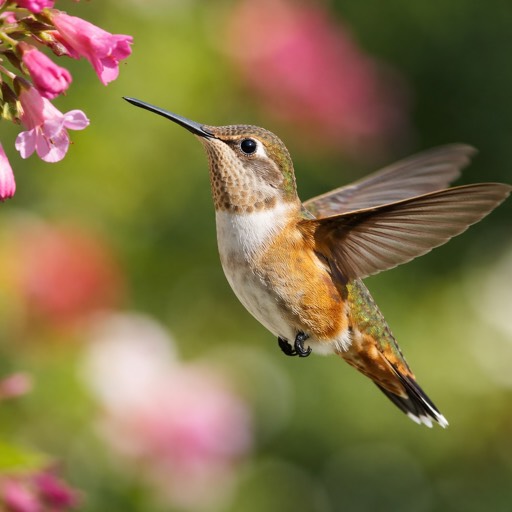
|
Field Marks to Verify:
- Male: brilliant orange-rufous body, iridescent red-orange gorget
- Female: rufous on flanks and tail base, green back
- Extremely aggressive and territorial at feeders
- Rufous tail with dark central feathers (both sexes)
- Common fall migrant through Colorado
View on All About Birds →
Report Issue →
|
Black-chinned Hummingbird - M
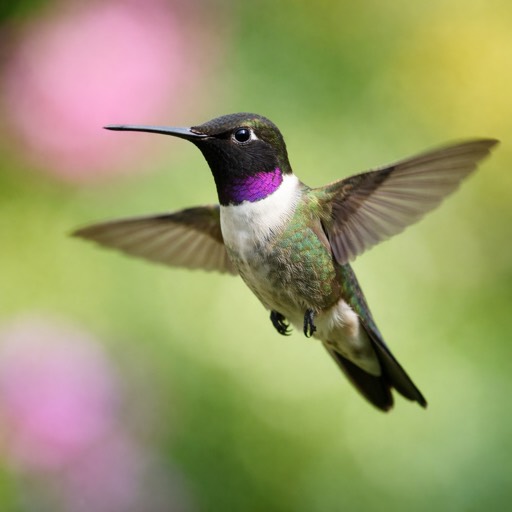
|
Field Marks to Verify:
- Male: black chin with thin purple band at bottom (hard to see)
- Female: plain — clean white underparts, green back
- Tail pumps while hovering — characteristic behavior
- Drab compared to other hummers — no rufous, no broad-tailed trill
- Bill slightly downcurved
View on All About Birds →
Report Issue →
|
Black-chinned Hummingbird - F
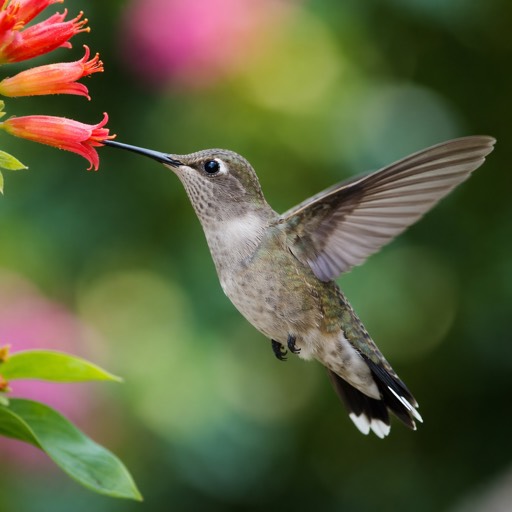
|
Field Marks to Verify:
- Male: black chin with thin purple band at bottom (hard to see)
- Female: plain — clean white underparts, green back
- Tail pumps while hovering — characteristic behavior
- Drab compared to other hummers — no rufous, no broad-tailed trill
- Bill slightly downcurved
View on All About Birds →
Report Issue →
|
Pinyon Jay - M
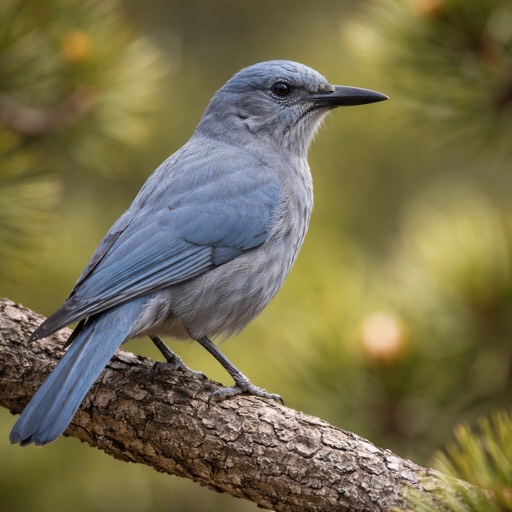
|
Field Marks to Verify:
- All-over dull blue — no crest, no white markings
- Crow-like shape with strong bill for pine nuts
- Travels in noisy, tight-packed flocks — sometimes hundreds
- Short tail gives compact appearance
- Walks on ground more than other jays
View on All About Birds →
Report Issue →
|
Clark's Nutcracker - M
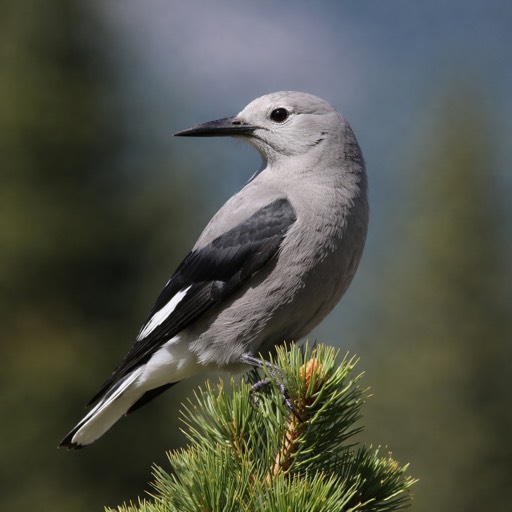
|
Field Marks to Verify:
- Gray body with black wings and black central tail feathers
- White outer tail feathers and white wing patches flash in flight
- Long, heavy, spike-like black bill for prying open pine cones
- Caches thousands of pine seeds for winter — remarkable memory
- High-elevation conifer forests near treeline
View on All About Birds →
Report Issue →
|
Vesper Sparrow - M
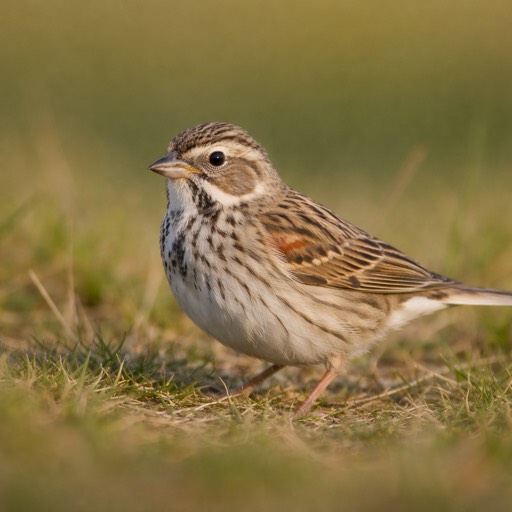
|
Field Marks to Verify:
- White outer tail feathers — visible in flight
- White eye-ring on plain face — no crown stripe
- Rufous shoulder patch (lesser coverts) — often hidden
- Fine breast streaking on pale underparts
- Often sings from fence posts at dusk — hence 'vesper'
View on All About Birds →
Report Issue →
|
Lark Sparrow - M
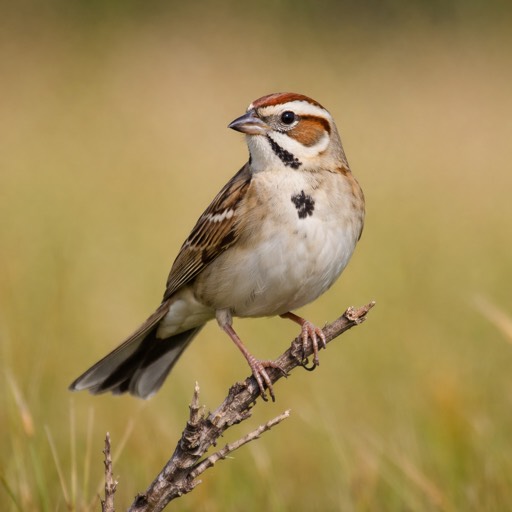
|
Field Marks to Verify:
- Bold harlequin face pattern — chestnut, black, and white
- Single dark central breast spot (like American Tree Sparrow)
- White tail corners visible in flight
- Large sparrow with rounded tail
- Open habitat — grasslands with scattered trees
View on All About Birds →
Report Issue →
|
Lincoln's Sparrow - M
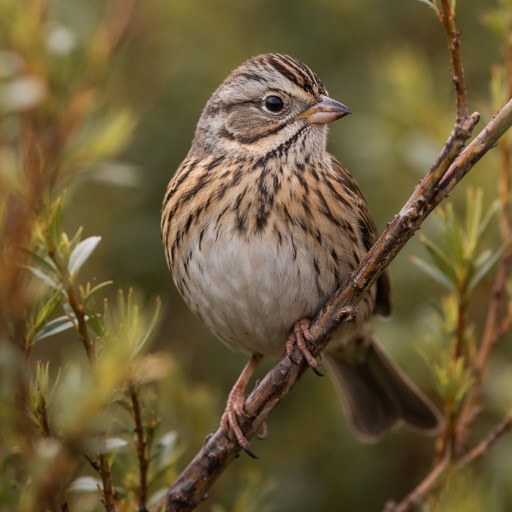
|
Field Marks to Verify:
- Fine, crisp streaking on buffy breast band
- Buffy moustache stripe and eye-ring — 'baby-faced' look
- Gray face contrasting with brown crown stripes
- More secretive and skulking than Song Sparrow
- Raised crown feathers give peaked head appearance
View on All About Birds →
Report Issue →
|
Savannah Sparrow - M
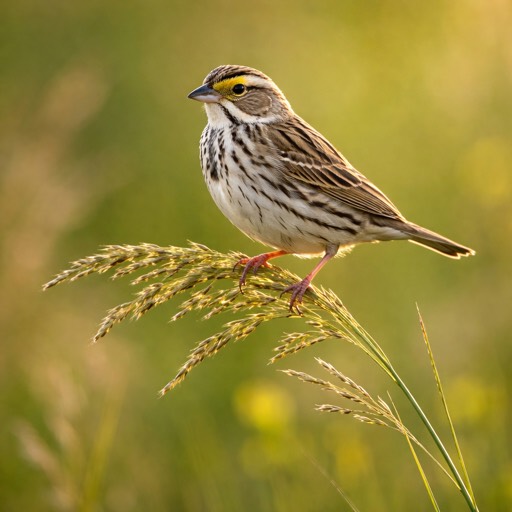
|
Field Marks to Verify:
- Yellow lores (between eye and bill) — often faint but diagnostic
- Short, notched tail
- Heavily streaked breast and flanks on white underparts
- Pale median crown stripe
- Grassland bird — runs on the ground, reluctant to fly
View on All About Birds →
Report Issue →
|
Grasshopper Sparrow - M
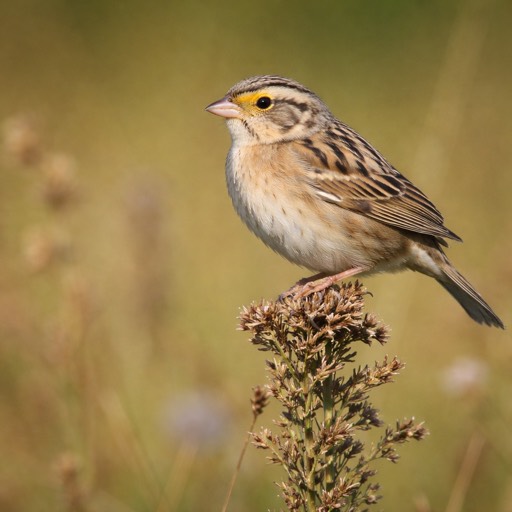
|
Field Marks to Verify:
- Flat-headed with large bill — distinctive profile
- Unstreaked buffy breast (adults) — unlike most grassland sparrows
- Buffy-orange face with pale eye-ring
- Short tail — barely visible above grass
- Insect-like song — often only way to detect them
View on All About Birds →
Report Issue →
|
Fox Sparrow - Red
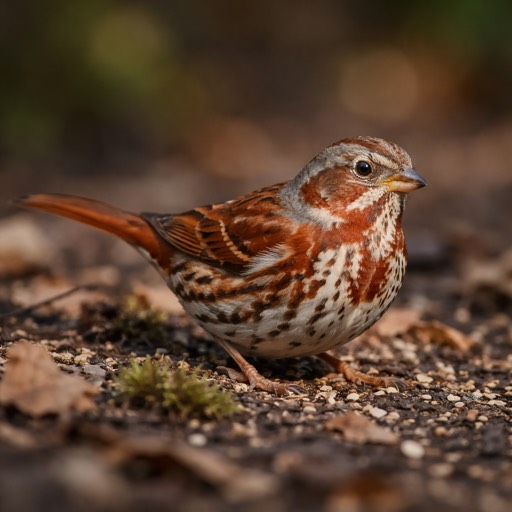
|
Field Marks to Verify:
- Chunky, large sparrow — biggest Emberizid sparrow
- Heavy triangular breast streaking that may merge into central spot
- Rufous tail pumped in flight (Sooty and Red forms)
- Scratches vigorously in leaf litter with both feet
- Variable: western birds range from sooty brown to slate gray
View on All About Birds →
Report Issue →
|
Fox Sparrow - Slate Colored
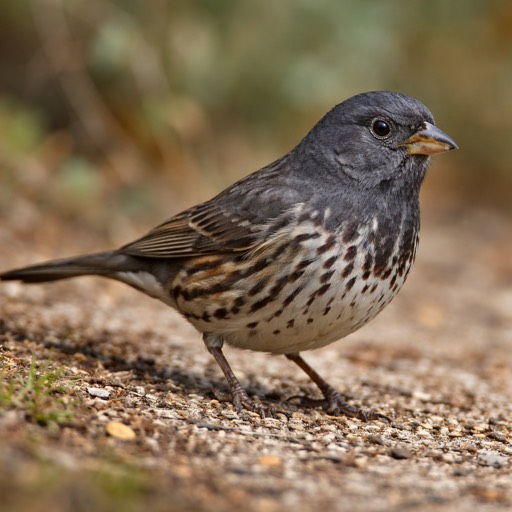
|
Field Marks to Verify:
- Chunky, large sparrow — biggest Emberizid sparrow
- Heavy triangular breast streaking that may merge into central spot
- Rufous tail pumped in flight (Sooty and Red forms)
- Scratches vigorously in leaf litter with both feet
- Variable: western birds range from sooty brown to slate gray
View on All About Birds →
Report Issue →
|
Harris's Sparrow - Adult
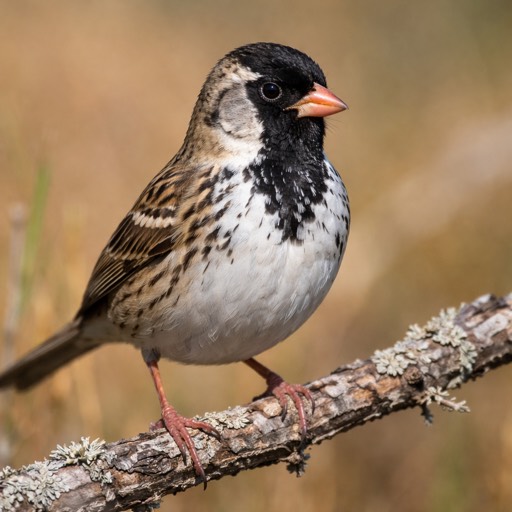
|
Field Marks to Verify:
- Black crown, face, and bib on breeding adults — striking
- Large — biggest North American sparrow
- Pink bill
- Immatures: less black, scaly crown pattern
- Winters in central Great Plains — uncommon in Colorado
View on All About Birds →
Report Issue →
|
Harris's Sparrow - Immature
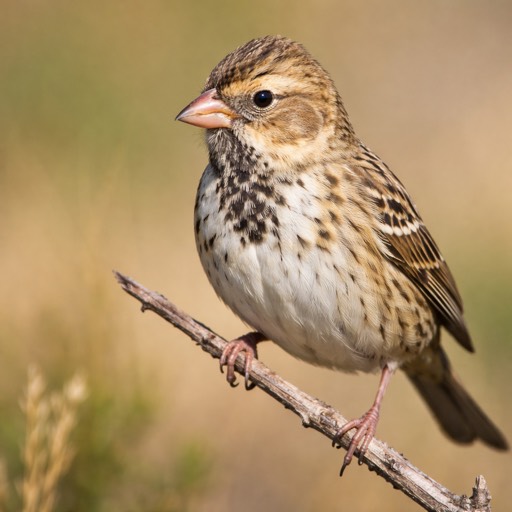
|
Field Marks to Verify:
- Black crown, face, and bib on breeding adults — striking
- Large — biggest North American sparrow
- Pink bill
- Immatures: less black, scaly crown pattern
- Winters in central Great Plains — uncommon in Colorado
View on All About Birds →
Report Issue →
|
White-throated Sparrow - White Striped
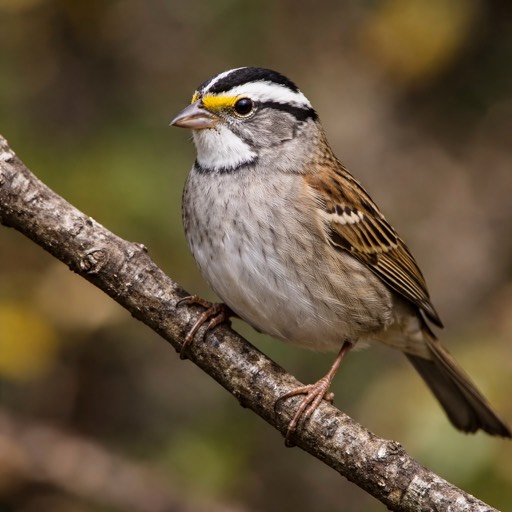
|
Field Marks to Verify:
- White throat sharply defined against gray breast
- Yellow lores (spot between eye and bill)
- Bold head stripes: black and white (or brown and tan) morph
- Tan-striped morph common — brown and tan replacing black and white
- Darker and browner overall than White-crowned Sparrow
View on All About Birds →
Report Issue →
|
White-throated Sparrow - Tan Striped
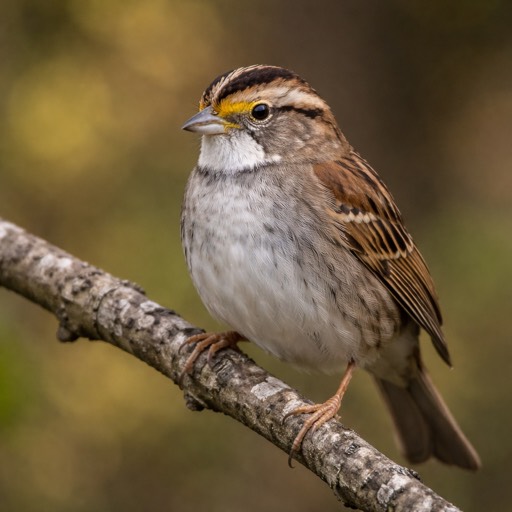
|
Field Marks to Verify:
- White throat sharply defined against gray breast
- Yellow lores (spot between eye and bill)
- Bold head stripes: black and white (or brown and tan) morph
- Tan-striped morph common — brown and tan replacing black and white
- Darker and browner overall than White-crowned Sparrow
View on All About Birds →
Report Issue →
|
Green-tailed Towhee - M
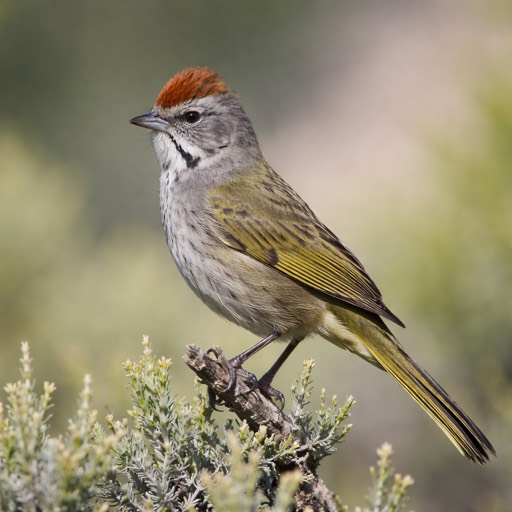
|
Field Marks to Verify:
- Rufous crown, olive-green body — unique color combo
- White throat with dark moustache stripe
- Yellow-green tones on wings and tail
- Secretive — often stays in dense shrubs
- Gray face and breast contrast with green upperparts
View on All About Birds →
Report Issue →
|
Canyon Towhee - M
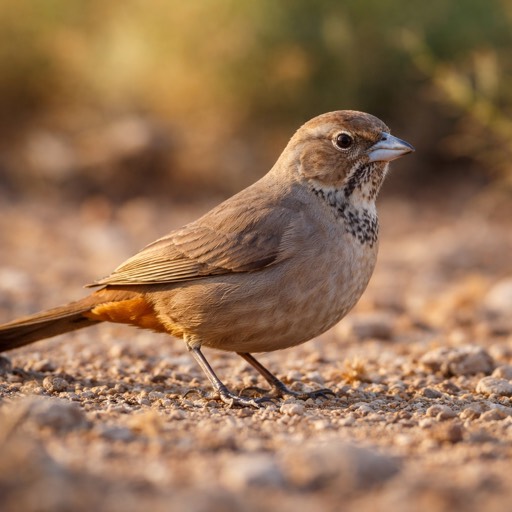
|
Field Marks to Verify:
- Plain gray-brown overall — large, drab sparrow
- Rusty-brown cap, dark central breast spot
- Rufous undertail coverts visible at close range
- Necklace of dark streaks across breast
- Resident of rocky canyon and scrub habitat
View on All About Birds →
Report Issue →
|
Cassin's Finch - M
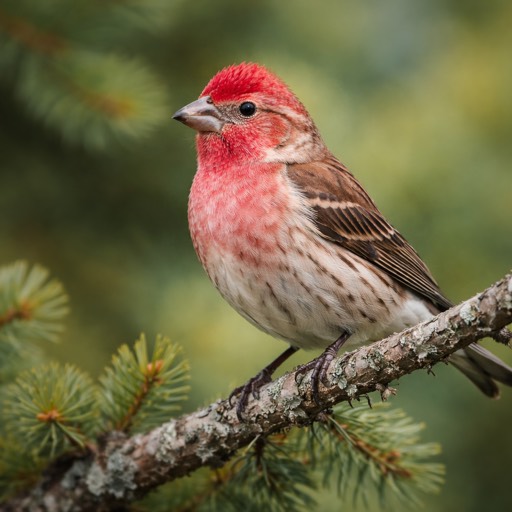
|
Field Marks to Verify:
- Male: bright rose-pink crown contrasting with brown nape ('beret' effect)
- Male: crisp, fine streaking on white flanks and undertail
- Female: crisp, fine streaking on white underparts — sharper than House Finch
- Slightly larger than House Finch with straighter bill ridge
- Higher elevation — montane forests
View on All About Birds →
Report Issue →
|
Cassin's Finch - F
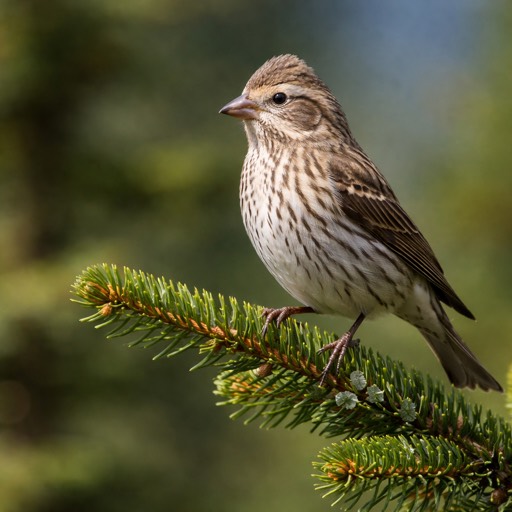
|
Field Marks to Verify:
- Male: bright rose-pink crown contrasting with brown nape ('beret' effect)
- Male: crisp, fine streaking on white flanks and undertail
- Female: crisp, fine streaking on white underparts — sharper than House Finch
- Slightly larger than House Finch with straighter bill ridge
- Higher elevation — montane forests
View on All About Birds →
Report Issue →
|
Red Crossbill - M
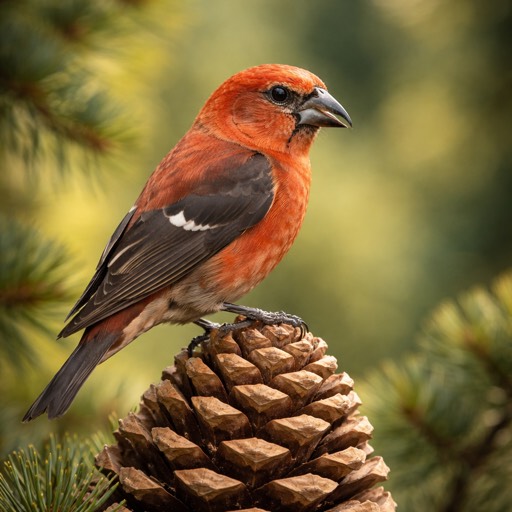
|
Field Marks to Verify:
- Crossed bill tips — visible at close range, diagnostic
- Male: brick-red to orange-red overall with dark wings
- Female: olive-yellow with dark wings
- No wing bars (vs White-winged Crossbill)
- Feeds on conifer cones — often hangs upside down
View on All About Birds →
Report Issue →
|
Red Crossbill - F
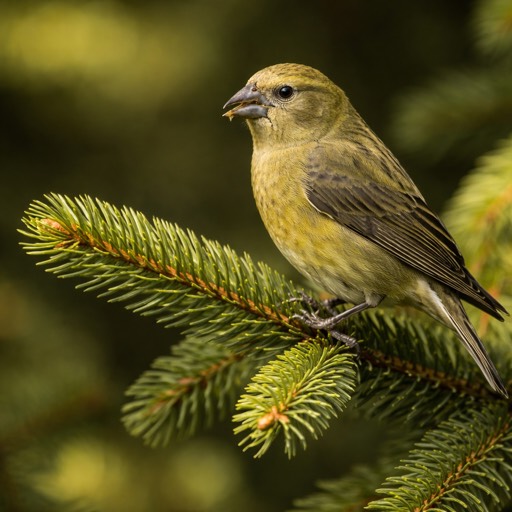
|
Field Marks to Verify:
- Crossed bill tips — visible at close range, diagnostic
- Male: brick-red to orange-red overall with dark wings
- Female: olive-yellow with dark wings
- No wing bars (vs White-winged Crossbill)
- Feeds on conifer cones — often hangs upside down
View on All About Birds →
Report Issue →
|
Evening Grosbeak - M
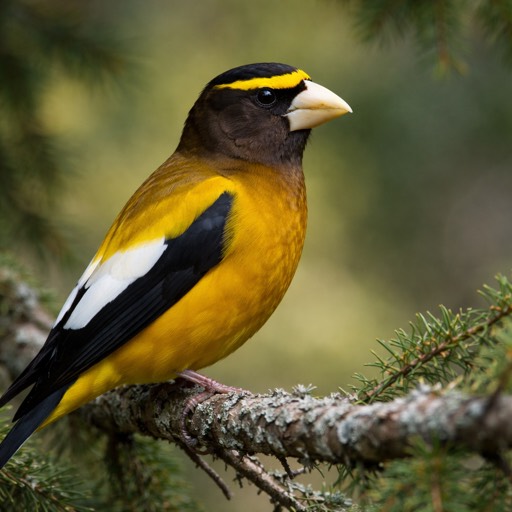
|
Field Marks to Verify:
- Massive pale bill — like it's wearing a wax nose
- Male: bold yellow body, black head and wings, white wing patches
- Female: gray with yellow-green tones and white wing patches
- Large and stocky — biggest finch at feeders
- Irruptive — unpredictable winter visitor
View on All About Birds →
Report Issue →
|
Evening Grosbeak - F
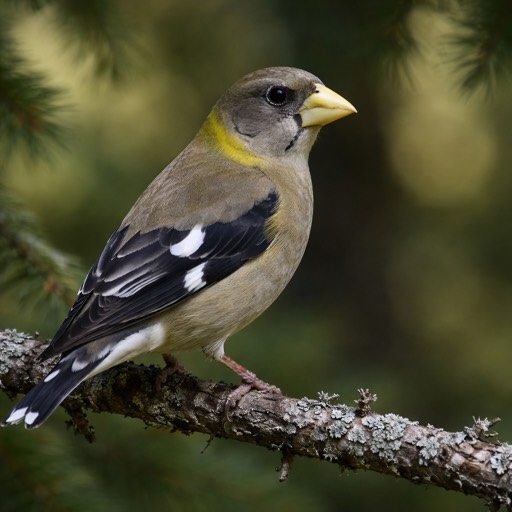
|
Field Marks to Verify:
- Massive pale bill — like it's wearing a wax nose
- Male: bold yellow body, black head and wings, white wing patches
- Female: gray with yellow-green tones and white wing patches
- Large and stocky — biggest finch at feeders
- Irruptive — unpredictable winter visitor
View on All About Birds →
Report Issue →
|
Wilson's Warbler - M
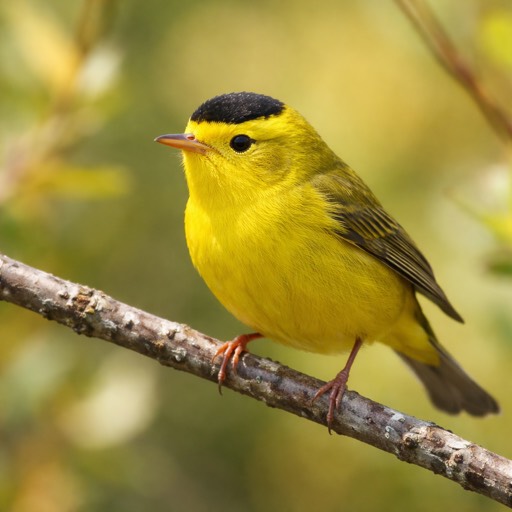
|
Field Marks to Verify:
- Male: bright yellow with neat black cap — like a yarmulke
- Female: yellow overall with olive-green cap (may show dark hint)
- No wing bars, no tail spots — plain bright yellow
- Small, active, often near water
- Flips tail frequently while foraging
View on All About Birds →
Report Issue →
|
Wilson's Warbler - F
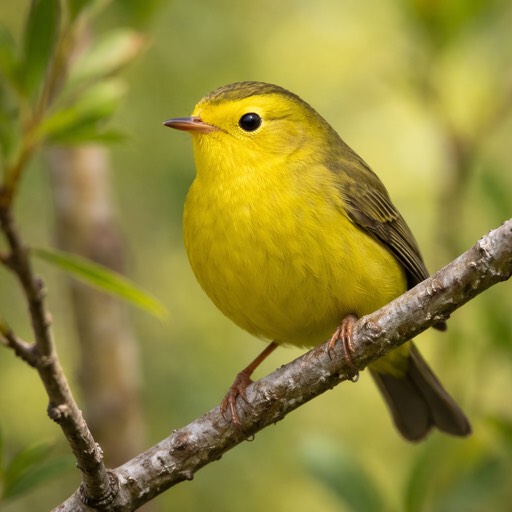
|
Field Marks to Verify:
- Male: bright yellow with neat black cap — like a yarmulke
- Female: yellow overall with olive-green cap (may show dark hint)
- No wing bars, no tail spots — plain bright yellow
- Small, active, often near water
- Flips tail frequently while foraging
View on All About Birds →
Report Issue →
|
Orange-crowned Warbler - M
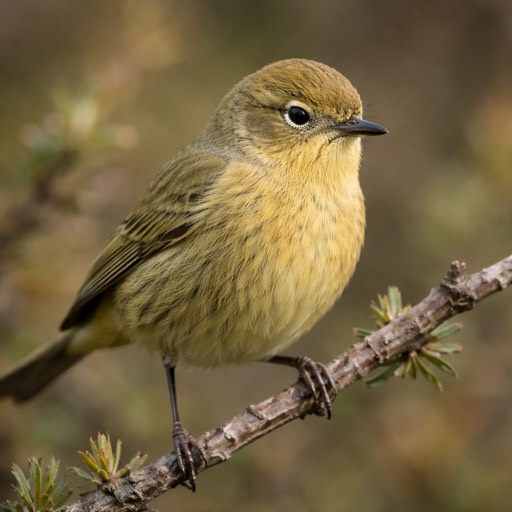
|
Field Marks to Verify:
- Drab olive-green overall — 'the boring warbler'
- Orange crown patch rarely visible
- Faint blurry breast streaking
- Split eye-ring and faint eye-line — subtle face pattern
- Dullest warbler but commonest in migration through Colorado
View on All About Birds →
Report Issue →
|
Virginia's Warbler - M
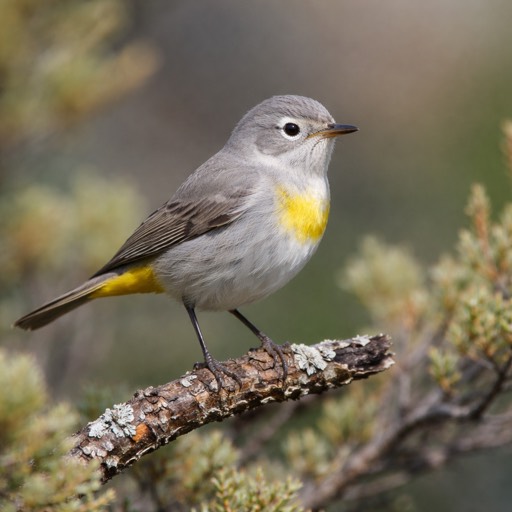
|
Field Marks to Verify:
- Gray overall with yellow breast patch and rump
- Bold white eye-ring on plain gray face
- Rufous crown patch (usually concealed)
- Bobs tail constantly — distinctive behavior
- Dry, brushy mountain slopes — pinyon-juniper habitat
View on All About Birds →
Report Issue →
|
MacGillivray's Warbler - M
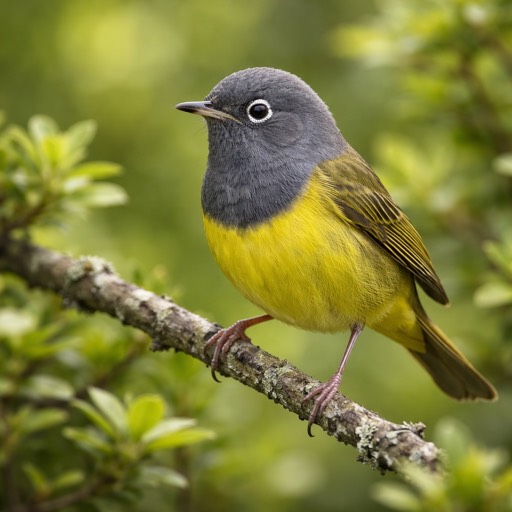
|
Field Marks to Verify:
- Gray hood on male — dark and complete
- Bold white eye arcs (broken eye-ring) — not a complete ring
- Bright yellow below from breast down
- Skulks in dense underbrush — hard to see
- Female: paler gray hood, same eye arcs
View on All About Birds →
Report Issue →
|
American Redstart - M
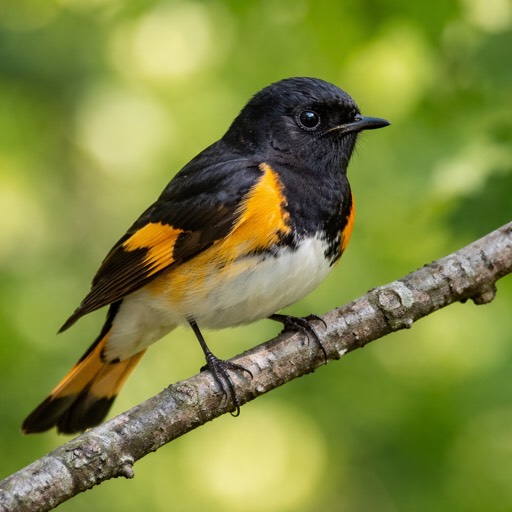
|
Field Marks to Verify:
- Male: jet black with vivid orange patches on wings, tail, and sides
- Female/immature: olive-gray with yellow patches where male has orange
- Fans tail and droops wings to flash patches — startles insects
- Extremely active and acrobatic — like a warbler-butterfly
- Long, flat tail fanned constantly
View on All About Birds →
Report Issue →
|
American Redstart - F
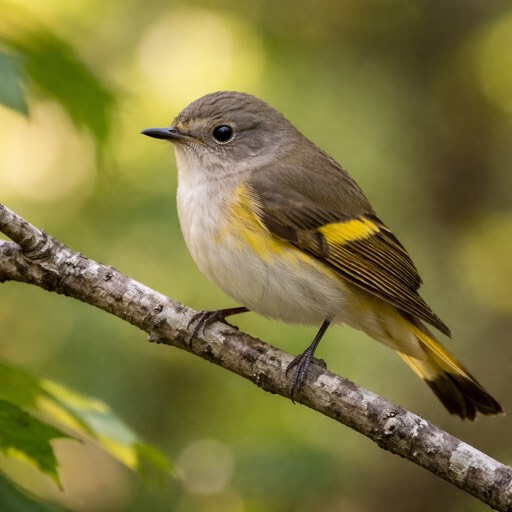
|
Field Marks to Verify:
- Male: jet black with vivid orange patches on wings, tail, and sides
- Female/immature: olive-gray with yellow patches where male has orange
- Fans tail and droops wings to flash patches — startles insects
- Extremely active and acrobatic — like a warbler-butterfly
- Long, flat tail fanned constantly
View on All About Birds →
Report Issue →
|
Western Bluebird - M
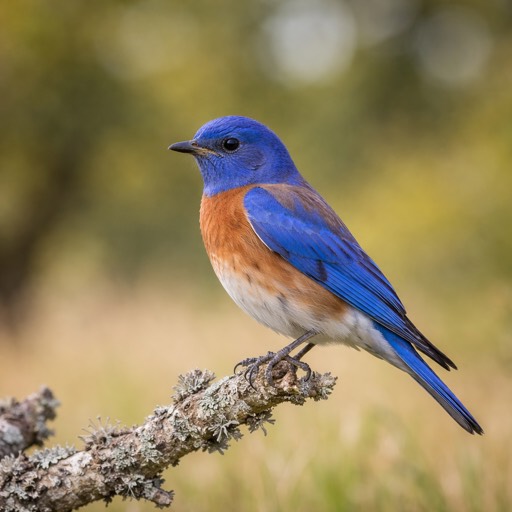
|
Field Marks to Verify:
- Male: deep blue head, wings, tail with rusty-orange breast and flanks
- Male: blue throat (vs Eastern's orange throat)
- Female: gray with blue tint on wings and tail, pale orange breast
- Chunkier than Mountain Bluebird
- Often in small flocks at fruiting trees in winter
View on All About Birds →
Report Issue →
|
Western Bluebird - F
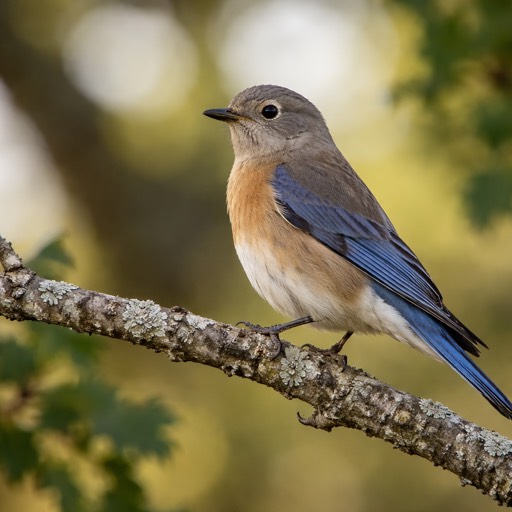
|
Field Marks to Verify:
- Male: deep blue head, wings, tail with rusty-orange breast and flanks
- Male: blue throat (vs Eastern's orange throat)
- Female: gray with blue tint on wings and tail, pale orange breast
- Chunkier than Mountain Bluebird
- Often in small flocks at fruiting trees in winter
View on All About Birds →
Report Issue →
|
Eastern Bluebird - M
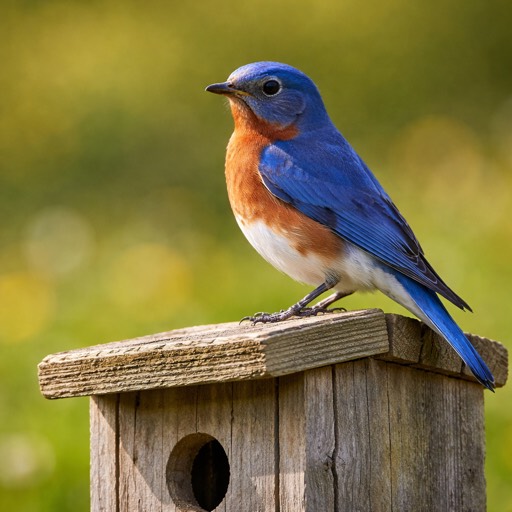
|
Field Marks to Verify:
- Male: bright blue above, rusty-orange breast and throat
- Male: orange throat (vs Western's blue throat)
- Female: gray-blue with pale orange wash on breast
- White belly contrasts with orange breast
- Eastern Colorado — overlap zone with Western Bluebird
View on All About Birds →
Report Issue →
|
Eastern Bluebird - F
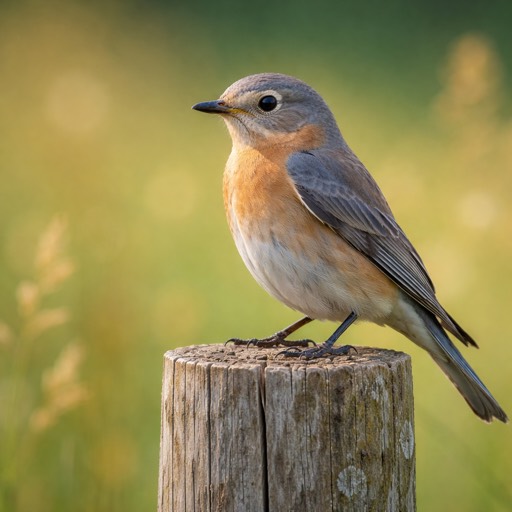
|
Field Marks to Verify:
- Male: bright blue above, rusty-orange breast and throat
- Male: orange throat (vs Western's blue throat)
- Female: gray-blue with pale orange wash on breast
- White belly contrasts with orange breast
- Eastern Colorado — overlap zone with Western Bluebird
View on All About Birds →
Report Issue →
|
Hermit Thrush - M
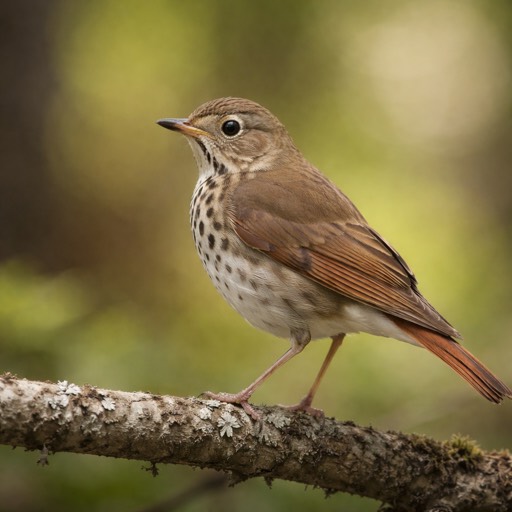
|
Field Marks to Verify:
- Rufous tail contrasting with brown back — diagnostic among thrushes
- Cocks tail upward and slowly lowers it — characteristic behavior
- Spotted breast on buffy-white underparts
- Thin white eye-ring
- Only catharus thrush wintering in North America
View on All About Birds →
Report Issue →
|
Swainson's Thrush - M
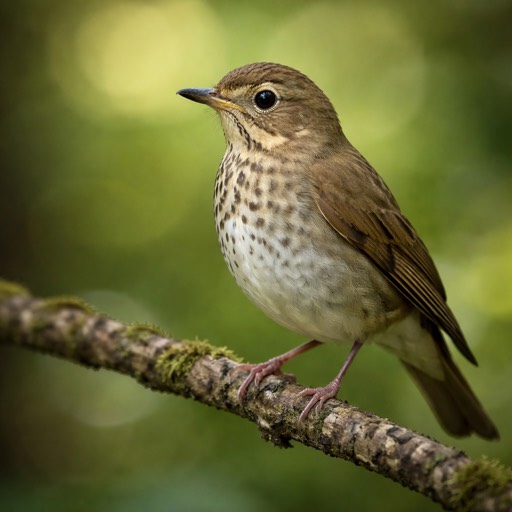
|
Field Marks to Verify:
- Buffy eye-ring and buffy face — warm spectacles
- Olive-brown above (vs Hermit's rufous tail contrast)
- Spotted breast like other thrushes
- Uniform upperparts — no tail contrast (vs Hermit)
- Migrant through Colorado — spiraling song given at night
View on All About Birds →
Report Issue →
|
Townsend's Solitaire - M
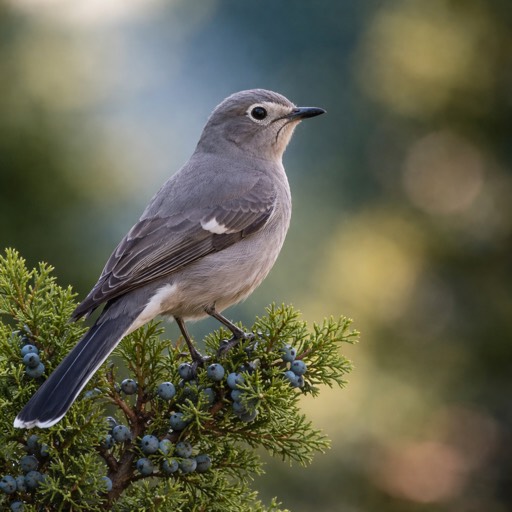
|
Field Marks to Verify:
- Gray overall with white eye-ring — plain but elegant
- Buff wing patches visible in flight
- White outer tail feathers
- Long tail — slim, upright posture on exposed perches
- Defends juniper berry territories in winter — unusually territorial for a thrush
View on All About Birds →
Report Issue →
|
Bushtit - M
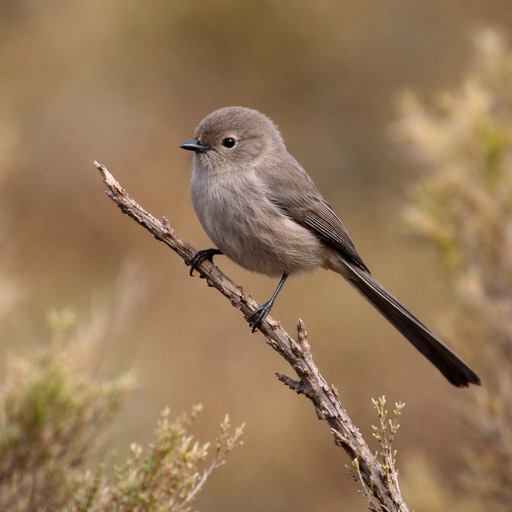
|
Field Marks to Verify:
- Tiny — one of North America's smallest songbirds (4.5 inches)
- Plain gray-brown with long tail — nondescript
- Travels in noisy, active flocks of 10-40 birds
- Builds remarkable hanging sock-like nest (up to a foot long)
- Interior birds have dark ear patches; coastal birds have brown caps
View on All About Birds →
Report Issue →
|
Pygmy Nuthatch - M
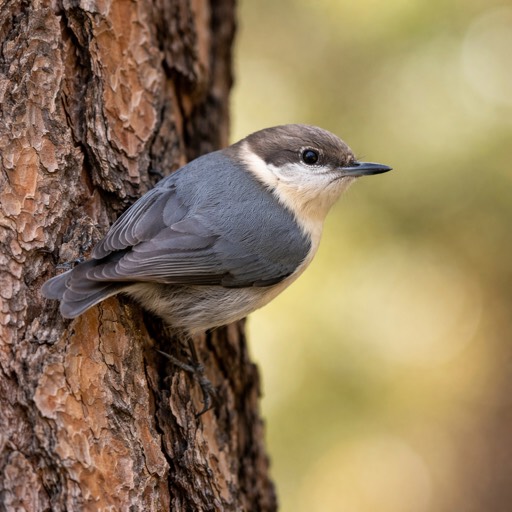
|
Field Marks to Verify:
- Tiny — smallest nuthatch, barely 4 inches
- Gray-brown cap coming down to eye (no eye-line like Red-breasted)
- Pale grayish underparts
- Travels in noisy chattering flocks
- Ponderosa pine specialist
View on All About Birds →
Report Issue →
|
Brown Creeper - M
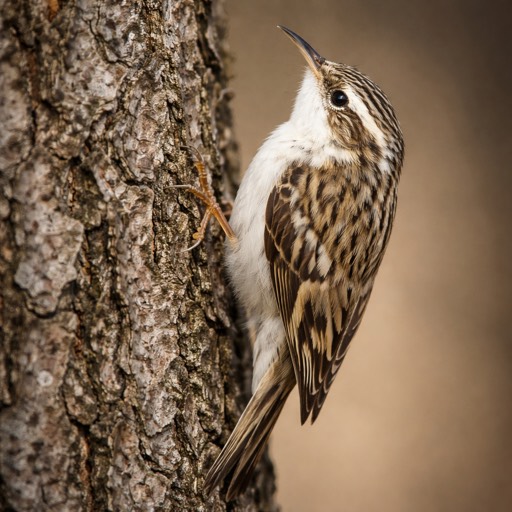
|
Field Marks to Verify:
- Spirals up tree trunks — opposite direction from nuthatches
- Brown-streaked bark-like plumage — nearly invisible against bark
- White underparts, stiff tail used as prop against trunk
- Thin, downcurved bill for probing bark crevices
- Flies to base of next tree and spirals up again — methodical
View on All About Birds →
Report Issue →
|
Canyon Wren - M
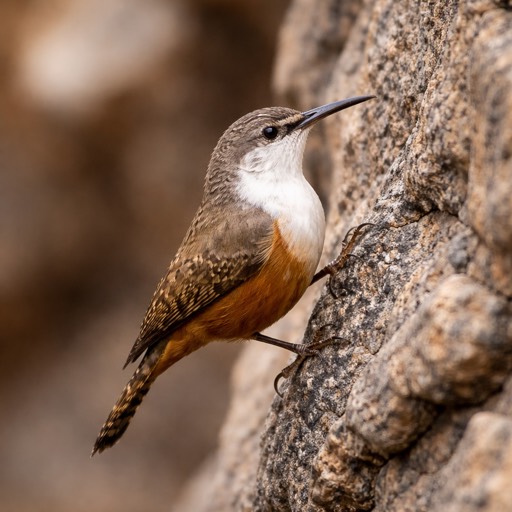
|
Field Marks to Verify:
- Rich rufous-brown overall with white throat and breast
- Very long, downcurved bill — probes into rock crevices
- Flattened body for moving along cliff faces
- Cascading, descending song echoes off canyon walls
- Dark belly contrasts with white breast
View on All About Birds →
Report Issue →
|
Rock Wren - M
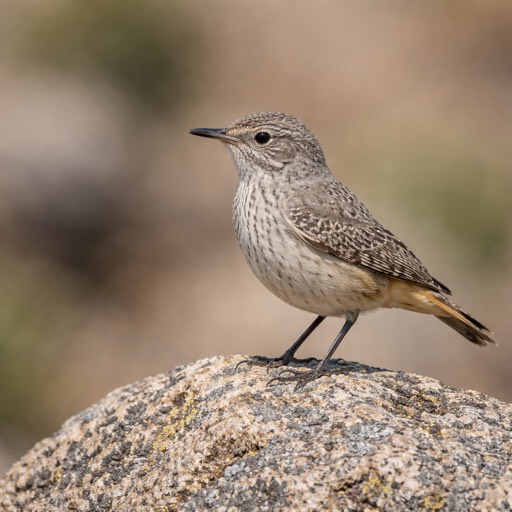
|
Field Marks to Verify:
- Pale gray-brown above with subtle spotting
- Buffy tips on tail feathers — visible spread in flight
- Finely streaked breast, pale underparts
- Bobs up and down — distinctive behavior
- Builds paved 'walkway' of small stones leading to nest
View on All About Birds →
Report Issue →
|
Marsh Wren - M
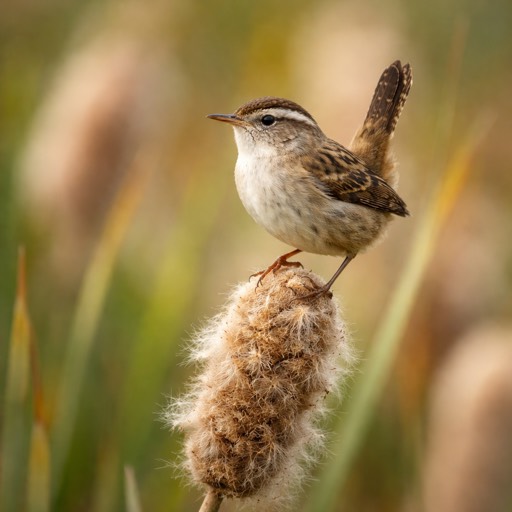
|
Field Marks to Verify:
- Bold white eyebrow stripe on brown head
- Black and white streaking on back
- Rounded, skulking shape in cattails and reeds
- Cocked tail — typical wren posture
- Males build multiple dummy nests in territory
View on All About Birds →
Report Issue →
|
Blue-gray Gnatcatcher - M
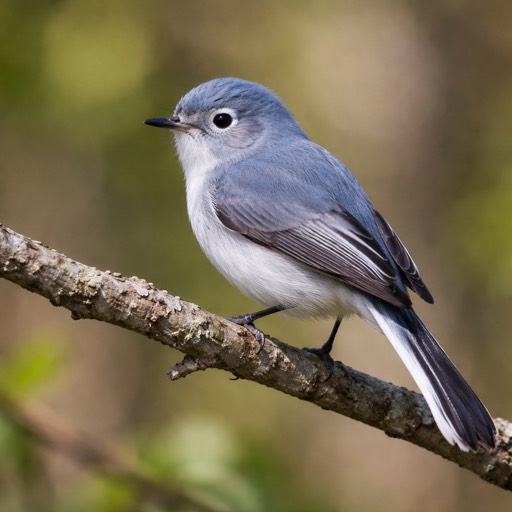
|
Field Marks to Verify:
- Tiny — long tail makes up half its length
- Blue-gray above, white below, white eye-ring
- Long black tail with white outer feathers — constantly fanned and cocked
- Active and wheezy — like a miniature mockingbird
- Black eyebrow (males in breeding) gives 'angry' look
View on All About Birds →
Report Issue →
|
Golden-crowned Kinglet - M
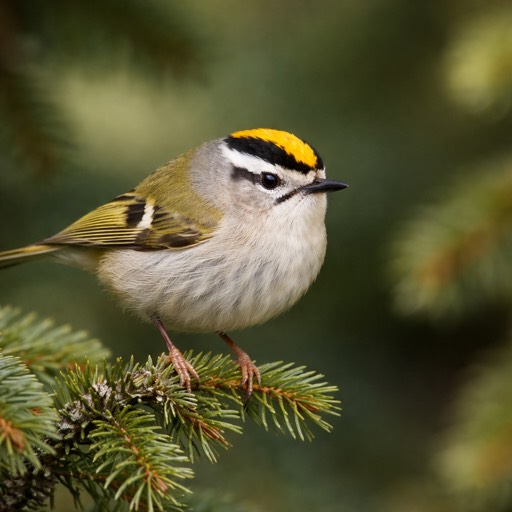
|
Field Marks to Verify:
- Yellow crown stripe bordered by black (orange center in males)
- White eyebrow stripe and black eye-line — striped face
- Olive above, pale below, two white wing bars
- Even smaller than Ruby-crowned — tiny and round
- Conifer specialist — often high in spruce and fir
View on All About Birds →
Report Issue →
|
Loggerhead Shrike - M
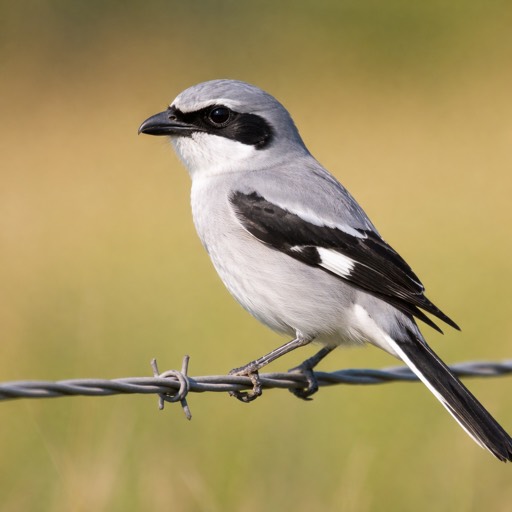
|
Field Marks to Verify:
- Black mask through and behind eye — like a bandit
- Gray above, white below with hooked bill — a predatory songbird
- Impales prey on thorns and barbed wire — 'butcher bird'
- White wing patches flash in undulating flight
- Smaller and darker mask than Northern Shrike
View on All About Birds →
Report Issue →
|
Gray Catbird - M
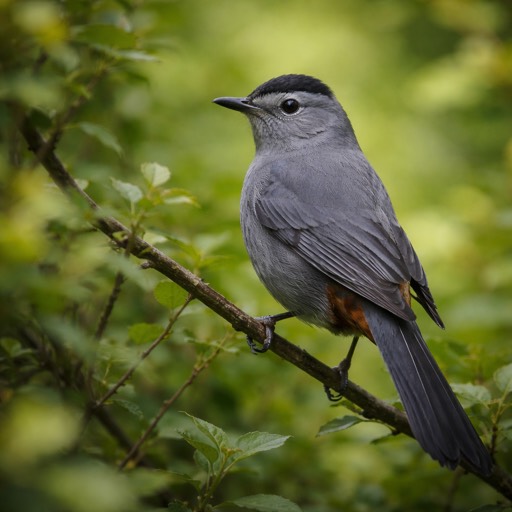
|
Field Marks to Verify:
- Slate gray overall — like a gray uniform
- Black cap
- Rufous undertail coverts — usually hidden but diagnostic
- Long tail — often cocked upward
- Skulks in dense shrubs
View on All About Birds →
Report Issue →
|
Brown Thrasher - M
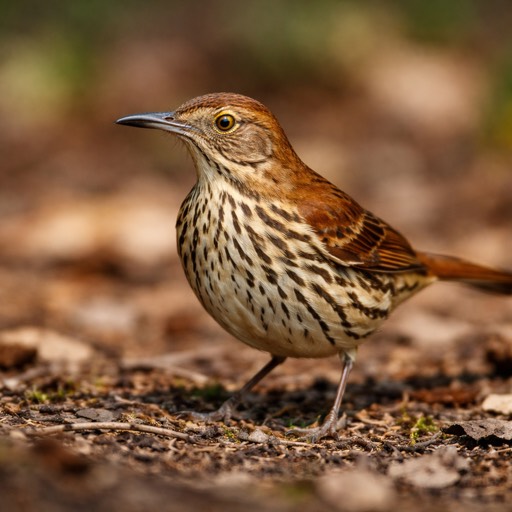
|
Field Marks to Verify:
- Bright rufous-brown above with long tail
- Heavy brown streaking on white underparts
- Yellow eye — piercing
- Long, slightly downcurved bill
- Sings from exposed perches — phrases in pairs
View on All About Birds →
Report Issue →
|
Sage Thrasher - M
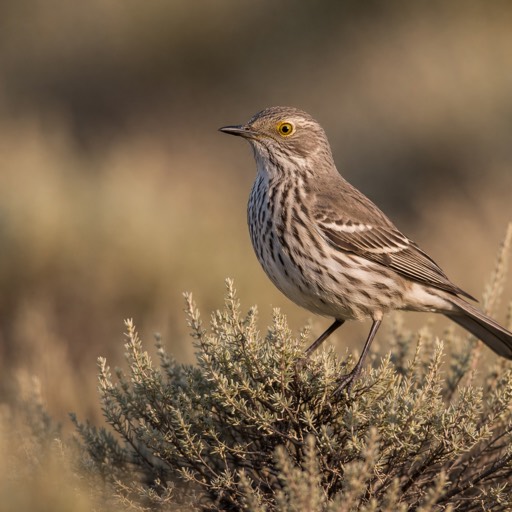
|
Field Marks to Verify:
- Gray-brown above, streaked whitish below
- White wing bars — unusual for a thrasher
- Short, straight bill (vs other thrashers' curved bills)
- Yellow eye
- Strongly tied to sagebrush habitat
View on All About Birds →
Report Issue →
|
Bank Swallow - M
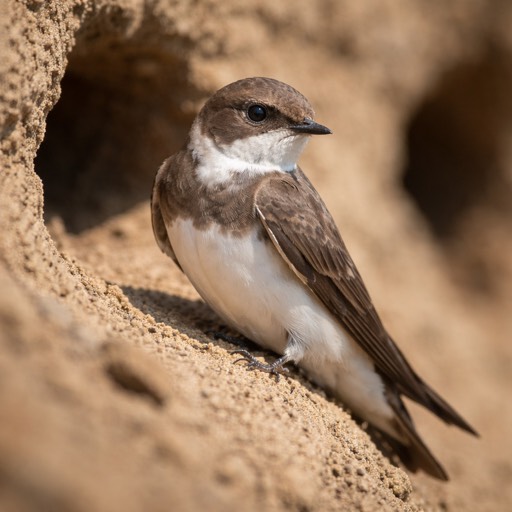
|
Field Marks to Verify:
- Brown above, white below with distinct brown breast band
- Smallest North American swallow
- Nests in colonies — burrows in sandy banks and bluffs
- Clean brown breast band (vs Northern Rough-winged's smudgy throat)
- Quick, fluttery wingbeats
View on All About Birds →
Report Issue →
|
Northern Rough-winged Swallow - M
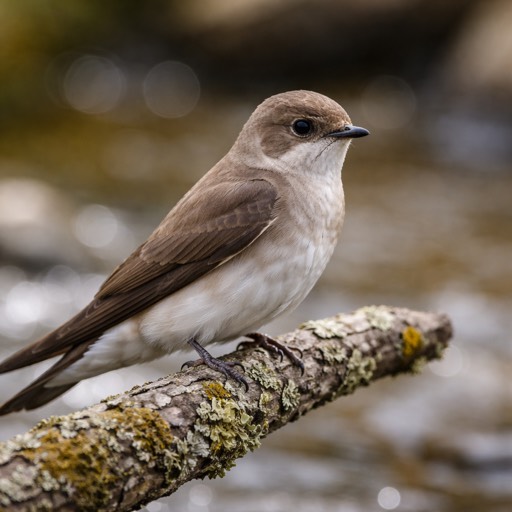
|
Field Marks to Verify:
- Brown above, dingy brownish throat fading to white belly
- No breast band — just diffuse brown wash on throat
- Larger and steadier flight than Bank Swallow
- Usually alone or in pairs (vs Bank Swallow's colonies)
- Rough-edged outer primary feathers — the 'rough wing'
View on All About Birds →
Report Issue →
|
White-throated Swift - M
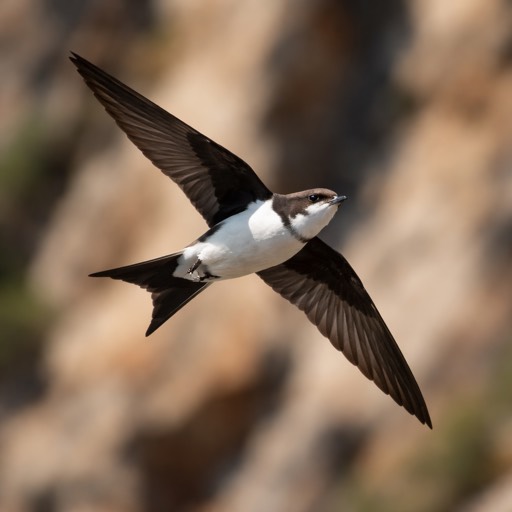
|
Field Marks to Verify:
- Black and white torpedo shape — fast and streamlined
- White throat, breast, and flanks form H-pattern on underside
- Long, slightly forked tail
- Nests on cliffs — often with Violet-green Swallows
- Fastest bird in level flight in North America
View on All About Birds →
Report Issue →
|
Chimney Swift - M
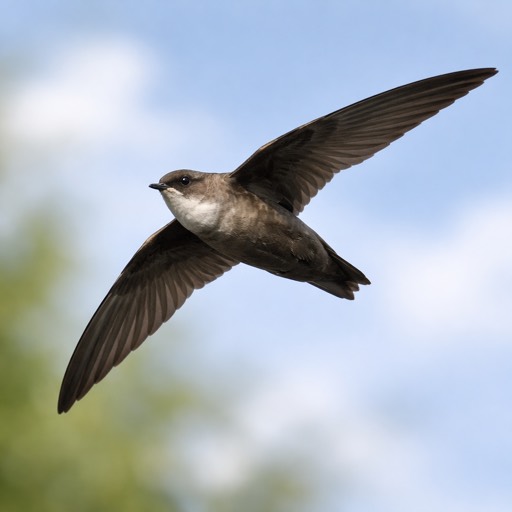
|
Field Marks to Verify:
- Dark cigar-shaped body — 'flying cigar'
- Very rapid, stiff wingbeats — wings never seem to bend
- Short, squared tail — stiff spines for clinging to vertical surfaces
- Chattering flight calls — constant twittering
- Nests in chimneys and hollow trees — declining as chimneys are capped
View on All About Birds →
Report Issue →
|
Black Phoebe - M
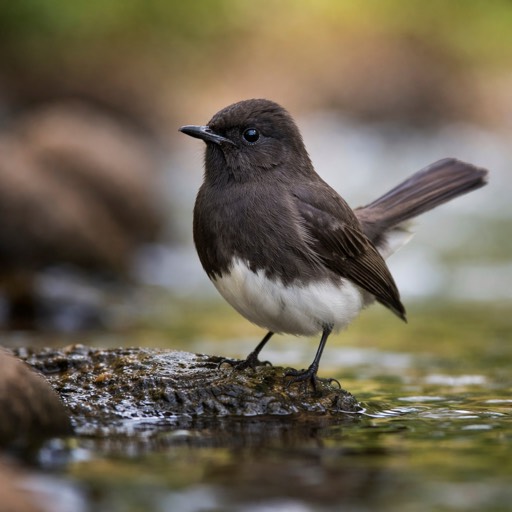
|
Field Marks to Verify:
- All dark above and on breast, white belly — like wearing a tuxedo
- Sharp line between black breast and white belly
- Pumps tail — classic phoebe behavior
- Always near water — streams, ponds, fountains
- Builds mud nest under bridges and overhangs
View on All About Birds →
Report Issue →
|
Dusky Flycatcher - M
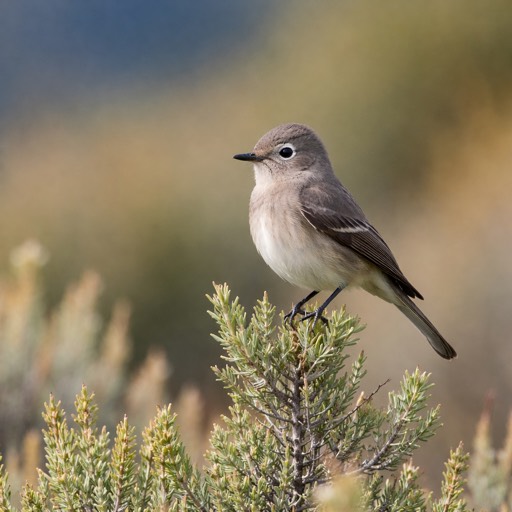
|
Field Marks to Verify:
- Gray-olive above with pale underparts — intermediate Empidonax
- Rounded eye-ring (vs Cordilleran's teardrop)
- Short bill, moderate tail length
- Sagebrush and open mountain shrub habitat
- Pumps tail downward (vs Hammond's upward tail flick)
View on All About Birds →
Report Issue →
|
Hammond's Flycatcher - M
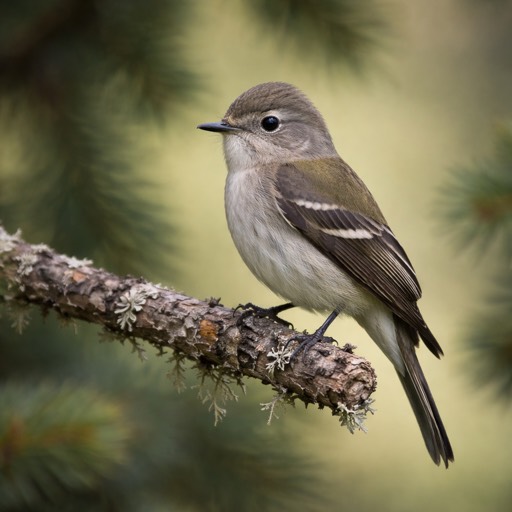
|
Field Marks to Verify:
- Olive-gray above, grayish breast, yellowish belly
- Bold eye-ring on large-headed profile — big-headed look
- Short bill on a big-headed bird
- High-elevation dense conifer forests
- Flicks tail upward (vs Dusky's downward pump)
View on All About Birds →
Report Issue →
|
Willow Flycatcher - M
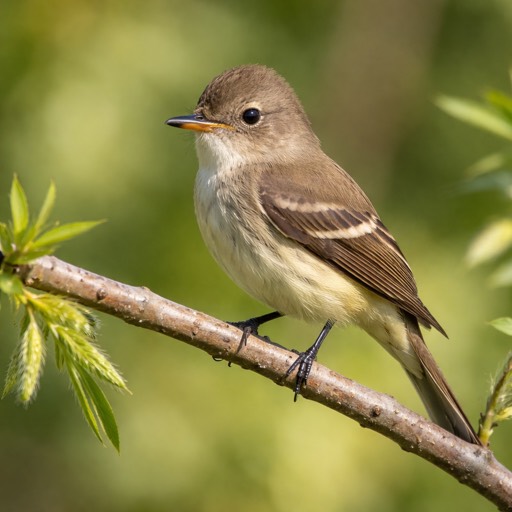
|
Field Marks to Verify:
- Olive-brown above, pale below with faint breast vest
- Minimal or no eye-ring — key distinction from Alder
- Two dull wing bars
- Willow thickets near water
- Best identified by voice: sneezy 'FITZ-bew!'
View on All About Birds →
Report Issue →
|
Ash-throated Flycatcher - M
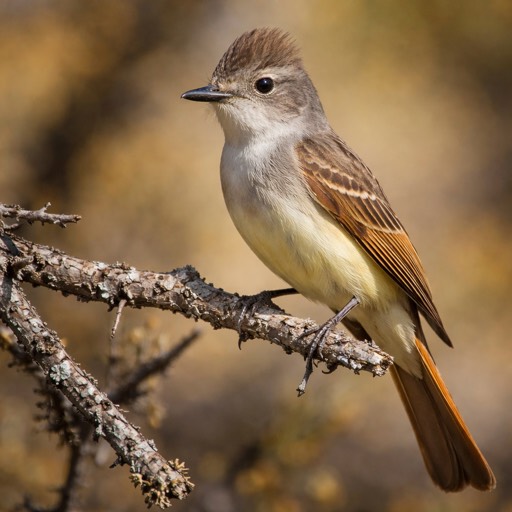
|
Field Marks to Verify:
- Pale gray throat and breast, pale yellow belly
- Rufous in tail visible in flight — rusty tail flashes
- Two white wing bars on dark wings
- Bushy-crested appearance — slight mohawk
- Dry, open woodlands — pinyon-juniper, desert scrub
View on All About Birds →
Report Issue →
|
Olive-sided Flycatcher - M
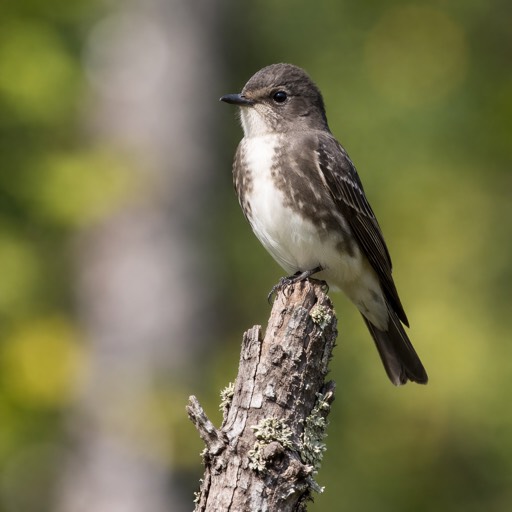
|
Field Marks to Verify:
- Dark vest flanking white breast center — looks like a dark vest over white shirt
- White tufts sometimes visible on sides of rump
- Large head, short tail — stocky flycatcher
- Sits at very tops of tall dead trees
- Emphatic 'Quick, THREE BEERS!' song
View on All About Birds →
Report Issue →
|
Western Wood-Pewee - M
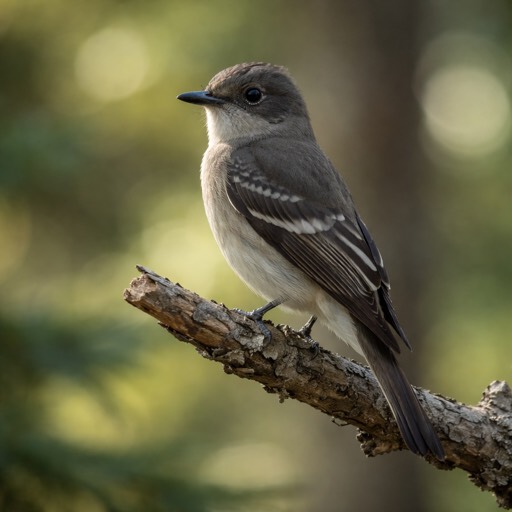
|
Field Marks to Verify:
- Dark olive-gray above and below — darkest small flycatcher
- No eye-ring or only very faint one
- Two pale wing bars, lower one more prominent
- Dark mandibles — both upper and lower
- Sits on exposed branches mid-canopy — less active than Empidonax
View on All About Birds →
Report Issue →
|
Common Poorwill - M
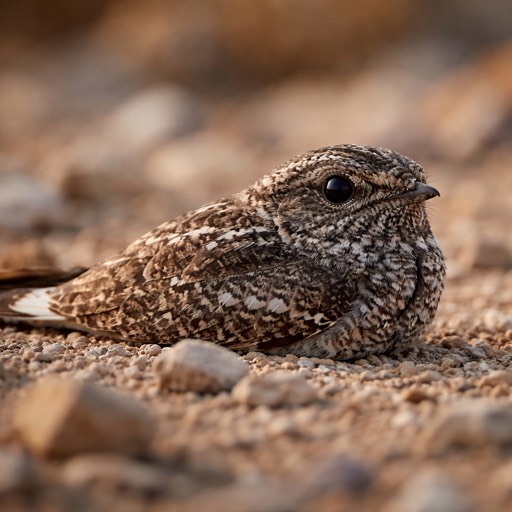
|
Field Marks to Verify:
- Mottled gray-brown — cryptic on ground
- Short tail with white outer corners (male)
- Tiny, rounded body — smallest nightjar
- Enters torpor in cold weather — only bird known to 'hibernate'
- Huge eyes, tiny bill with enormous gape
View on All About Birds →
Report Issue →
|
Band-tailed Pigeon - M
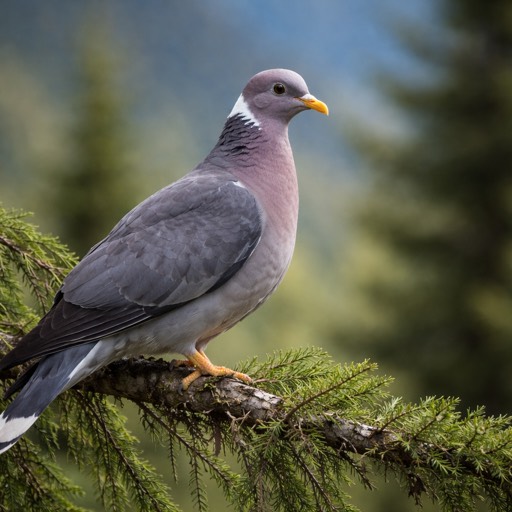
|
Field Marks to Verify:
- Gray overall with purplish-pink breast
- White crescent on back of neck above iridescent green patch
- Pale band across end of tail — the 'band' in the name
- Yellow bill with dark tip
- Mountain forests — often in flocks at fruiting trees
View on All About Birds →
Report Issue →
|
Greater Roadrunner - M
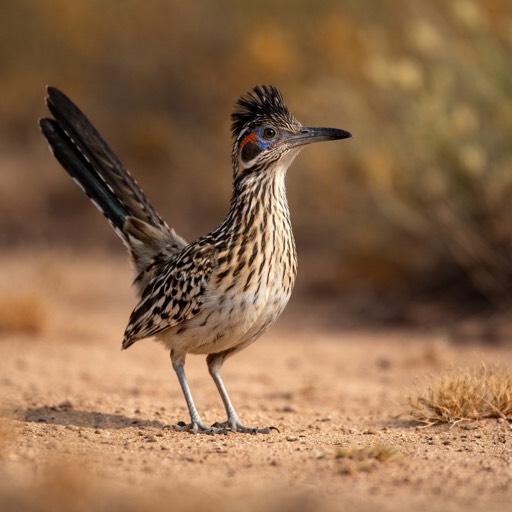
|
Field Marks to Verify:
- Long tail and legs — runs on ground up to 20 mph
- Streaked brown and white with shaggy crest
- Blue and red bare skin behind eye
- Heavy bill — catches lizards and snakes
- X-shaped footprints — two toes forward, two back
View on All About Birds →
Report Issue →
|
Black-crowned Night-Heron - Adult
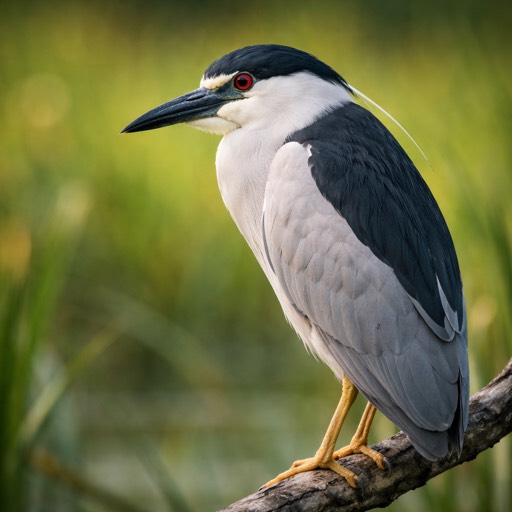
|
Field Marks to Verify:
- Stocky, hunched heron with thick neck
- Adult: black crown and back, gray wings, white underparts
- Red eye (adults)
- Immatures: brown with white streaking — look very different from adults
- Active at dusk and night — hence 'night-heron'
View on All About Birds →
Report Issue →
|
Black-crowned Night-Heron - Immature
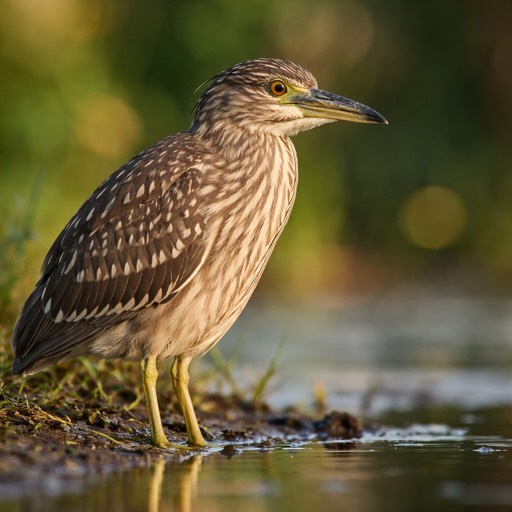
|
Field Marks to Verify:
- Stocky, hunched heron with thick neck
- Adult: black crown and back, gray wings, white underparts
- Red eye (adults)
- Immatures: brown with white streaking — look very different from adults
- Active at dusk and night — hence 'night-heron'
View on All About Birds →
Report Issue →
|
Great Egret - M
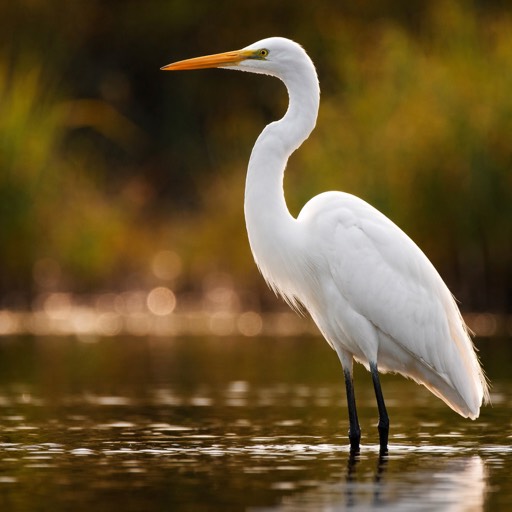
|
Field Marks to Verify:
- Tall, all-white with long yellow bill and black legs
- Largest white egret — stands 3+ feet tall
- Slow, deliberate stalk in shallow water
- Long, sinuous S-curved neck
- Black legs/feet distinguish from Snowy Egret
View on All About Birds →
Report Issue →
|
Snowy Egret - M
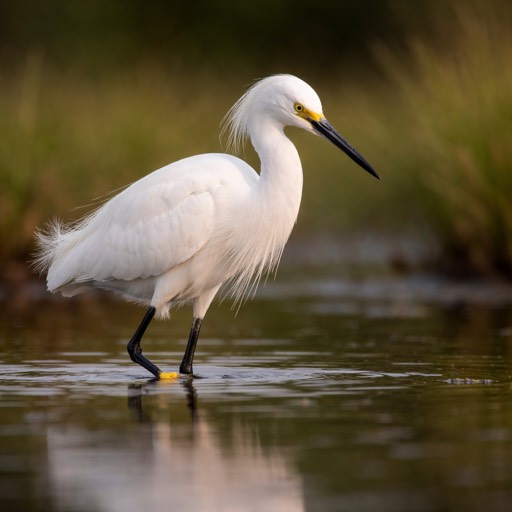
|
Field Marks to Verify:
- All white with black bill and black legs
- Bright yellow feet — 'golden slippers' (diagnostic)
- Smaller and more active than Great Egret
- Shuffles feet in water to stir up prey — distinctive hunting method
- Yellow lores (between bill and eye) — brighten in breeding
View on All About Birds →
Report Issue →
|
Cattle Egret - Breeding
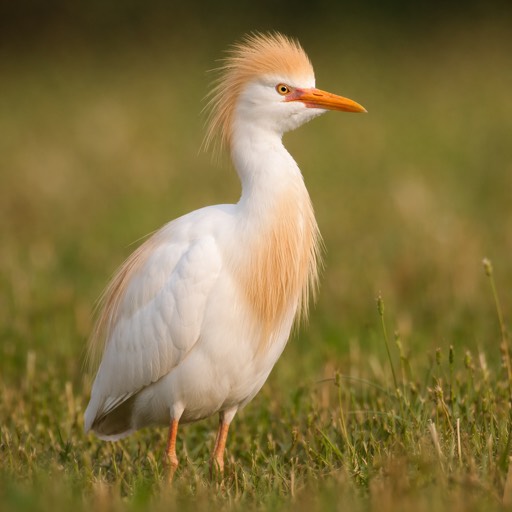
|
Field Marks to Verify:
- Compact, stocky white egret — shorter-necked than Snowy or Great
- Breeding: buffy-orange wash on crown, breast, and back
- Yellow bill and legs (non-breeding); orange-red bill (breeding)
- Often in fields with livestock — eats insects stirred up by cattle
- Relatively recent arrival to Americas from Africa
View on All About Birds →
Report Issue →
|
Western Flycatcher - M
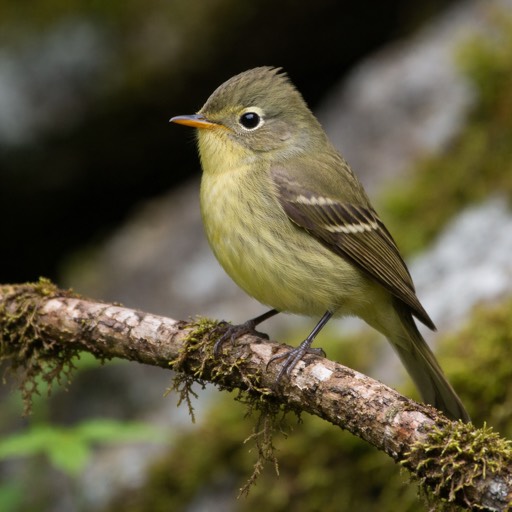
|
Field Marks to Verify:
- Olive-green above, yellowish below — typical Empidonax
- Teardrop-shaped eye-ring (pointed behind) — key field mark
- Two buffy wing bars
- Lower mandible entirely orange-yellow
- Mountain canyon habitat — prefers shady, moist areas
View on All About Birds →
Report Issue →
|
Tier 3
Mississippi Kite - Adult Flight
Northern Saw-whet Owl - M Perch
Great Gray Owl - M Perch
Barred Owl - M Perch
Long-eared Owl - M Perch
Northern Pygmy-Owl - M Perch
Flammulated Owl - M Perch
Snowy Plover - M
American Three-toed Woodpecker - M
Ladder-backed Woodpecker - M
Calliope Hummingbird - M
Calliope Hummingbird - F
Canada Jay - M
Black-throated Sparrow - M
Thick-billed Longspur - M Breeding
Chestnut-collared Longspur - M Breeding
Pine Grosbeak - M
Pine Grosbeak - F
Black Rosy-Finch - M
Brown-capped Rosy-Finch - M
Gray-crowned Rosy-Finch - M
Eastern Meadowlark - M
Orchard Oriole - M
Orchard Oriole - F
Townsend's Warbler - M
Black-throated Gray Warbler - M
Ovenbird - M
Northern Waterthrush - M
Veery - M
Juniper Titmouse - M
Gray Vireo - M
Bewick's Wren - M
Bohemian Waxwing - M
Northern Shrike - M
Curve-billed Thrasher - M
Eastern Wood-Pewee - M
Yellow-billed Cuckoo - M
California Quail - M
California Quail - F
Sharp-tailed Grouse - M
Greater Sage-Grouse - M
Dusky Grouse - M
White-tailed Ptarmigan - Summer
White-tailed Ptarmigan - Winter